
From the Toysit archive
Scooby-Doo Mystery Mine Game
Picture Scooby-Doo’s winding Mystery Mine game, then make a paper casebook where three clues turn a strange echo into a friendly explanation.

The play at a glance
A mystery that climbs above the table
Mystery Mine gives Scooby-Doo and Shaggy a setting full of corners, ledges and surprises. The box shows a route winding upward through a tall mine, with bright platforms standing out against dark scenery. Its height makes the destination feel far away even on a tabletop: every turn in the path looks like a place where the story could change.
A winding route and a comic surprise
The illustrated mine looks like a little stage, with several levels for the eye to follow. Scooby and Shaggy’s startled expressions on the box set a playful tone: the place may appear spooky, yet the characters make room for a comic explanation. A player can study the picture and imagine what lies around the next bend.
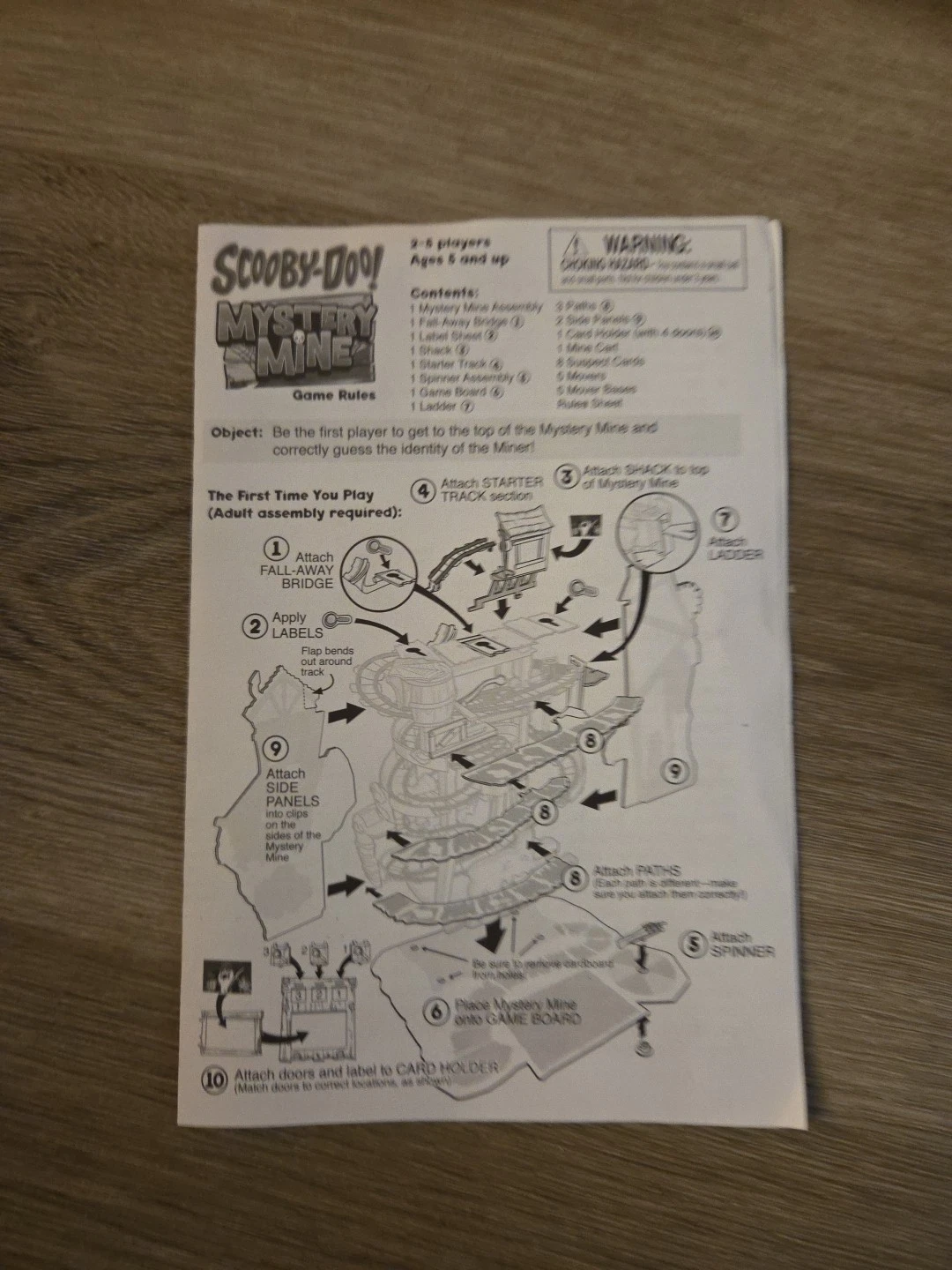
Toysit’s earlier description presents a spinner-led climb, clues and eight traps, including a falling staircase and a swinging gate. That complete account remains below. For an actual boxed game, use its matching instructions to assemble the mine and resolve moves and traps. The drawing activity here supplies its own small mystery and needs only paper and a pencil.
Make the missing echo casebook
Draw three places in an imaginary mine: the entrance shelter, a bridge and a little signal hut. A strange ringing sound has interrupted the workers’ lunch, and a paper investigator has come to find its source. Keep this an invented tabletop setting.
Beside the shelter, draw a ribbon blowing toward the bridge. At the bridge, add a small metal shape caught on a railing. At the hut, draw the matching shape hanging from a loose wind chime. Let a partner follow the picture clues in order and say what each one might mean before looking at the next.
Reveal that the breeze has been moving the chime against the hut. Divide a casebook page into three boxes labeled “What we noticed,” “What we guessed” and “What we found.” The partner can draw or dictate an entry in each. Finish with a friendly thank-you note from the lunch crew.
For a second case, change the sound and its harmless cause: a rolling lunch tin or a creaky sign can give the same three locations a different ending. Trade investigator and storyteller roles so each player gets to make a discovery.
The historical record
Original Toysit coverage
The complete earlier product account and commentary are preserved below as historical coverage.
Be careful - collect the clues
Spin the spinner and move up the path of the mystery mine. Along the way get clues about who is trying to keep you away. Eight exciting traps can get activated at any time, sending you flying back. The fall away bridge, the falling staircase, swinging gate, web flinger and more. Get to the top and reveal who the monster really is.
Scooby-Doo is a lovable Great Dane known for his distinctive speech pattern, insatiable appetite, and penchant for getting into comedic, mystery-filled adventures. Often characterized by his catchphrase "Scooby-Doo, where are you?", he is both easily frightened and yet innately curious. Despite his initial hesitations and fear, Scooby often finds himself at the center of various mysteries, usually alongside his close group of human friends known as "Mystery Inc." His bond with his best friend, Shaggy, is central to the series, and the two share many characteristics, including their cowardice and love for food. However, when incentivized (often by the promise of a "Scooby Snack"), Scooby displays moments of bravery and resourcefulness. His comedic antics, genuine heart, and the endearing way he refers to himself in the third person have made him an iconic and beloved character in animation history.
Sources and editorial notes
The original Toysit box photograph and complete historical account support this image-led profile. A photographed original instruction cover was located, but complete matching Pressman rules and assembly instructions were not recovered. Trap counts and procedures remain attributed to the earlier account. The paper casebook below is an original activity, separate from the boxed game; no physical testing was performed.
- Original Toysit image — Existing same-site image reviewed and retained unchanged.
- Original Mystery Mine instruction front — Photograph of the manufacturer sheet located through an eBay listing; front and assembly illustration inspected, with limited small-text legibility. Complete rules were not recovered.
- Original Toysit coverage — Complete historical account retained, including its original claims and wording.

Images and descriptions are retained as historical material. How Toysit covers toys.
Created for Toysit by Tabbloza — the artwork in our header.