
From the Toysit archive
Dora’s Talking Kitchen
Follow Dora’s Talking Kitchen from recipe card to pretend meal, explore its radio and telephone, and design a three-stop menu map.
The play at a glance
Map turns a pretend meal into a little adventure
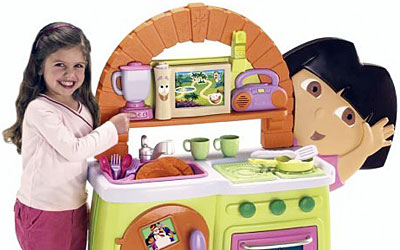
A colorful arch rises above the counter, with Dora smiling beside the work space. Cups hang within reach, a telephone sits ready for a call, and the oven and refrigerator give the play food places to go. Dora’s Talking Kitchen makes choosing a recipe the beginning of a small expedition.
Choose a recipe and touch Map
The guide shows a supplied recipe card fitting into the Map slot. With the kitchen switched on, touching Map begins a recipe adventure. That gives a player a starting point before gathering the play food and arranging a meal.
Cards can be stored inside the refrigerator door between adventures. A player might make a little ritual of choosing the next dish, laying out the pieces and inviting a guest to the counter.
A kitchen with company
The radio button plays songs, the blender button adds a mixing sound, and lifting the telephone brings a recorded encounter with Boots, Diego or Abuela. The refrigerator’s frames can hold the player’s own pictures or artwork.
Imagine that the kitchen is preparing a welcome meal for a traveler. One player might be the cook, another the guest, and a drawn character could deliver the invitation. Let the recorded sounds accompany the scene while players invent their own menu and conversation.
Match the edition and prepare the space
Mattel’s H1581 listing describes five recipe adventure maps and 28 pieces. J4493 describes seven maps, 28 pieces and a bonus soft chef Dora doll. The shared guide helps identify the assembly and controls; the edition record helps explain the different advertised contents.
An adult assembles the kitchen using the illustrated guide. Keep the countertop play dry and wipe the main toy with a lightly dampened cloth, following the care directions. Its sink, oven and blender form a pretend cooking scene.
Make a gather, make and serve map
- Draw three stops on a page: gather, make and serve.
- At the first stop, draw the ingredients for an imaginary dish.
- At the second, show a mixing, arranging or decorating action.
- At the third, draw a guest and a place setting.
- Follow the route while describing the meal, then let the guest suggest the next dish.
This original activity works with drawings or play food. Keep the homemade map beside the kitchen as a story prompt; the toy’s Map slot takes its supplied recipe cards.
The historical record
Original Toysit coverage
The original toy description and broader play discussion are preserved below as historical coverage.
Interactive play kitchen includes seven recipe adventure maps and forty-four talking phrases
Interactive play kitchen toy set brings Dora's adventures into kitchen role play. Children can go on Dora the Explorer recipe adventures with the help of the seven recipe adventure maps and twenty-eight play pieces. It captures the unique Dora styling with a life-size Dora who will be cooking right alongside. Also included are bilingual phrases, music and sound effects.
The Joy of Children Participating in Following Cooking Recipes
Engaging children in the process of following cooking recipes is a delightful and educational activity that offers a range of benefits and enjoyable experiences:
Hands-On Learning: Following a recipe involves practical learning as children actively measure ingredients, mix them together, and perform various cooking techniques. This hands-on experience enhances their understanding of math, science, and reading comprehension in a real-world context.
Sense of Accomplishment: As children successfully follow a recipe and create a delicious dish, they experience a sense of accomplishment and pride. This achievement boosts their self-confidence and encourages them to explore their capabilities.
Life Skills: Cooking is a valuable life skill that children can develop from an early age. Learning to follow recipes equips them with essential skills such as measuring, following instructions, and working with various ingredients and utensils.
Creativity and Exploration: While recipes provide guidelines, there's often room for creativity. Children can experiment with flavors, spices, and toppings, allowing them to explore their culinary imagination and create unique variations of dishes.
Teamwork and Bonding: Cooking together as a family or with friends promotes teamwork and collaboration. Children learn to cooperate, share responsibilities, and communicate effectively while working towards a common goal.
Language Development: Reading and following a recipe involves language skills such as reading comprehension, vocabulary building, and understanding procedural language. This linguistic engagement supports their cognitive development.
Sensory Exploration: Cooking engages multiple senses, from smelling ingredients to tasting the final product. Children develop their sensory awareness and gain a deeper understanding of how different elements contribute to the overall culinary experience.
Patience and Time Management: Cooking teaches children about the importance of patience and time management. They learn to follow step-by-step instructions and wait for certain processes like baking or simmering to complete.
Healthy Eating Habits: Involving children in cooking encourages them to be curious about ingredients and their nutritional value. This awareness can lead to a better understanding of healthy food choices and an appreciation for balanced meals.
Cultural Exploration: Cooking recipes from various cultures introduces children to diverse flavors, ingredients, and cooking techniques. This promotes cultural awareness and curiosity about the world around them.
Overall, involving children in following cooking recipes offers a fun and enriching experience that goes beyond the kitchen. It nurtures their curiosity, creativity, and skills while fostering a positive attitude towards food, learning, and sharing quality time with loved ones.
Sources and editorial notes
Both the H1581 standard and J4493 Toys R Us product records link to the same H1581pr-0920 guide; all 12 pages were visually reviewed. The records describe five and seven recipe adventure maps respectively, while the guide’s parts illustration shows two physical cards. Edition descriptions also differ in the bonus doll, so use the matching contents list when checking a set. The new menu-map activity is original. No physical testing was performed.
- Mattel: Dora’s Talking Kitchen, H1581 — Standard edition description and contents.
- Mattel: Dora’s Talking Kitchen, J4493 — Toys R Us edition, additional maps and chef Dora doll.
- Fisher-Price: Talking Kitchen instructions — All 12 pages reviewed, including assembly, recipe cards, controls and care.
Images and descriptions are retained as historical material. How Toysit covers toys.
Created for Toysit by Tabbloza — the artwork in our header.