
From the Toysit archive
Kai-lan Special Friend
Meet Kai-lan Special Friend’s light-up heart, hand-holding responses and expressive movements, then create a colorful character scene.
The play at a glance
A glowing heart brings a character’s mood into view
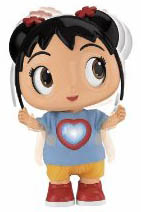
Red ornaments brighten Kai-lan’s black hair, and a large heart sits at the center of her blue top. Her red shoes echo the color above her face. Kai-lan Special Friend combines that familiar character design with a changing heart light, eye movements and invitations to join her.
Hold hands, then see the response
Mattel describes Kai-lan rocking her head and changing her heart’s colors while her hands are held. Releasing her hands brings one of six programmed combinations of emotion, color and eye movement. Her arms also move toward her heart and upward as she invites a hug, a dance and other shared moments.
The response gives a short scene its beginning. Imagine Kai-lan arriving at a friend’s house. A player might introduce the host, listen to the doll’s recorded phrase and then invent the next exchange.
Let the story give a feeling its setting
Try choosing one small event: a visitor brings a surprise, a picnic needs moving indoors, or a character finds a drawing made especially for them. Draw the setting and decide how the character might feel at that moment.
Each player can choose a color that suits their version of the scene. Someone might use blue for a peaceful evening and someone else might choose gold. The interesting part is hearing what the color means in that player’s story.
Add a thoughtful next step
A second character can help the scene move forward. Perhaps a friend makes space at the table, offers to share an umbrella or asks to see the new drawing. Give that character a small, specific action and let the first character respond.
Players can tell the scene aloud, point to their drawings or act it out with dolls. A short beginning and one kind action are enough for a complete little encounter.
Draw a feeling and a friendly action
- Draw a character in a familiar place.
- Choose a small event and decide how the character feels.
- Add a color that fits your story, explaining your choice if you wish.
- Draw a friend doing something thoughtful.
- Tell what happens next, or make a second drawing to show it.
This original activity works with Kai-lan, other dolls or drawings. The players supply the characters’ feelings, color choices and dialogue.
The historical record
Original Toysit coverage
The original toy description and broader play discussion are preserved below as historical coverage.
Highly interactive doll whose heart changes color to suggest different emotions
Super Special Friend Kai-Lan from Fisher-Price is a highly interactive just-over-a-foot-tall electronic doll with sound effects and phrases. Hold Kai Lan's hands and watch her head rock back and forth and her heart change colors as she appears to feel different emotions. Kai Lan has six different emotions (giggly, silly, happy, sad, dreamy, friendly) she will show girls as they play with her. With each emotion she will show different colors and eye movements. You make me feel super happy, she says. Her heart changes color: purple giggly, green silly, yellow happy, blue sad, red dreamy, pink friendly. Kai-Lan will move her arms and ask girl to hug her and dance with her. Kai Lan comes with a dragon shaped comb to brush her hair.
The Appeal of Color-Changing Emotion Dolls
Dolls that change color to display different emotions have captured the hearts and imaginations of children with their captivating and interactive features. The appeal of these dolls stems from their ability to engage children on multiple levels:
- Visual Fascination: The color-changing feature instantly grabs a child's attention. Watching the doll's appearance transform as it expresses various emotions is visually captivating and intriguing.
- Emotion Exploration: Color-changing emotion dolls provide a tangible representation of different feelings. Children can associate specific colors with emotions, helping them better understand and navigate their own emotions.
- Interactive Play: Children actively participate in the dolls' emotional expressions by triggering the color changes. This interaction fosters a sense of control and engagement, encouraging imaginative play.
- Empathy and Empowerment: As children play with these dolls, they develop empathy by imagining how the doll feels based on its colors. This empowers children to express their own emotions and engage in open conversations about feelings.
- Creative Storytelling: Color-changing emotion dolls inspire imaginative storytelling as children create scenarios that mirror real-life emotions. They can craft narratives around the doll's changing colors and create unique adventures.
- Social and Emotional Learning: These dolls encourage social and emotional learning by helping children identify and discuss emotions. Children can explore the reasons behind different feelings and develop emotional intelligence.
- Personal Connection: Children often form a strong attachment to these dolls due to the emotional connection they establish through shared experiences and imaginative play.
- Positive Reinforcement: By understanding that each color represents an emotion, children can celebrate the positive emotions and work through challenging ones, promoting emotional well-being.
- Stimulating Curiosity: The color-changing mechanism piques children's curiosity about how the doll works and why certain colors correspond to specific emotions. This curiosity encourages learning and exploration.
- Safe Expression: Color-changing emotion dolls provide a safe and nonjudgmental way for children to express and explore their own feelings. This creative outlet helps build a healthy emotional foundation.
The appeal of dolls that change color to show different emotions lies in their power to spark curiosity, encourage emotional growth, and create meaningful connections between children and their toys. These dolls become not only play companions but also valuable tools for learning and emotional development.
Sources and editorial notes
Mattel’s N5895 Kai Lan I Feel Super Doll record and photograph match the pictured heart, outfit and hand-holding play. The record describes six programmed responses; the original coverage supplies the specific color-to-emotion list. A matching operating guide remains unrecovered, so detailed setup should follow the model’s own instructions. The new activity lets players choose colors for fictional scenes. Broader developmental claims are retained as historical prose, with no measured outcomes or physical testing claimed here.
- Mattel: Kai Lan I Feel Super Doll, N5895 — Manufacturer description and photograph; hand inputs, six responses and arm movements.
Images and descriptions are retained as historical material. How Toysit covers toys.
Created for Toysit by Tabbloza — the artwork in our header.