
From the Toysit archive
¡Eso Es! Maya
Explore ¡Eso Es! Maya’s heart locket, spinning ponytail, light-up ornaments and interchangeable clothes, then draw an idea-to-adventure comic.
The play at a glance
A bright idea comes with a spinning ponytail
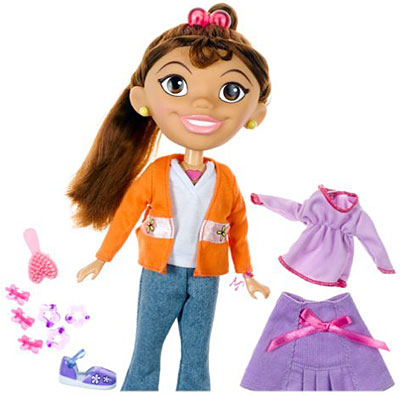
Maya wears an orange jacket and jeans, with a purple outfit and little accessories arranged beside her. A heart locket rests at her chest, and colorful ornaments decorate her ponytail. ¡Eso Es! Maya turns the character’s moment of inspiration into a combination of speech, movement and light.
Press the heart and follow the idea
The manufacturer’s launch account describes pressing Maya’s heart locket to hear one of ten phrases in English and Spanish while her ponytail spins and its ornaments light up. The combination gives a familiar character gesture a visible flourish.
Imagine using that moment as the opening of a story. Maya could be thinking about a welcome party, a new place to visit or a surprise for a friend. The toy supplies its recorded lines and effects; players decide which idea starts the adventure.
An outfit can suggest the next scene
The 14-inch poseable doll was introduced with interchangeable clothes and shoes, a brush and accessories. Toysit’s photograph shows the orange jacket and jeans alongside a purple outfit, making a change of scene easy to imagine.
A player might choose clothes for a trip to a pretend café, then draw the café sign. Another could arrange a small audience for a performance. Give the outing a purpose: someone has an invitation to deliver or a friend to meet.
Let the idea grow into a shared adventure
Try beginning with a simple question: how could a character welcome a new neighbor? One player might suggest a drawing, another a tiny concert and another a tour of a paper town. Choose an idea and decide who will help.
The story can use any languages the players enjoy. Add speech bubbles with words of your own, or use pictures and gestures to show the greeting. A few friendly details give the adventure its own voice.
Draw an idea-to-adventure comic
- Divide a page into three panels.
- In the first, show a character with a question or small problem.
- In the second, draw a bright idea and a friend who can help.
- In the third, show the place where they try the idea.
- Add your own dialogue or tell the adventure aloud.
This original activity works with Maya, another doll or drawings. All comic dialogue comes from the players, while Maya’s recorded phrases remain part of the toy’s own performance.
The historical record
Original Toysit coverage
The original toy description and broader play discussion are preserved below as historical coverage.
Bilingual talking fashion doll says phrases in English and Spanish
Fashion doll comes wearing her signature outfit. Press on her heart locket to hear her say one of ten phrases on English and Spanish. Watch her hair bobbles light up and her ponytail spin around just like they do on the Maya and Miguel show. Also comes with an additional doll outfit, shoes, brush, and hair accessories.
Maya and Miguel is a charming animated television show that captivates audiences with its heartwarming stories, relatable characters, and diverse themes. The show's appeal is evident through various aspects that make it a favorite among children and families:
- Diversity and Representation: Maya and Miguel stands out for its diverse cast of characters from various cultural backgrounds. This representation fosters inclusivity and helps children see themselves and their experiences reflected on screen.
- Positive Sibling Dynamic: The strong bond between the titular siblings, Maya and Miguel, is at the heart of the show. Their supportive relationship and shared adventures emphasize the value of family, teamwork, and mutual respect.
- Humor and Lightheartedness: The show's humor and lighthearted approach to storytelling resonate with its young audience. Playful antics, amusing scenarios, and witty dialogue create an engaging and enjoyable viewing experience.
- Problem Solving and Cultural Exploration: Each episode features Maya and Miguel navigating challenges and dilemmas, often incorporating cultural elements. This encourages critical thinking, problem-solving skills, and an appreciation for different customs and traditions.
- Life Lessons and Values: The show addresses important life lessons such as empathy, friendship, honesty, and the importance of embracing one's heritage. These messages are conveyed through relatable scenarios that resonate with young viewers.
- Educational Elements: Maya and Miguel seamlessly integrates educational content, teaching children about geography, language, and cultural diversity. This educational approach promotes learning while entertaining.
- Positive Role Models: Maya and Miguel serve as positive role models for viewers, showcasing the power of determination, curiosity, and a willingness to learn from their mistakes.
- Multigenerational Appeal: The show's themes and humor appeal not only to children but also to parents and caregivers, making it a show that families can enjoy together.
- Social and Emotional Learning: Through the characters' interactions and experiences, the show promotes social and emotional skills such as empathy, understanding, and effective communication.
- Entertaining Storylines: Each episode is crafted with engaging storylines that capture children's imaginations, encouraging them to follow Maya and Miguel on their adventures and discoveries.
Maya and Miguel shines as a show that combines entertainment, education, and positive values. Its relatable characters, diverse representation, and meaningful messages contribute to its enduring appeal, making it a beloved choice for children and families.
Sources and editorial notes
Toy Play/The Betesh Group’s August 15, 2005 launch release, preserved by Toymania, identifies ¡Eso Es! Maya and documents the locket control, ten English-and-Spanish phrases, moving ponytail and clothes. Toysit’s photograph supplies the outfit and accessory details shown here; the release’s image link is unavailable. A complete operating guide remains unrecovered; the profile uses the launch account for the basic action. The comic and its dialogue are original editorial suggestions. No physical testing was performed.
- Toy Play/The Betesh Group: Maya & Miguel toys launch — Manufacturer press release dated August 15, 2005, preserved by Toymania; ¡Eso Es! Maya description and image.
Images and descriptions are retained as historical material. How Toysit covers toys.
Created for Toysit by Tabbloza — the artwork in our header.