
From the Toysit archive
LOL Laughing Elmo
Explore LOL Laughing Elmo’s tickle responses, Dorothy fishbowl squeaker and joke mode, then invent a three-card silly story.
The play at a glance
A fishbowl squeak starts a fit of giggles
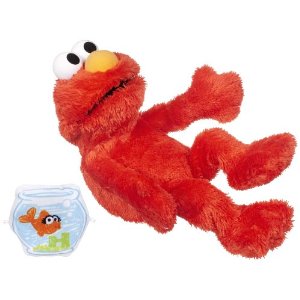
Elmo leans back with his feet lifted, a round orange nose above his open smile. Beside him sits Dorothy’s fishbowl, a small squeaking accessory with a goldfish pictured inside. LOL Laughing Elmo brings rolling laughter and recorded jokes into a play session that begins with a tickle or a funny sound.
Several ways to begin the laughter
The guide shows tickle inputs at Elmo’s tummy and feet. Dorothy’s fishbowl offers another beginning: squeeze it near his tummy, about six inches away as illustrated, or make a silly sound. His laughing and wiggling responses build with further tickling.
The original photograph catches the toy in an expansive pose, with both feet lifted and his arms out. That whole-body response is part of the spectacle: a little comic performance for a player sitting nearby.
Elmo can take a turn telling jokes
Holding either foot for three seconds selects Joke Mode. Another press brings another recorded joke, and holding a foot again returns to ordinary play. A foot press also wakes the toy after its quiet period.
Imagine inviting Elmo to a pretend comedy show. A player could introduce him, listen to his recorded material and then take a turn with a freshly invented scene. Give each performer an entrance and a moment for the audience to respond.
Let the surprise come from the story
Try putting an everyday object in an unexpected setting: a tiny boot used as a flowerpot, a teddy bear arriving at a picnic with an umbrella for a hat, or a paper dragon asking for a very small chair. Draw the scene and let someone else imagine what happens next.
Keep the humor friendly and let players choose whether to tell, draw or simply watch. One surprising detail is enough to give a short story a playful turn.
Draw three silly-scene cards
- Draw a character on one card, a place on another and an unusual object on a third.
- Lay the cards in a row and introduce the scene.
- Invite another player to suggest a surprising event.
- Give the character a kind or funny solution.
- Change one card and tell a different version.
This original activity works alongside Elmo’s performance or with drawings alone. The stories and dialogue come from the players.
The historical record
Original Toysit coverage
The original toy description and broader character or play discussion are preserved below as historical coverage.
Stuffed animal rolls on floor in laughter and has a remote control gold fish bowl
Elmo enjoys giggling and laughing. Preschoolers will themselves laugh and giggle with LOL Elmo. He laughs, tells jokes, and comes with a fish bowl squeaky toy for even more fun. The more he laughs, the more Elmo rolls and shakes.
Why Elmo is Beloved by Children
Elmo, the iconic furry red monster from Sesame Street, has captured the hearts of children around the world for several reasons, making him one of the most beloved characters in children's entertainment:
Engaging Personality: Elmo's friendly and enthusiastic personality is instantly relatable to young children. His cheerful demeanor, innocent curiosity, and simple way of expressing himself make him approachable and endearing.
High Energy: Elmo's boundless energy and zest for life resonate with the natural exuberance of young children. His active and playful nature makes him a captivating character to watch and interact with.
Childlike Innocence: Elmo embodies the innocence and wonder of childhood. His view of the world is free from cynicism or complexity, which resonates with young children who are navigating their own early experiences.
Interactive Communication: Elmo often speaks directly to the audience and engages in conversations with viewers. This interactive approach creates a sense of connection and inclusion, making children feel like they are a part of Elmo's world.
Relatable Situations: Elmo's storylines and interactions revolve around relatable themes for children, such as friendship, sharing, problem-solving, and empathy. These themes help children learn important life lessons in a way that is engaging and memorable.
Physical Expressions: Elmo's distinctive way of communicating through body language, gestures, and his signature giggle adds an extra layer of charm. His physical expressions make him visually captivating and enhance his appeal to young children.
Recognizable Voice: Elmo's unique voice, provided by a talented puppeteer, adds authenticity and familiarity to the character. Children quickly learn to recognize and respond to his voice, creating a sense of comfort and familiarity.
Positive Role Model: Elmo embodies positive traits like kindness, curiosity, and resilience. His actions and interactions serve as examples for children to emulate in their own lives.
Memorable Catchphrases: Elmo is known for his signature catchphrase "Elmo loves you!" This simple and heartfelt expression of affection resonates with children and leaves a lasting impression.
Consistency: Elmo has maintained his endearing qualities over the years, remaining a constant presence on Sesame Street. This consistency allows children to develop a strong connection with the character over time.
Through his relatable personality, interactions, and positive messages, Elmo provides a comforting and enriching experience for young viewers. His timeless appeal lies in his ability to speak directly to children's emotions and experiences, making him a beloved friend and role model in the hearts of countless children.
Sources and editorial notes
Both pages of the original Hasbro A1500 English instruction scan were visually reviewed through the TransformerToys archive. Its Elmo, fishbowl and controls match the original photograph and description. The mirror adds a server warning before the PDF; the readable document was recovered for review. The new guide describes the sound/squeaker input documented there; the old headline’s remote-control wording remains in the historical section. The silly-story activity is original, with no physical testing.
- Hasbro: LOL Elmo A1500 instructions, archived by TransformerToys — Original two-page manufacturer scan; tickle inputs, squeaker positioning and joke mode visually reviewed.
Images and descriptions are retained as historical material. How Toysit covers toys.
Created for Toysit by Tabbloza — the artwork in our header.