
From the Toysit archive
A to Z Learning Zoo
Explore A to Z Learning Zoo through animal sounds, letter names and short stories, with an edition-aware guide to the 26-animal description.
The play at a glance
Choose an animal, then choose a way to play
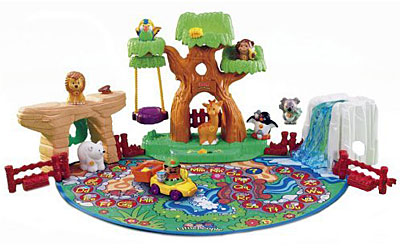
A to Z Learning Zoo combines animal figures, scenery and an alphabet trail. A session can be about making an animal sound, finding a letter or inventing a visit. Those are different activities, and there is no need to do them all at once.
The J0134 version documented here has separate Play and Learn modes. Choose a mode for the response you want, or leave the electronics off for an animal story.
Know what the modes change
In the J0134 guide, Play mode uses the letter areas for animal sounds. In Learn mode, a first press names the letter and another names an animal beginning with it. The question button changes its prompts with the mode; a separate music control plays the alphabet song with animal sounds.
That makes three different things to notice: a letter’s name, an animal’s name and a recorded sound. Hearing one does not establish understanding of the others. Let the child choose which response is interesting instead of turning every press into a question.
Try choose, find and tell
This original activity begins with only a few of the set’s own animal figures. There is no need to arrange the entire collection or complete the alphabet.
- Choose an animal and say what you notice about its shape or appearance.
- With a caregiver’s help, find a letter associated with the animal’s name. Use the matching language and labels on your set.
- Listen to a response if wanted, then give the animal a destination in the pretend zoo.
- Tell one thing that happens there and bring the animal back.
A very short story works: the animal visits a friend, finds a resting place or goes for a pretend ride. If letter finding interrupts the fun, leave that step out and keep the animal story.
When two people play, one can choose the animal and the other choose its destination. Change roles on the next visit.
Make comparisons without a quiz
Place two figures beside each other and describe something visible: one has a long neck, one has wings, or their poses differ. A caregiver can add words while leaving the child free to move the figures.
For a listening round, try one response and pause. Ask what story the sound suggests rather than requiring an animal name. For a quiet round, switch the toy off and supply voices yourselves.
The alphabet mat can also be a path through the scenery. Following that path is a play choice, not evidence that a child has learned to read. The useful observation is what the child chooses to do next.
Check the edition before counting figures
Both the J0134 record and manual specify 26 animal figures. Other packages may have different contents or language, so match the product label before using that count as a checklist. Do not infer completeness from the original photograph.
The guide shows adult assembly of the scenery and supports. Check those connections, the mat, figures and secured battery cover before play, and follow the matching instructions for care and battery work. Gather the figures afterward so missing or damaged pieces can be noticed without turning cleanup into an alphabet test.
The historical record
Original Toysit coverage
The original playset description and complete zoo-visits essay are retained below. General claims about real zoo visits are historical commentary, not findings about this toy. The original 26-animal description is supported for J0134, but should not be applied to every package with this name.
Fisher Price Little People ABC zoo alphabet learning playset
The A to Z Learning Zoo teaches toddlers the alphabet. Animal sounds mode allows toddlers to follow an alphabet trail where they can press any letter to hear the sound that each animal makes. ABC mode teaches the beginning letter of each animal's name, the animal's name and the sound, that animal makes. They can even press on the music button to hear a fun tune with animal sounds. Playset includes twenty-six toy animals.
The Delight of Zoo Trips for Children
Trips to the zoo are a source of immense joy and excitement for children, offering a unique opportunity to connect with animals and the natural world. The zoo experience captivates young minds in various ways, creating cherished memories and fostering a love for animals and conservation. Here's why children love trips to the zoo:
- Animal Encounters: The chance to see animals up close is a highlight of zoo trips. Children are awestruck by the diversity of creatures, from majestic lions to playful monkeys, as they observe animals in their habitats.
- Learning and Discovery: Zoos are educational environments that provide children with the opportunity to learn about different species, their behaviors, habitats, and unique characteristics. Interactive exhibits and informative signage engage their curiosity and expand their knowledge.
- Sensory Stimulation: The sights, sounds, and even scents of the zoo stimulate children's senses, creating a multisensory experience that captures their attention and immerses them in the natural world.
- Connection with Nature: Zoos offer a connection to nature that may not always be available in urban settings. Children experience a sense of wonder as they witness animals in settings that mimic their natural habitats.
- Imaginative Play: Zoo trips inspire imaginative play as children imagine themselves in the shoes of the animals they encounter. They may mimic animal behaviors, creating their own stories and adventures inspired by the creatures they see.
- Animal Advocacy: Trips to the zoo provide an opportunity to teach children about the importance of conservation and protecting endangered species. Learning about conservation efforts instills a sense of responsibility for the well-being of animals and their habitats.
- Connection to Favorite Characters: Many children's stories, movies, and cartoons feature animals as beloved characters. Seeing real-life versions of these animals at the zoo enhances their connection to these fictional worlds.
- Family Bonding: Zoo trips often involve spending quality time with family and friends. Exploring the zoo together, sharing observations, and discussing the animals create lasting memories and strengthen relationships.
- Experiencing Diversity: Zoos feature animals from different continents and ecosystems. Children have the chance to appreciate the diversity of life on Earth and gain a global perspective.
- Hands-On Activities: Many zoos offer interactive areas where children can touch and interact with animals in a safe and controlled environment, enhancing their sense of engagement and participation.
Trips to the zoo are a magical experience for children, sparking wonder, curiosity, and a deep appreciation for the natural world. The opportunity to observe, learn, and connect with animals creates a memorable adventure that leaves a positive and lasting impact on their development.
Sources and editorial notes
Reviewed October 16, 2026 using Mattel’s catalog-exclusive J0134 record and six-page J0134a-0920 guide, including the 26-animal parts list and mode diagrams. This documents a version consistent with the original description; the photograph and retained ASIN alone do not conclusively identify its package. Other language and retailer versions differ. The suggested activities are original editorial guidance. No physical toy, speech or learning outcome was tested.
- Mattel: J0134 A to Z Learning Zoo — Catalog-exclusive version with 26 animals.
- Mattel: J0134 Learning Zoo instructions (PDF) — Parts, assembly and Play and Learn modes.
Images and descriptions are retained as historical material. How Toysit covers toys.
Created for Toysit by Tabbloza — the artwork in our header.