
From the Toysit archive
FurReal Friends Luv Cubs
Explore the original FurReal Friends Luv Cubs through pretend feeding, hugs and peekaboo, with a three-scene care activity and preserved Toysit coverage.
The play at a glance
A bear cub gives pretend care a response
Luv Cubs build a small care story around a soft bear: welcome it, offer a pretend meal, share a game, then settle it down. Movements and sounds give the player something to answer.
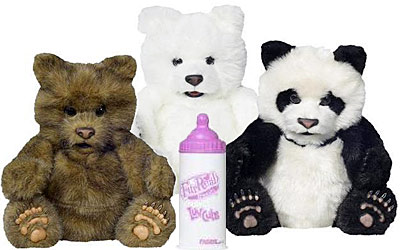
This page follows the brown, white and panda cub family shown in the original photograph. Hasbro’s Cub Care Guide for assortment 73901 provides a useful match for that family.
Small inputs create a care routine
- Pretend feeding
- The guide describes a bottle interacting with the mouth sensor to produce feeding sounds. The bottle is a pretend-feeding prop; the meal stays imaginary.
- Hugging and petting
- The left-foot and back sensors support hug and settling responses. The bear’s arm movement gives the player a visible part of the exchange.
- Peekaboo
- The cub covers its eyes, and the guide describes a foot input for continuing the game.
Feeding, hugging and peekaboo give the player several ways to take a turn in the care story. The matching guide gives the operating sequence for each game.
Give each response a place in a story
A sound can mean “hello” in one scene and “time for a rest” in another. The toy supplies movement and sound; the player chooses the character’s name, setting and reason for being there.
The same story works with an ordinary bear or a drawing. A child can narrate the response, an adult can take a character’s voice, or two players can trade roles. Each player can contribute an expression, a voice or a new idea for the scene.
Three bear faces, many personalities
Toysit’s original photograph brings together a brown bear, a white bear and a panda, with a purple pretend-feeding bottle in front. Their round faces and outstretched arms give the care story a welcoming starting point.
Choose a personality for your character: perhaps a sleepy bear who loves bedtime stories, a curious cub who asks questions, or a playful visitor who always wants another round of peekaboo. A name and a few imagined preferences make the next scene easier to invent.
Make three pretend-care cards
- Arrival: draw your cub, name it and invent a place where it feels welcome.
- Snack: draw a pretend menu and decide what the character says after its imaginary meal.
- Rest: draw a quiet scene and add a short goodnight message.
- On each card, write one action for the player and one response for the character.
- Shuffle the cards. Tell a new story that explains the changed order, such as waking from a nap before meeting a visitor.
Use paper for the meal and setting. The cards turn arrival, snack time and rest into a story you can share with any paper or plush bear.
The historical record
Original Toysit coverage
The original feature paragraph and bear discussion follow. The new profile uses Hasbro’s spelling Luv Cubs, while the Love Cubs URL and original metadata retain their historical wording.
Baby panda, polar, and brown bears from Fur Real Friends drink from bottles with realistic interactive sounds and actions
This lovable, huggable bear cub belongs right in your arms. Watch her facial expressions and listen to her make adorable baby bear cub sounds. Your little cub makes a variety of realistic electronic sounds. As you play with her, she really yawns, sniffs, snores, snorts, coos, burps, hiccups and sighs. This cuddly friend really wants to be loved by you. When you hear her sniffing around for food, place the bottle in her mouth and you will hear her slurping up her dinner. Press her foot and she will give you a hug. Pet her to comfort her until she falls asleep. Play a cute and friendly game of peek-a-boo with her and don't forget to tickle her until she giggles.
Children are naturally drawn to bear cubs for their adorable appearance, playful antics, and the undeniable cuteness that resonates with their own sense of wonder and innocence. The small size and fluffy fur of bear cubs make them relatable and endearing to young minds. Whether it's through a storybook, a nature documentary, or a plush toy, the likeness of a bear cub often becomes a symbol of curiosity and adventure. Many children also see a bit of themselves in the playful and inquisitive nature of bear cubs, making it easy for them to imagine fantastical adventures in forests and mountains. Additionally, the parent-child bond observed in bear families resonates with young children, reinforcing themes of love, protection, and family unity. This captivating allure makes bear cubs a universally beloved icon for children everywhere.
Sources and editorial notes
Hasbro’s 2004 Cub Care Guide, assortment 73901, was visually reviewed across all six PDF pages. Its cover matches the three bear types in the original photograph. The sensor diagram and play spreads support the pretend-feeding, hugging, petting and peekaboo overview. For operation, match your cub’s label to its care guide; later Baby Luv Cub editions have their own documentation. This is a documentary profile; hardware and developmental benefits were not tested. Broad claims about childhood appeal remain in the preserved historical text. The care cards are an original paper activity.
- Hasbro: FurReal Friends Luv Cubs care guide — Assortment 73901; original three-bear family, sensor map and pretend-care play.
Images and descriptions are retained as historical material. How Toysit covers toys.
Created for Toysit by Tabbloza — the artwork in our header.