
From the Toysit archive
Cold Nose Puppy
A brown-and-white puppy with floppy ears inspires a postcard journey. Retained period coverage supplies the history; an original paper activity supplies the adventures.
The play at a glance
A floppy-eared visitor with places to go
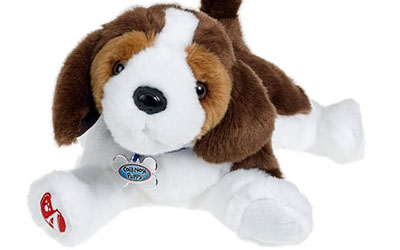
Brown ears frame the puppy’s white face, and a small collar tag hangs beneath its chin. The photograph gives this plush character an attentive, waiting expression—the sort of face a storyteller might place beside a garden gate or a bakery window. Cold Nose Puppy’s period identity adds a little toy history, while a set of handmade postcards can take the pictured character anywhere a player imagines.
Picture a puppy at the start of a journey
The archive image shows a compact puppy with a broad white muzzle, dark nose and long brown ears. Its collar tag provides one more detail to carry into a drawing. A player might use the ears as the character’s recognizable outline and invent a name that appears on every postcard.
Playmates’ 2006 company report places Cold Nose Puppy in its Amazing Pets range from the previous year. The original Toysit description below records how the toy was presented at the time. Here, the puppy’s photographed appearance is the starting point for a separate storytelling activity.
Start a puppy postcard exchange
Divide a sheet into three postcard-sized spaces. Draw a bakery window on the first, a garden gate on the second and library steps on the third. Add the puppy to each scene, keeping its brown ears and little tag easy to recognize.
Write a greeting under the bakery picture: “Hello from the window with the enormous loaf!” Imagine what the puppy notices—the shape of a bun, a striped awning or a floury hand waving from inside. Another player can write a reply from home.
At the garden gate, change the greeting and add a sound made by a player: a gentle “woof,” a bird’s call or the creak of an imaginary gate. Decide what waits beyond it. Perhaps the garden grows ribbon flowers, or a very small gardener is looking for a lost watering can.
Send a story home from the library
For the last postcard, draw the puppy beside the library steps. Invent the title of a book it would like to hear, such as The Umbrella That Learned to Bark. Tell the first two sentences of that book and let a partner add the next.
Place the three postcards in order and read the greetings aloud. Then choose one reply that could begin another journey. The exchange works with a drawing or any ordinary plush puppy; every sound, destination and reply comes from the players.
Save the cards together under the puppy’s name. A new outing can add one familiar landmark and one surprise, turning a single archive photograph into a growing collection of imagined visits.
The historical record
Original Toysit coverage
The complete earlier coverage follows. Its product claims and broader commentary remain part of the historical record; researched details and qualifications appear in Sources.
Plush puppy toy wags his tail, barks, whimpers, and his nose grows cold
Plush puppies with amazing cold noses are interactive. Pat their heads and rub their bellies and these puppies respond to your love and care. Their tails start to move faster, they start to bark louder, and when you place their cold nose on your face, they give you a kiss.
Responsive plush puppies bring a whole new level of interactive enjoyment to children's playtime. Unlike static stuffed animals, these toys come to life with sounds, motions, and even tactile responses, making the play experience much more dynamic and engaging.
Many of these plush puppies come equipped with sensors that allow them to react to a child's touch or voice. They can bark, wag their tails, move their heads, and some even 'follow' the child around, offering a simulation of pet ownership that is often captivating for children. This can also teach kids about responsibility and empathy as they learn to 'care' for their toy.
Furthermore, responsive plush puppies often come with a range of different modes or activities, including songs, games, and educational content. This not only entertains but can also provide valuable developmental benefits. The multi-sensory experience—seeing the toy move, touching its fur, and hearing it make sounds—also stimulates cognitive and emotional development. All these features together make responsive plush puppies an irresistibly fun toy for children.
Sources and editorial notes
All three pages of Playmates’ September 2006 company filing excerpt were visually reviewed. It identifies Cold Nose Puppy as a 2005 Amazing Pets product and distinguishes it from the later Love ’n Licks Puppy. It supplies historical identity, not operating instructions. An exact guide for the pictured brown-and-white variant remains unrecovered; a period Golden Retriever description is a different variant. The retained claims about cold-nose effects, touch, voice, following and face contact are historical descriptions, not new instructions or verified specifications. New material is limited to visible form, company history and independent paper play. The companion activity is original to Toysit. No physical toy testing was performed.
- Playmates: 2006 management discussion and brand overview — Three-page filing excerpt reviewed; printed page 4 identifies the 2005 Cold Nose Puppy and the later Love ’n Licks product.
- Original Toysit coverage — Complete earlier text, original SSI values and historical image inspected and preserved.
Images and descriptions are retained as historical material. How Toysit covers toys.
Created for Toysit by Tabbloza — the artwork in our header.