
From the Toysit archive
Animal Crossing — GameCube Village
Explore Animal Crossing’s GameCube village, its daily routines and neighborly exchanges, then invent a village noticeboard day on paper.
The play at a glance
A village with something happening at every hour
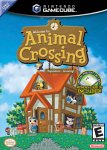
A timber house, green grass and a crowd of animal neighbors fill the little GameCube cover. Animal Crossing gives that village an everyday rhythm: a letter to send, a room to arrange, a fish to look for, or someone to greet on the way home. The pleasure is in choosing what matters to your resident today.
Little errands that make a place feel lived in
Imagine setting out to find one thing for your home and returning with a new idea for the whole room. Fishing, shopping, letter writing and arranging furniture give a visit several possible directions. A neighbor can be the reason to leave the house; the house can become the reason to bring something back.
The game follows a calendar and clock, with changing seasons and weather. Up to four residents share a town through alternating play. Letters and the bulletin board let one visit leave a trace for another. Try choosing a modest theme for a session: a fishing afternoon, a letter-writing day or a new corner of the house.
A town that travels on a memory card
The original booklet describes visiting a friend’s town using GameCube memory cards. It also describes a Game Boy Advance connection for island visits and pattern design, using the separate Nintendo GameCube Game Boy Advance cable. Collectible NES games are another part of this edition’s history. Follow the matching regional booklet for the actual hardware and saving procedure; the older account below preserves its contemporary description of these extras.
Try a village noticeboard day
For this original paper activity, draw a noticeboard with three spaces: morning, afternoon and evening. Give your imaginary village a name, then invent three animal neighbors with different plans.
- Write a morning request from one neighbor: “The otter needs a sign for the riverside picnic.” Add a small drawing so the request is easy to picture.
- Write an afternoon reply from another neighbor. The reply should offer something specific, such as drawing a fish-shaped arrow or finding a shaded picnic spot.
- Add an evening notice showing what happened. Perhaps the picnic became a lantern supper, or the new sign helped a visitor find the river.
- Now draw a raincloud over the afternoon. Change one notice and explain how the neighbors adapt their plans.
Keep the first and revised notices together. Read them as a tiny village story, or exchange boards with a partner and write a friendly visitor’s reply. The changing board makes ordinary details—weather, messages and small favors—into the things that move the story along.
The historical record
Original Toysit coverage
The complete earlier product account and commentary are preserved below as historical coverage.
Interact with a virtual village of animals. The game world runs on a real-time 24-hour clock.
The sun rises and sets at the same time as the real world. Link up your Game Boy Advance to collect NES games and unlock new worlds. Use your memory card to take your character to the animal world of your friend. Build a community like no other in this one-of-kind game that's been a sensation in Japan. In Animal Crossing, you'll venture into a charming world teeming with colorful characters living in time with an actual 24-hour clock. You'll get a job, buy and furnish a house, and begin to interact extensively with your intriguing new neighbors. You'll help them with their many tasks, visit their homes and build warm relationships. A masterpiece of balanced gameplay, Animal Crossing deftly promotes both friendly competition and big-hearted cooperation at the same time. Over time, the many activities fuse to create a fascinating community experience. You'll yearn to return again and again to Animal Crossing.
History of Animal Crossing
Animal Crossing is a popular life-simulation video game series developed and published by Nintendo. The series has evolved significantly over the years, providing players with unique and immersive experiences in various iterations.
1. Animal Crossing (2001 - Japan, 2002 - International)
The debut title was first released for the Nintendo 64 in Japan under the name Dōbutsu no Mori. Later, it was adapted for the GameCube with added content and was introduced to international audiences as Animal Crossing.
2. Animal Crossing: Wild World (2005)
This installment was the first on a handheld console, the Nintendo DS. Wild World introduced online play, allowing players to visit other players' towns.
3. Animal Crossing: City Folk (2008)
Released for the Nintendo Wii, City Folk introduced a city area where players could shop for rare items and meet special characters.
4. Animal Crossing: New Leaf (2012)
Debuting on the Nintendo 3DS, New Leaf had a significant twist: players became the mayor of their town, granting them more control over its development.
5. Animal Crossing: Pocket Camp (2017)
This mobile version brought the series to smartphones, focusing on managing and customizing a campsite.
6. Animal Crossing: New Horizons (2020)
Released for the Nintendo Switch, New Horizons offers a deserted island setting that players can transform into their dream paradise. It became especially popular during the global pandemic, offering players a virtual escape and means of socializing.
Throughout its history, the series has been lauded for its charming characters, freedom of expression, and the soothing rhythm of life it offers. As the series continues, fans eagerly await what the next iteration will bring.
Sources and editorial notes
This profile concerns the original GameCube game. Nintendo’s publisher description and the Australian instruction-booklet transcript support the village routines and connections described here; the transcript was reviewed as text, not as a complete set of readable diagrams. The historical franchise survey, promotional claims and existing video identifier are retained; video playback was not tested. The activity is an original Toysit paper exercise, not an in-game feature or a tested learning outcome.
- Original Toysit image — Existing same-site image reviewed and retained unchanged.
- Nintendo: Animal Crossing for GameCube — Publisher description supports village activities and alternating 1–4-player play. Regional listing dates concern the game, not this article.
- Nintendo Animal Crossing instruction booklet, Australian edition (transcript) — Manufacturer booklet text reviewed for clock, letters, bulletin board, memory-card visits, NES games and GBA island/pattern connections. Hosted transcript has OCR errors; complete original diagrams were not visually verified.
- Original Toysit coverage — Complete historical account retained, including its original claims and wording.

Images and descriptions are retained as historical material. How Toysit covers toys.
Created for Toysit by Tabbloza — the artwork in our header.