
Toy profile
Rush Hour Duel: Two Routes to the Finish
Explore Rush Hour Duel’s two-player traffic puzzle, then retell a useful move with an original traffic reporter’s replay.
The play at a glance
Two routes to the finish
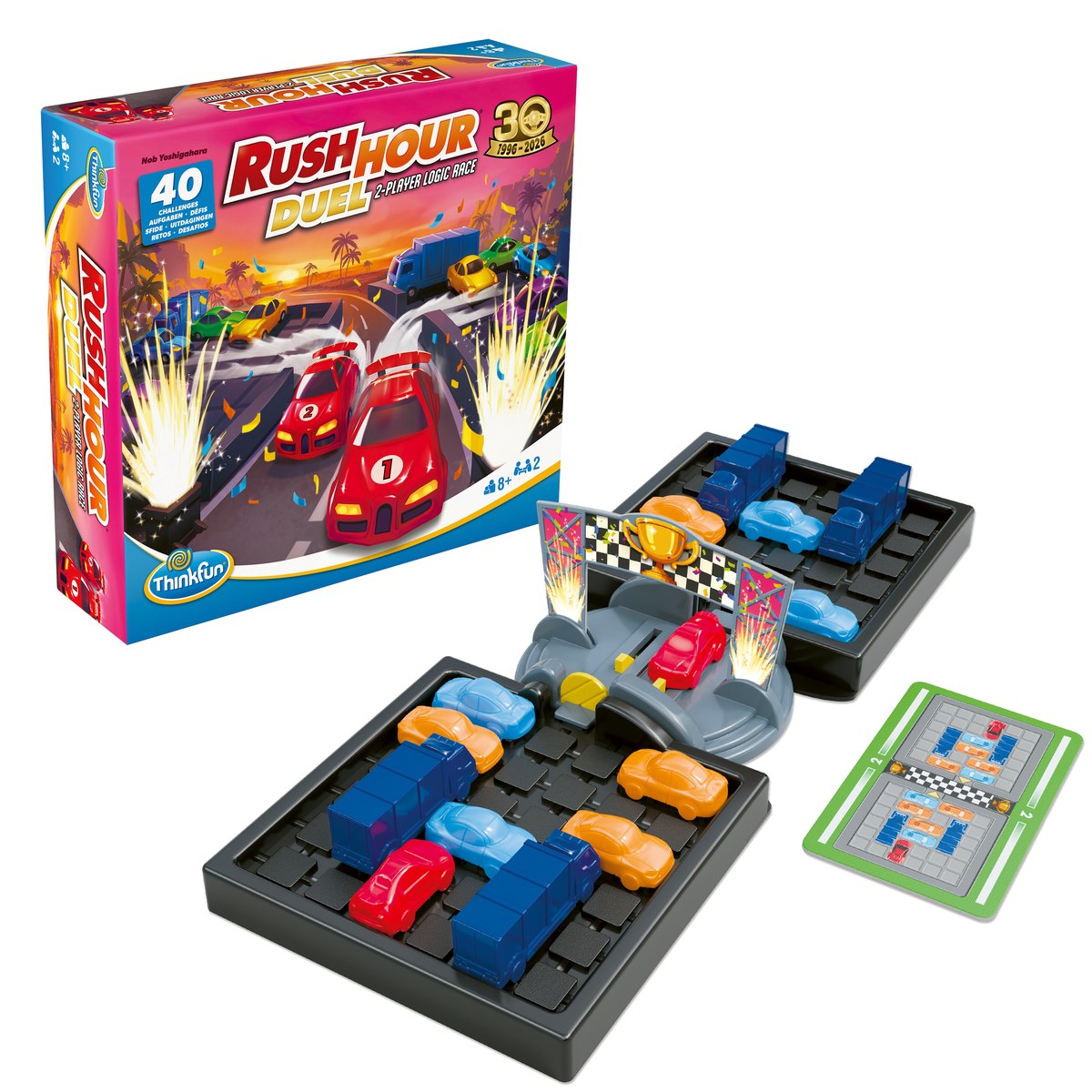
Two red cars wait inside crowded grids. Blue trucks and orange cars stand between them and a shared finish. Rush Hour Duel turns the familiar traffic puzzle into a race for two players, with each person searching for the slides that open a way out.
After the round, try becoming a traffic reporter: remember one useful move and explain the opening it created.
Find the Toy on Amazon: ThinkFun Rush Hour Duel (76686), two-player game (paid link)
Two traffic jams face the same finish
The product photograph makes the idea easy to picture. Two dark grids stretch away from a central finish, with small red cars surrounded by blue and orange vehicles. A challenge card shows arrangements for the two sides. The checkered divider and trophy-shaped detail give this tabletop traffic jam the look of a tiny race course.
ThinkFun describes Rush Hour Duel as a simultaneous contest: both players work to release their own car, with the first escape deciding the race. Its launch announcement describes a barrier closing at the finish. The interesting contrast is between the crowded starting layout and the open route each player is trying to create.
A useful move can begin with a vehicle some distance from the red car. Look at the space beside a blocker, then at the space that blocker would leave behind. That chain of possibilities gives a sliding puzzle its appeal: one small opening can make the next move possible.
Meet the Duel edition
The manufacturer identifies this set as Rush Hour Duel, model 76686, for two players aged eight and older. Its listed contents include one game board, 24 vehicles divided between the players, 40 challenges with solutions, and instructions. The anniversary packaging marks 30 years of Rush Hour.
Toysit's earlier Rush Hour profile describes the familiar solo traffic puzzle and preserves the history of an older set. Duel gives that route-clearing idea a different social setting: a second person is solving alongside you, heading toward the same finish. Use the booklet supplied with Duel for its setup, movement and finish rules.
The challenge cards matter as much as the little cars. They provide a starting arrangement to investigate. Before racing, take time to match the chosen card and identify your own side of the board. The manufacturer's two-player age recommendation is the useful starting point when deciding who will join in.
Try a traffic reporter's replay
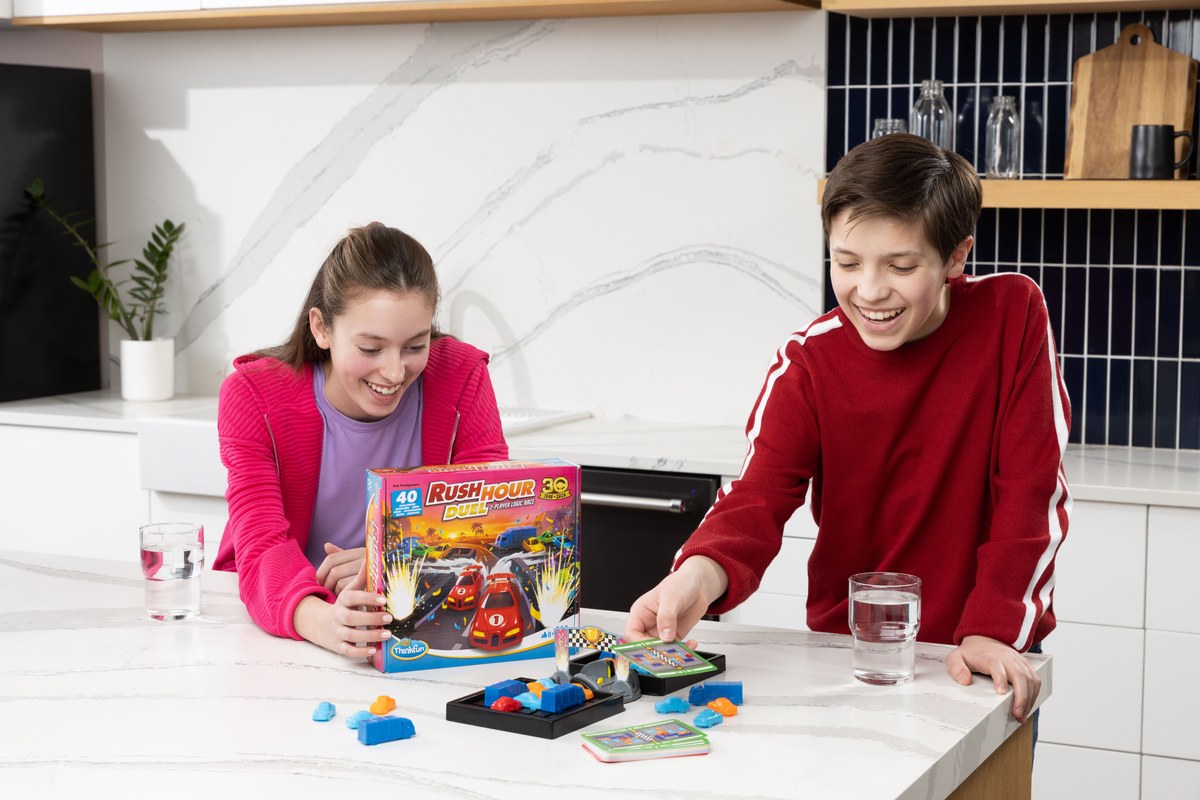
An original Toysit after-game activity: once a round has finished, become a reporter at the miniature traffic desk. Choose one move you remember because it opened useful space. Explain what was crowded before it and what became possible afterward.
- Choose the moment. Each player picks a move from their own puzzle. It can be an early slide that helped later, or the move that finally opened the way out.
- Draw two small pictures. Make a rough before-and-after sketch. Colored rectangles are enough; this is a memory aid, so there is no need to reproduce a challenge card.
- Give the report. Try a sentence such as, “The orange car moved into the gap, leaving room for the blue truck.” Let your partner ask which space changed.
- Swap voices. On another round, tell the report from the red car's point of view. Imagine what the driver could see before the route opened.
Keep the reporting between rounds so it fits around the simultaneous game. A surprising wrong turn can make a good story too: describe the opening you expected, then the blocker you noticed.
For a separate paper activity, draw an exit on a sheet and arrange a few colored paper rectangles in front of it. Take turns suggesting a slide and describing the space it creates. You can make the arrangement together and adjust it as you go. This homemade route puzzle is an editorial invitation, not an additional Rush Hour challenge or an official scoring variation.
Sources and editorial notes
Researched November 6, 2026 for ThinkFun Rush Hour Duel 76686, using the official US product record, the October 5 German launch release and publisher photographs. The exact instruction booklet was not reviewed; the play description is an overview, with the supplied booklet governing setup and rules. The traffic reporter and paper puzzle are original Toysit suggestions. No hands-on testing, measured learning benefit or sponsorship is claimed. The Amazon listing matches model 76686 and its barcode; the link is an affiliate link.
- ThinkFun Rush Hour Duel: official product information — Exact model, age label and manufacturer description; checked November 6, 2026.
- Manufacturer launch announcement — Dated source for the described features; promotional claims are attributed.
Created for Toysit by Tabbloza — the artwork in our header.