
Toy profile
Arkitec CityVision New York: A Skyline With Stories
Where to buy
On Amazon Arkitec CityVision New York 108-piece wooden model (paid link)
Build Arkitec CityVision New York and turn three miniature landmarks into a small exhibition with researched labels and a one-minute tour.
The play at a glance
A little skyline with a story to tell
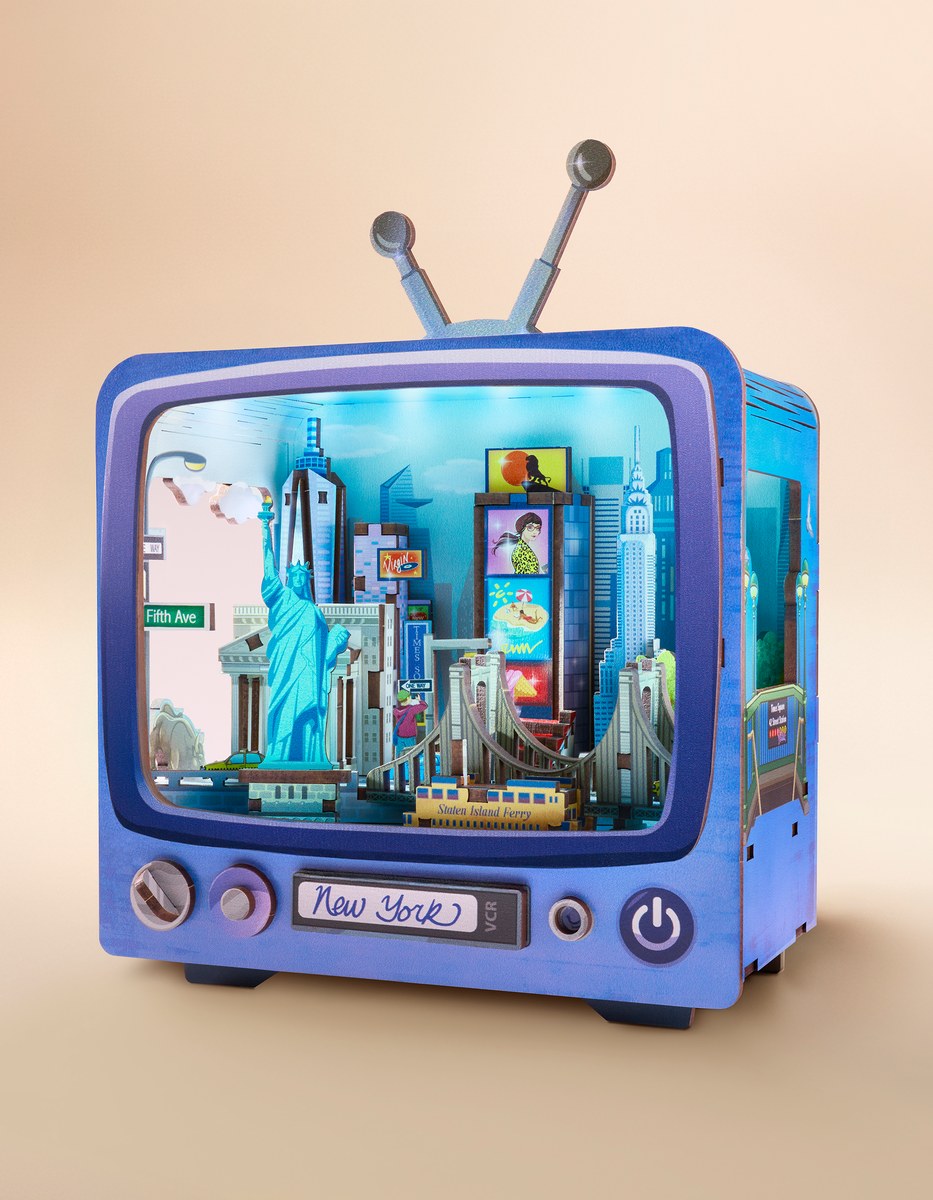
Build a layered New York scene inside a retro television-shaped case, then give its landmarks the labels of a miniature museum.
New York inside a wooden television
A bridge crosses the foreground, towers rise behind it and the Statue of Liberty holds her torch nearby. A blue case with little antennae frames the scene like an old television. The picture has depth: it is a layered wooden model with details to find.
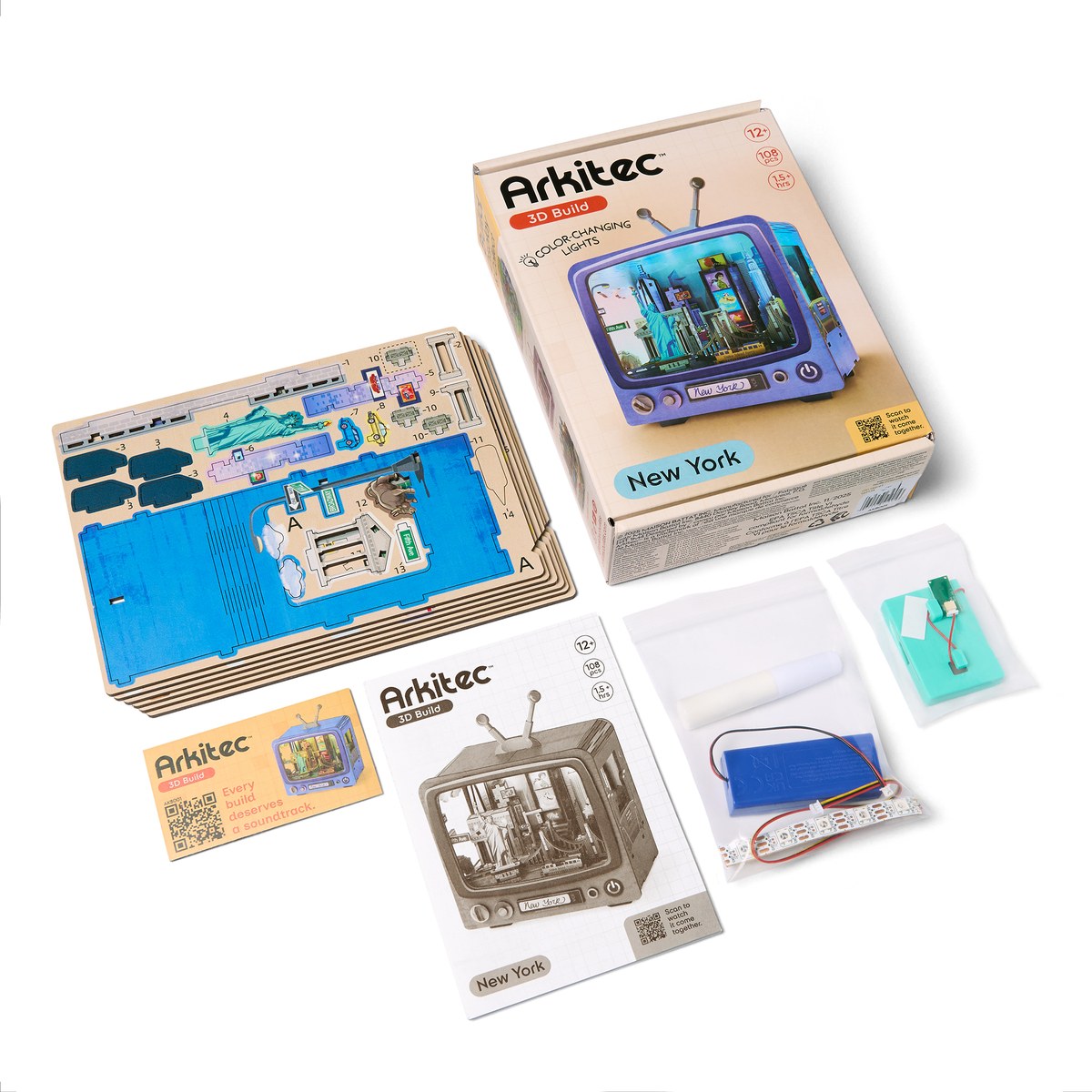
Arkitec CityVision New York, Maison Battat model AK8001, uses 108 wooden pieces and color-changing LEDs. It is recommended for ages twelve and older. Two AAA batteries are required and are not included. The television shape is a display case, not a working television.
Use the matching illustrated instructions for assembly. Keep pieces in their sheets until needed, handle narrow parts carefully and carry out the guide’s LED function test before building around the lighting. Glue is required at specified steps; the listed supplies include glue and sandpaper. Have an adult install or replace batteries. This profile does not replace the complete assembly guide.
Let a familiar shape lead to a fact
The miniature brings landmarks together in a compact scene. Treat it as an imaginative arrangement rather than a street map. Once built, it can become a starting point for looking at the places it represents.
- Statue of Liberty: look for the raised torch and the tablet. The National Park Service identifies the torch in her right hand and the tablet in her left.
- Brooklyn Bridge: follow the bridge across the model’s foreground. New York City’s transportation department records completion of the real bridge in 1883.
- Empire State Building: use the maker’s scene information to find this tower. The building’s official history dates its opening to May 1, 1931.
Curate a one-minute skyline exhibition
An original Toysit research and display activity: make three small paper labels to stand beside the finished model. Each label should help a visitor move from a detail they can see to something they have learned.
- Sketch a clue. Draw one recognizable feature of each landmark: the raised torch, a bridge tower or a stepped building outline. Keep the sketch simple enough to read at a glance.
- Separate looking from learning. Write “In the model” above your observation and “About the real place” above one researched fact. Add the source’s name beneath the fact.
- Choose a route. Number the labels in the order you want a visitor to explore. You might begin at the foreground and finish with a tower farther back.
- Lead a short tour. Point out each shape, then share its fact in your own words. Ask the visitor which detail they would like to investigate next.
- Look again with the lights. Use the model’s lighting as directed and notice which outlines stand out. Add one sentence about the changed appearance without moving or bending the assembled pieces.
Keep the source names with the labels so another reader can follow the research. A fourth label can grow from a visitor’s question, turning the completed build into an exhibition that changes as you learn more about the city.
Sources and editorial notes
Researched November 12, 2026 from Maison Battat’s product information, retained Arkitec launch release, matching AK8001 instructions, the actual Amazon listing and the three primary landmark sources below. Full manual text and selected illustrated setup/finishing pages reviewed; the complete assembly sequence was not checked. The exhibition activity is an original Toysit suggestion. No hands-on testing or sample/sponsorship arrangement recorded.
- Maison Battat: New York AK8001 — Current model, piece count, age guidance and two-AAA battery requirement.
- Maison Battat: Arkitec launch release (PDF) — February 2026 launch context; CityVision is distinct from the moving Miniscapes line.
- Arkitec: AK8001 instructions (PDF) — Full text read; parts, initial LED test, glue step and battery pages visually reviewed. The full assembly sequence was not checked.
- National Park Service: Statue of Liberty facts — Torch and tablet identifying details.
- NYC DOT: Brooklyn Bridge — Bridge completion in 1883.
- Empire State Building: history — Building opening on May 1, 1931.
Created for Toysit by Tabbloza — the artwork in our header.