
Play ideas to start with
What should your building make possible? An entrance can welcome a visitor, a frame can shelter a car, and a short row of dominoes can set a story in motion. Start with one small purpose and leave room to change it.
Explore earlier toys through their play ideas and historical context. Each article explains its evidence and edition limits; these selections are reading routes, not a current buying list.
Places and connections
Play guide

Build a place for a visitor
Choose a small visitor, build an entrance and change the opening when a wider visitor arrives.
Wooden Building Blocks: Build a Passage and Change the Plan
Historical profile and play idea
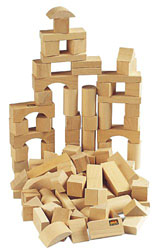
Start with a gap
Explore how flat supports and a span can leave room for a little figure.
BRIO Wooden Blocks
Historical profile and play idea
Build with notches
See how notched logs make crossings, then imagine a low enclosure with a purpose.
Lincoln Logs
Historical profile and play idea

Connect a framework
Give bricks, sticks and panels different jobs in a gateway for a toy car.
TRIO Building System
Movement and research
Historical profile and play idea

Plan a chain reaction
Follow a short toppling line, find a stopping point and change one connection. Launcher instructions remain edition-specific.
Domino Rally Airplane
Research follow-up
Read the research in context
Read the historical block-play trial and its limits, alongside a simple build-and-describe invitation.
Block Play: What a Later Pilot Study Found
Explore the collection
Find a closer look at each toy, activity or historical report, grouped by what you would like to explore. The original index remains below with its earlier titles and wording.
Blocks, logs and open constructions
- BRIO Wooden Blocks
- Ello Jungala
- Hardwood Color Blocks
- ImagiBRICKS Giant Building Blocks: walls, windows and small-town stories
- Lincoln Logs
- Little Tikes Big Building Blocks
- Wooden Building Blocks: Build a Passage and Change the Plan Play guide and multi-set archive
Frames, rides and chain reactions
- Domino Rally Airplane
- Gecko Run Starter Set: Build a Marble-Mail Route Researched toy profile
- K’NEX Corkscrew Canyon
- K’NEX Pirate Ship Park: build a swinging fairground ride
- K’NEX Roller Coaster: Screamin’ Serpent
- TRIO Building System
Places and characters to build
- Batman C3 Mini Batmobile: build a Gotham detour story
- BTR Rock Crusher Construction Set
- Imaginext Battle Castle
- Imaginext Rescue Center
- Imaginext T-Rex Mountain
- LEGO Hero Factory Frost Beast (44011)
- LEGO Legends of Chima: The Lion CHI Temple (70010)
- LEGO Teenage Mutant Ninja Turtles: Turtle Lair Attack (79103)
- LEGO The Hobbit: An Unexpected Gathering (79003)
- Mega Play Adventure Castle: a doorway into castle stories
- Playmobil Egyptian Adventure
- Tenkai Knights Bravenwolf (10001)
- TRIO Batcave
Work crews, vehicles and routes
- Adventure Scoop: a cheerful digger with two busy buckets
- Chuggington StackTrack Rescue at Rocky Ridge
- Home Depot Electronic Play Workbench Historical pretend-play toy
- Home Depot Work Bench
- Imaginarium Train Table Set
- Manny's Construction Site
- Manny’s Transforming Tool Truck
- Matchbox Programmable Block Dump Truck
- Mega Bloks Talking Timmy
- Nano Construction Hauler: a small truck with a delivery route
- Rocky the Robot Truck
- Rokenbok RokWorks: give the construction crew a dispatch bulletin
- Rokenbok Start Set
- Sesame Street Radio Control Construction Set
- Spin and Fix Thomas: a visit to the Sodor Steamworks
- Thomas at the Timber Yard
- Tonka Mighty Dump Truck
- Winnie the Pooh ABC Singing Wagon: letters on a rolling journey
History and research
- Block Play: What a Later Pilot Study Found Historical research follow-up and play invitation
Recall history and owner guidance
This historical profile explains the recall and points toward alternative play ideas.
- Playskool Team Talkin’ Tool Bench Historical recall profile
Think about what happens after assembly
Some builders enjoy following a detailed plan; others want a pile of pieces to reinvent. Choose a system around that preference, the effort of joining parts and the space available to build, play and store.
Compare building systems by their possibilities
A piece count says little about how a set feels in use. The variety of parts, their connections and their fit with pieces already owned are more helpful. Consider whether the finished result is a display model, a prop for pretend play or a mechanism to change and test.
| System | What the player explores | Check first |
|---|---|---|
| Stacking blocks | Balance, shape, height and making places for stories. | Piece size, weight, finish and a stable floor area. |
| Connecting bricks | Following plans or combining reusable parts into new models. | Connection effort, separation tools and the exact compatible system. |
| Rods, panels or magnetic pieces | Frames, structures and different ways to enclose space. | Joint strength, small parts, enclosed-magnet condition and age labeling. |
| Mechanical construction | Gears, wheels, linkages and moving assemblies. | Tools, moving-part clearances, motor power and clear diagrams. |
| Model-specific kits | A planned sequence leading to a particular finished object. | Reading load, build stages, glue or tools, and whether rebuilding is possible. |
Scroll the table sideways on a narrow screen.
Match the connections to the builder
Small connectors, tight-fitting parts and long sequences can make a project tiring even when its theme is appealing. If possible, try a few pieces from the same system. Observe whether the child can join and separate them comfortably and whether the instructions are understandable.
Follow the manufacturer's age labeling, then consider the child's experience and the adult support available. A larger model is not automatically a better next step. A modest set with several approaches can offer more independent play than a long project requiring constant rescue.
When adding to an existing collection, check the exact product line and connection type. A familiar brand name is not a guarantee that every piece, motor or electronic controller works with every other range. Check documented compatibility before choosing an expansion.
For a brick-based collection, the LEGO guide covers set identification, instructions and combining pieces. If the appeal is acting out a repair rather than building a model, compare the pretend-tool and toy-construction choices in Handy Manny.
Look for useful ways to rebuild
Open-ended play becomes easier when the collection contains versatile pieces rather than only a few specialized shapes. Wheels, flat bases, simple connectors and a range of structural parts can support different projects, depending on the system. Instructions for alternate builds are helpful, but a player's own small changes count too.
A bridge with a purpose
Using age-appropriate building pieces, make a low bridge on the floor that a toy vehicle can pass under. First decide how wide and tall the opening needs to be. Build, try the vehicle, and adjust one part of the design. Then invent a new constraint: a wider opening, fewer pieces or a road that turns.
Keep structures toy-sized and use toy loads only. The point is to connect a design choice to what the model can do. LEGO Education's Design for You lesson offers another example of building, testing and improving a useful invention.
Plan for storage and unfinished work
Decide whether a model can stay assembled overnight. A shallow tray can give a small project a temporary home; a larger floor build may need a space the household can leave undisturbed. Store pieces so the builder can find them without emptying every container.
Sorting should serve the activity. Broad groups such as wheels, connectors and structural pieces may be easier to maintain than a very detailed color system. Keep instructions and unusual spare parts together. For projects with batteries or motors, follow the manufacturer's storage and battery-removal directions.
When comparing cost, count the parts the child will actually use, the scope for rebuilding and any required additions. A smaller compatible expansion can be more useful than a large unrelated system.
Inspect parts and check older sets
Check for cracked pieces, sharp damage and loose components before play. Keep small parts away from younger children and follow the instructions for tools, batteries and powered mechanisms. Damaged magnetic pieces need particular attention: stop using a piece that exposes or releases its magnet, and keep loose powerful magnets out of children's play.
The CPSC magnet-safety resource explains the ingestion risk. For an older or secondhand set, search CPSC recalls using the manufacturer and exact product name or model. Confirm the parts list and instructions before treating an incomplete set as ready to use.
For projects centered on observation and experiments, see Science Toys. For a build that adds programmed movement, see Robot Toys. Historical sets and construction-themed toys remain listed below with their original article titles.
From the Toysit archive
Earlier coverage, with the original article titles. These pages document toys described in past seasons; availability, pricing, safety status and app support have not been reverified. Use exact model information when researching an older toy.
- Batman C3 Construction
- Battle Castle Imaginext
- Team Talking Tool Bench
- Bob the Builder Toys
- Brio Wooden Blocks
- BTR Building Sets - Built to Rule
- BTR Construction Set
- Wooden Building Blocks - ABC, Alphabet, Hardwood
- Ello Jungle
- Fisher Price Baby Blocks
- Fisher Price Rescue Center
- Geomag Magnetic Construction Toy
- Giant Building Blocks
- Hardwood Color Blocks
- Home Depot Work Bench
- K'NEX - knex - building toy that connects
- Knex Corkscrew Canyon
- Lincoln Logs Toys
- Little Tikes Big Building Blocks
- Magnetic Blocks
- Magnetic Marble Building Set
- Magnaworld
- Manny's Construction Site
- Matchbox Programmable Block Dump Truck
- Mega Blocks Dragons Crystal Wars
- Mega Blocks Talking Timmy
- Mega Play from Mega Blocks
- Mighty Dump Truck
- Nano Mega Blocks
- Pirate Ship Park
- Play Workbench
- Egyptian Adventure
- Pop Ons Building System
- Rocky the Robot Truck
- Rokenbok Discount Starter Set
- Rokenbok Start Set
- Sesame Street Radio Control Construction Set
- Thomas at the Timber Yard
- Spin and Fix Thomas
- Tractor Tom Toys
- Train Table Set
- Manny's Transforming Tool Truck
- T-Rex Mountain
- Trio Bat Cave
- Trio Building System
- Winnie the Pooh ABC Singing Wagon
A guide to evaluating toys, not a hands-on product test. Read our editorial approach.
Created for Toysit by Tabbloza — the artwork in our header.