
From the Toysit archive
Crayola Crayon Maker
Explore the original Crayon Maker’s 2002 history, plan a color combination and compare marks with a no-heat drawing activity.
The play at a glance
Plan the colors before changing the crayon
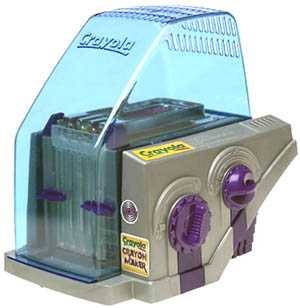
The original Crayola Crayon Maker turned the idea of reusing worn crayons into a tabletop toy. Crayola’s own history places its introduction in 2002 and pictures the same distinctive enclosed design seen in Toysit’s archive.
A useful place to begin today is on paper: choose two colors, compare their marks and sketch a possible combination. That activity needs no heating equipment.
Try a no-heat color plan
Choose two ordinary crayons that are comfortable to hold and a sheet of paper. Make a separate patch with each color, using similar pressure. Label the patches or place the crayons beside them so the choices remain clear.
Make a third patch by drawing short alternating strokes of the two colors. In a fourth patch, draw one color lightly over the other. Compare the results: separate marks remain distinct, while overlapping marks can produce a different appearance.
These paper samples are a way to explore color arrangements. They do not predict exactly what melted and remolded wax would look like. A striped plan, a layered mark and a thoroughly mixed material are different things.
Change one feature at a time
- Choose a pair
- Try two clearly different colors and describe what each contributes.
- Change the balance
- Make many strokes of one color and a few of the other. Compare with an evenly divided patch.
- Reverse the order
- Layer the first color over the second, then reverse them in a new patch.
- Name the combination
- Give the sample a descriptive name and use it in a small drawing.
Keep a few samples side by side. Ask which arrangement suits a sea, a forest or an imaginary creature, rather than choosing a single “best” combination.
What changes when wax changes shape?
The original toy’s premise involves solid crayon wax becoming liquid when heated and solid again as it cools. A mold gives the material a new shape. That physical change is distinct from deciding how the colors are distributed through the finished crayon.
Remelting does not create new pigment or automatically restore a crayon’s color. A different shape or distribution of colored wax may change the marks it makes. The archive’s language about renewed vibrancy is enthusiasm, not a measured result.
If a finished multicolored crayon is already available, compare a few marks made with it against the paper plan. Describe what is actually visible: separate streaks, a changing color along a line or a more uniform patch. This observation does not require making a new crayon.
Identify the machine before considering use
The original photograph shows a gray base, transparent blue enclosure and purple controls. Crayola’s timeline includes this design in its 2002 entry. A similarly named later Crayon Maker, Melt ’n Mold or Crayon Factory may use different parts and instructions.
Keep the model label, original manual and parts together. Before operating a surviving unit, an adult needs instructions that match it, including the permitted materials, supervision, enclosure and locking requirements, heating and cooling sequence. Missing instructions are a reason to keep the machine out of the activity.
This page supplies no heating times, bulb substitutions, improvised molds or kitchen-appliance alternatives. The paper exercise offers a complete color activity while the older machine remains an object of historical interest.
The historical record
Original Toysit coverage
The original product description and complete later enthusiasm essay are preserved below. Suggestions about experimental molds, melting techniques and aroma are historical copy, not operating advice. The new guide does not endorse the claim that remelting restores lost color or provide a heating procedure for an unidentified unit.
Make your own crayons by melting down the old ones.
Ever wonder what to do with the hundreds of worn down Crayola crayons your kids have accumulated? The new Crayola Crayon Maker lets kids have hours of fun making their very own Crayola crayons by melting down those well-used bits and pieces and molding them into brand new crayons. Kids can make new crayons in their favorite hues or they can mix different bits of wax together and make multi-colored crayons. The tabletop crayon factory is the only toy of its kind that lets kids make their own crayons. The Crayon Maker includes decals, crayons labels, a mold and unlabeled crayons.
The process of melting down old crayons to create new ones is a wonderfully creative and satisfying activity that brings new life to worn-out art supplies. This enjoyable crafting endeavor offers a range of reasons why it's so much fun to transform old crayons into vibrant, brand-new creations:
Colorful Alchemy: Melting crayons allows you to blend different colors together, creating unique and eye-catching combinations that add a touch of magic to your artwork.
Upcycling Joy: Turning old, broken, or worn crayons into new ones is a fantastic example of upcycling—a practice that not only reduces waste but also brings joy through creative transformation.
Hands-On Experience: The process of peeling, breaking, and melting crayons engages your hands and senses, providing a tactile and hands-on crafting experience that's both relaxing and rewarding.
Custom Color Creations: By mixing and matching different crayon pieces, you have the power to create custom color palettes that suit your artistic vision, giving your creations a personal touch.
Creative Exploration: Melting crayons encourages you to experiment with different techniques and molds, sparking your imagination and inspiring new ways to express yourself artistically.
Science and Art Fusion: The melting process involves science and art, as you observe crayons transforming from solid to liquid and back to solid again. It's a creative way to explore scientific concepts like states of matter.
Layered Artistry: Creating multi-colored crayons by layering melted wax adds depth and dimension to your drawings. The resulting strokes on paper reveal hidden shades as you explore various angles.
Recaptured Vibrancy: Old crayons might have lost their original vibrancy, but when melted down, they regain their bright hues, ready to infuse new life into your artwork.
Artistic Repurposing: The new crayons can be used for various art projects, from coloring books to DIY crafts, allowing you to extend the creative lifespan of your art supplies.
Sensory Experience: The aroma of melting crayons adds an extra sensory element to the process, immersing you in the experience and enhancing the overall creative journey.
Artistic Gifts: Handmade crayons crafted from melted-down originals make for thoughtful and unique gifts that showcase your creativity and effort.
Inspiration for Others: Sharing your melted crayon creations can inspire others to try their hand at this enjoyable DIY project, fostering a community of creative enthusiasts.
The process of melting down old crayons to make new ones is a fantastic blend of creativity, craftsmanship, and eco-friendly innovation. It's a satisfying way to explore color, shape, and texture while giving new purpose to materials that might otherwise go to waste—ultimately adding a colorful and imaginative dimension to your artistic endeavors.
Sources and editorial notes
Reviewed October 16, 2026 using the original source, ASIN B0000634SD, photograph and Crayola’s Colorful Moments in Time timeline, page 2. The timeline’s 2002 illustration matches the original enclosed design. A manufacturer manual securely matched to this pictured edition was not established; later Crayon Maker or Melt ’n Mold instructions have not been substituted. The activity in this guide uses ordinary crayons on paper, and no machine was physically tested.
- Crayola: Colorful Moments in Time (PDF) — Manufacturer timeline, page 2, dates and illustrates the original Crayon Maker in 2002. This is historical evidence, not an operating manual.
Images and descriptions are retained as historical material. How Toysit covers toys.
Created for Toysit by Tabbloza — the artwork in our header.