
From the Toysit archive
Electronic Home Kitchen
Picture a white-and-pink Electronic Home Kitchen with a blue counter, then open a pretend cafe with a two-item menu and playful sound cues.
The play at a glance
A small cafe opens at the blue counter
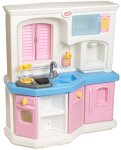
The blue counter makes a bright working place between white walls and pink doors. Above it, a little microwave window and cupboard give the cook places to point; below, more doors suggest supplies waiting for the next order. The Electronic Home Kitchen can become a cafe with just two things on the imaginary menu and a cheerful voice announcing each one.
Find a place for each part of the meal
The pictured kitchen brings several familiar household shapes into one wall: a sink, a counter, an upper appliance and storage doors. A player can stand at the counter as the cook, then turn outward to become the person taking orders. An imagined customer can sit nearby or speak from the other side of the room.
The earlier product account describes cooking sounds, glowing pretend flames and a faucet that makes water sounds. Those details suggest little moments in a kitchen story: something begins, something is ready, and someone tidies up. The same scene works with sounds supplied by the players.
Try the sound-cue cafe
- Choose two pretend dishes. Invent something simple and something surprising, such as moon soup and a cloud sandwich. Say the menu aloud, or draw its two pictures.
- Take one order. A customer names a dish. The cook repeats it and points to the place where the imaginary preparation will begin.
- Give the work a gentle sound. Say “swish” while pretending to stir or “ding” when the dish is ready. If using a working toy feature, follow its own matching instructions and let that response mark a moment in the story.
- Serve with a description. Announce one imaginary detail: the soup has a silver swirl, or the sandwich is piled very high. Let the customer answer with a short comment.
- Tidy and swap. Use a final spoken cue for putting everything away. Change roles, reverse the order of the two dishes, and open the cafe again.
Keep the ingredients imaginary or use suitable pretend food. This scene needs no heat or liquids. Without the kitchen, draw a counter, sink and serving place on paper, then move a finger from one station to the next while telling the story.
Make tomorrow’s special
Ask the customer to name a place the cafe might visit next: a garden, a space station or a snowy hill. Change one menu item to suit that place while keeping the familiar preparation, serving and tidying cues. The kitchen stays recognizable, and a new setting gives the cook another story to tell.
The historical record
Original Toysit coverage
The original product account and commentary are preserved below as historical coverage.
Wall kitchen set.
Fun Electronic Kitchen features pretend stove-top grill with 3 cooking sounds and light up "flames". The faucet has pretend running water sounds.
Advances in Dollhouse Electronics
Dollhouses have come a long way from simple playsets to highly sophisticated miniature worlds, thanks to remarkable advances in electronics and technology. These advancements have transformed traditional dollhouses into interactive and realistic environments, enhancing the play experience for children and collectors alike:
LED Lighting: One of the notable advancements in dollhouse electronics is the integration of LED lighting systems. LED lights provide realistic and adjustable illumination for each room, allowing dollhouse enthusiasts to recreate different moods and settings. Miniature chandeliers, lamps, and even fireplaces can be outfitted with LED bulbs for a lifelike glow.
Sound Effects: Dollhouses now feature sound effects that add depth and immersion to the miniature world. From the soft hum of a television to the chatter of kitchen appliances, sound effects enhance the atmosphere and make the dollhouse environment more dynamic and engaging.
Motion and Animation: Some modern dollhouses incorporate motion and animation to create captivating scenes. Miniature fans rotate, tiny figures move, and doors can automatically open and close. These animations add an interactive layer to the dollhouse's charm and surprise.
Voice Activation: With voice-activated technology, dollhouses respond to commands and prompts, creating a more interactive experience. Children can control lights, appliances, and even initiate conversations between miniature characters using voice commands.
Smartphone Integration: Dollhouses equipped with smartphone integration allow users to control various features using a mobile app. This may include adjusting lighting, activating animations, or even remotely controlling elements within the dollhouse, providing an added level of convenience and control.
Remote Control: Some dollhouses feature remote control capabilities, enabling users to adjust settings, activate animations, and manage lighting from a distance. This technology offers greater flexibility and makes it easier to customize the dollhouse's environment.
Interactive Accessories: Dollhouse electronics have expanded to include interactive accessories that respond to touch or motion. For example, miniature TVs may display changing images or scenes, and mirrors may light up to simulate real reflections.
Smart Home Integration: The concept of the smart home has extended to dollhouses, allowing users to integrate their miniature world with other smart devices. This integration can include syncing dollhouse lighting with real-world lighting or triggering actions in the dollhouse based on external events.
Customization: With advanced electronics, dollhouses can be highly customizable. Users can program and adjust various settings to create specific scenes, moods, or effects. This level of customization enables creativity to flourish and makes each dollhouse experience unique.
Learning and Education: Some electronic dollhouses offer educational features, such as interactive quizzes, trivia, or facts about the miniature world. These features blend play with learning, making the dollhouse an educational tool as well as a source of entertainment.
The evolution of dollhouse electronics has revolutionized how people engage with and enjoy miniature worlds. These technological advancements not only enhance play experiences but also allow for greater personalization, creativity, and immersion within the miniature environment.
Sources and editorial notes
The original Toysit photograph and product paragraph establish this white, pink and blue kitchen. A matching complete Little Tikes manual was not recovered: an indexed reproduction has poor OCR and an unresolved model match. The three cooking sounds, light-up flames and faucet sounds remain attributed to the original account; no power, assembly or control instructions are inferred. The preserved dollhouse-electronics essay discusses a broader subject, and its smartphone, voice and smart-home features are not established features of this kitchen. The cafe is an original editorial activity; no physical testing was performed.
- Original Toysit image — Existing same-site photograph reviewed and retained unchanged.
- Original Toysit coverage — Complete original product account and historical commentary preserved.

Images and descriptions are retained as historical material. How Toysit covers toys.
Created for Toysit by Tabbloza — the artwork in our header.