
From the Toysit archive
Little Chefs Kitchen Meals
Explore a spread of plastic play food, turquoise plates and purple utensils, then describe a mystery lunch tray for a partner to draw.
The play at a glance
A colorful spread ready for pretend serving
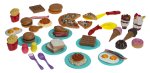
Turquoise plates and purple utensils sit among a spread of little food shapes in the original photograph. There are rounded burger-like pieces, slender fries, drink containers and desserts, each offering a different color or outline to choose for a pretend meal.
Toysit’s earlier description calls this selection Little Chefs Kitchen Meals and presents it as plastic food for an imaginary restaurant or play kitchen. Its simplest invitation is to choose a few pieces, arrange them on a plate and announce what the make-believe customer has ordered.
Choose by color and shape
Spread out the pieces you have and look for a few contrasting outlines. A long shape, a flat round one and something with an uneven edge can make an interesting plate to describe. A player might group pieces by color for an imaginary café display, then rearrange the same pieces into separate orders.
The scene can happen wherever there is a clear play surface. Draw a counter on a large sheet of paper, put a menu beside it and invite a partner to be the first customer. Foods absent from the collection can appear as drawings on the menu or as part of the spoken story.
Try a mystery lunch tray
This original Toysit activity gives the host and guest different jobs: one describes an arrangement, and the other makes a picture of it.
- Have the host choose three play-food pieces and arrange them on a plate or a paper tray out of the partner’s view.
- Describe each piece using its visible color and shape. Add where it sits: near the edge, in the middle or beside another piece.
- Let the partner draw a menu picture from those clues. They can ask the host for another detail.
- Reveal the tray and compare it with the drawing. Point out a detail that matched and one that made the result surprising.
- Swap one item to invent a new meal, then exchange the host and artist roles.
A paper-only version works with three food drawings. Someone who prefers to speak can describe the menu while a partner draws, or both players can arrange their pictures together.
Give the menu a setting
Invent a place where the meal will be served: a picnic beside a pretend pond, a café at a toy railway station or a lunch stop for plush travelers. Add a name to the menu and choose a greeting for the arriving customer.
The original coverage warns that this set has small parts and is unsuitable for children under three. Follow the guidance on the actual set, keep the plastic pieces for play, and use large drawings when a larger-scale activity suits the players better.
The historical record
Original Toysit coverage
The original product account and commentary are preserved below as historical coverage.
Plastic play foods.
Whether your play kitchen is wooden, plastic, or purely imaginary, be sure to supply it with lots of calories. This selection of plastic play foods contains enough items to open a restaurant. There are three complete meals, and also place mats, plates, silverware, and menus. Food items range from pizza slices and fried eggs to ice cream cones, waffles, and glazed donuts. Pieces are typically about half life-size. Safety Information: small parts, not for children under 3 years old.
Play food playsets offer a delightful and imaginative play experience for children, allowing them to engage in role-playing scenarios that mirror real-life activities like cooking, serving meals, and grocery shopping. These sets typically include a variety of realistic-looking food items, ranging from fruits and vegetables to meats, desserts, and even packaged goods. Children can use their creativity to create imaginary meals, organize picnics, or run their own make-believe restaurant. Through these interactive play sessions, kids develop essential skills such as fine motor control, hand-eye coordination, and cognitive abilities as they sort, stack, and assemble the play food. Additionally, play food playsets encourage social interaction and communication as children collaborate with friends or family members in shared culinary adventures. As they explore different textures, colors, and shapes, youngsters also gain a basic understanding of nutrition and food groups, fostering both entertainment and education in one captivating package.
Sources and editorial notes
The original account and small photograph are the evidence for this profile. A maker, exact edition and matching package were not established; the original identifier is a placeholder. Three complete meals, menus, placemats and approximate half-life-size pieces are claims of the preserved earlier account. Its small-parts warning is retained, while nutrition and developmental assertions remain historical commentary. The mystery-tray activity is original editorial work, not a tested learning exercise.
- Original Toysit image — Existing same-site photograph reviewed and retained unchanged.
- Original Toysit coverage — Complete original product account and historical commentary preserved.

Images and descriptions are retained as historical material. How Toysit covers toys.
Created for Toysit by Tabbloza — the artwork in our header.