
From the Toysit archive
Ello Fairytopia: build a meeting place for fairies
Turn flower shapes, panels and fairy figures into a little gathering place, then invent three visitors and the stories they bring.
The play at a glance
A fairy world made from shapes
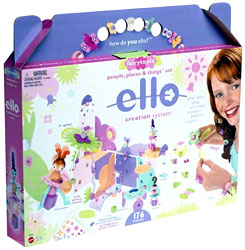
Ello Fairytopia brings flowerlike shapes, small faces and colorful panels into the same building system. A piece can help make a character, decorate a small place or become part of a fanciful object. The pictured box suggests a whole little world of fairies and bright constructions.
The pleasure is in deciding what the shapes mean. Imagine a flower becoming a meeting-place sign, or a newly built fairy arriving with news from a faraway garden.
Look for the job each piece can do
The manufacturer’s diagrams show panels meeting through small connectors, a face and body combining with arms and decorative shapes, and thin rods supporting assemblies. Some constructions are characters; others are places or useful objects. The same visual vocabulary runs through them: rounded faces, petal outlines and flat colored surfaces.
Mattel’s 2003 product record describes more than 170 pieces, reusable glitter stickers and twirling elements. Its sheet offers a fairy cart and a “fairycopter” among the model ideas. Follow the illustrated connections when building; the story can begin with one small creation.
Try a fairy meeting-place map
For this original activity, choose a fairy and a small gathering place to build with the set’s instructions. Draw the place on paper and give it a name: Petal Post Office, Moonflower Corner or the Garden News Desk. Add a path leading to it.
- Invent three visitors. Draw one carrying a message, one searching for a friend and one bringing an invitation. Give each a name or a recognizable symbol.
- Choose an arrival order. Place the visitor drawings beside the path. Decide who reaches the meeting place first and what they say.
- Give the place a purpose. A post office delivers the message; a news desk asks a question; a garden corner becomes the spot where friends meet.
- Leave something for the next visit. Draw a reply or an invitation that another visitor can collect.
One player can voice everyone, or each person can speak for a visitor. The fairy’s personality comes from those choices: perhaps a careful messenger repeats every address, while an excited guest keeps announcing tomorrow’s celebration.
Let one detail change the scene
Try giving the meeting place a new sign while keeping its visitors. A garden post office becomes a lost-and-found desk, and the same message may become a clue. This small change gives the characters a new reason to speak to one another.
The complete activity also works as a drawing. Sketch a fairy, a flower-shaped sign and a path, then move the visitor cards between them. With the physical set, follow its age and small-parts guidance and use the pictured connections for each build. Mattel lists this edition for ages five and up.
The historical record
Original Toysit coverage
The original product account and commentary are preserved below as historical coverage.
Ello Fairytopia People, Places, and Things Playset
Create a whimsical Ello Fairytopia with the Ello Fairytopia People, Places and Things set. Fairytopia is the only Ello Creation System with twirling pieces to add movement to your creations. Create a fairy world with fun fairy friends and fantastical jewelry, too. Comes with over 170 pieces and reusable glitter stickers to add fun fairy detail. Closed box.
Why Young People Love Fairies
Fairies hold a magical allure that captivates the hearts and imaginations of young people. From whimsical tales to enchanting illustrations, here are some reasons why fairies are so beloved by the younger generation:
Magic and Fantasy: Fairies are symbols of magic and fantasy, transporting young minds to enchanting worlds beyond the ordinary. The idea of magical powers, secret realms, and mystical creatures sparks the imagination and allows children to explore limitless possibilities.
Imaginative Play: Fairies inspire imaginative play, where young people can create their own stories, adventures, and scenarios involving these magical beings. Imaginative play is essential for cognitive development and creativity, and fairies provide a wonderful canvas for this creativity to flourish.
Tales and Stories: Fairy tales and stories featuring fairies have been passed down for generations. These tales often convey important lessons, values, and morals while also introducing children to themes of bravery, kindness, and the triumph of good over evil.
Symbolism of Nature: Fairies are often associated with nature and its beauty. Their connection to flowers, forests, and wildlife resonates with young people's innate curiosity and appreciation for the natural world. This connection can foster a sense of wonder and environmental consciousness.
Friendship and Companionship: Fairies are often depicted as friendly and helpful beings, emphasizing qualities of kindness, compassion, and friendship. Young people are drawn to characters who embody these virtues and who can serve as role models for their own interactions and relationships.
Representation of Freedom: Fairies are often portrayed as free-spirited beings who roam the land and sky. This portrayal aligns with children's desire for independence and freedom, resonating with their yearning for exploration and adventure.
Personal Expression: Fairies' colorful and diverse appearances encourage young people to explore their own sense of style and self-expression. Whether through costumes, drawings, or creative projects, fairies provide a platform for young individuals to showcase their unique personality.
Sparkle and Glitter: The shimmering and glittering nature of fairies adds an element of visual delight that appeals to young eyes. The aesthetic beauty of fairies enhances their enchantment, making them visually captivating and delightful to engage with.
Magical Friendships: The concept of having a magical friend or guardian fairy is a cherished idea for many young people. Imagining a fairy companion who offers guidance, protection, and encouragement can provide comfort and a sense of connection in a child's world.
Wonder and Curiosity: Fairies evoke a sense of wonder that aligns with children's natural curiosity about the unknown. The mysteries and magical qualities of fairies spark questions and exploration, nurturing a lifelong love for learning and discovery.
The timeless fascination with fairies among young people is a testament to the enduring appeal of magic, imagination, and the beauty of the unknown. These magical beings continue to inspire creativity, empathy, and a sense of awe in the hearts of the youngest dreamers.
Sources and editorial notes
Reviewed October 18, 2026 against the original account and photograph, Mattel’s B0358 record and both pages of its linked instruction sheet. The sheet is marked B0358-0521-G1 and illustrates connections and model ideas; it says the illustrated models cannot all be made at once. The historical fairy essay remains intact; its broad developmental statements are not findings from testing this set. Activities and dialogue here are original suggestions. No physical set was tested.
- Original Toysit image — Existing same-site photograph reviewed and retained unchanged.
- Mattel B0358 product record — Manufacturer identification, 2003 release, age guidance and description of Fairytopia pieces.
- Ello Fairytopia instruction sheet — Both pages visually reviewed, including connectors, character construction and example models.
- Original Toysit coverage — Complete original product account and historical commentary preserved.

Images and descriptions are retained as historical material. How Toysit covers toys.
Created for Toysit by Tabbloza — the artwork in our header.