
From the Toysit archive
Alphabet Art Puzzle
Explore Alphabet Art Puzzle as a letter-shape matching board, distinguish names from sounds, and try a familiar-letter picture hunt.
The play at a glance
Start with a letter that means something
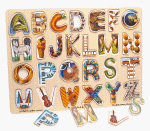
Alphabet Art Puzzle turns letter forms into pieces that can be lifted, turned and matched. The retained image shows an illustrated uppercase alphabet board. A familiar letter—the first in a child’s name, for example—can provide a manageable starting point without making completion of the whole alphabet the goal.
Matching a shape is one task
Offer one familiar letter and look for its opening. Notice long lines, curves and enclosed spaces. Turning a piece can help its outline line up with the board even before the child knows what the letter is called.
Leave most pieces in place if a full board feels busy. Finding one personally meaningful letter is a useful play session in its own right. Ask whether the child wants to find another rather than treating every empty space as unfinished work.
A letter’s name and a word’s sound are different clues
You can name M and then say “moon,” drawing attention to the sound at the beginning of the word. Those are related conversations, but recognizing the shape, naming the letter and hearing a sound are separate tasks. A child may enjoy one before wanting the others.
Use a clear, familiar word rather than guessing what a tiny illustration represents. The historical image is too small to confirm every picture association, and an alphabet puzzle should not be assumed to provide a complete phonics sequence.
Look for letters beyond the board
Find a chosen letter in a name written on paper or in a familiar book title. Compare the letter’s features when its size or lettering style changes. Keep this an invitation to notice, rather than a timed search.
The archived board shows uppercase forms. Do not assume it includes lowercase partners or electronic sound because another alphabet toy does. The old claims about learning and construction do not establish those features.
Make a personal letter-picture page
Choose two or three familiar letters and write each large on a sheet. Beside each one, draw something whose name begins with it: M and a moon, for example. Say the word together and let the child choose the picture’s details.
Later, point to a letter and ask which picture you made beside it. Add another word only if that sounds enjoyable. This independent Toysit activity needs paper and a drawing tool; its pictures are your own, not a reconstruction of the archived artwork.
The historical record
Original Toysit coverage
The original description and alphabet-learning essay are retained in full below. Claims about lifelong durability, memory, writing readiness and learning styles remain historical commentary, not measured outcomes for this board.
Learn the alphabet and art with this puzzle.
Beautifully illustrated letters make learning the alphabet easy and fun. Matching full color illustrations are underneath each piece. Helps children develop their dexterity and matching skills. Quality wood construction will last a lifetime.
Puzzles designed around the alphabet offer a hands-on and interactive approach to letter recognition and phonetic understanding for children. As children piece together alphabet puzzles, they are prompted to match each letter with its corresponding shape, reinforcing visual recognition of each character. Additionally, many of these puzzles come with images representing words that start with the corresponding letter, linking the visual symbol of the letter with its sound. This association aids in phonetic understanding and vocabulary expansion. Handling the puzzle pieces also enhances fine motor skills, which can be beneficial when children begin to write. Moreover, the repetitive nature of assembling and disassembling puzzles reinforces memory retention. In essence, alphabet puzzles combine tactile, visual, and auditory learning styles, making the process of learning the alphabet engaging, memorable, and enjoyable for young learners.
Sources and editorial notes
The original GIF and product copy establish the illustrated letter-board concept. No exact primary product record or instruction guide was matched to this historical edition. The small image does not verify every illustration-to-letter association, lowercase partners, sound features or current age guidance. No physical board or learning outcome was tested.
Images and descriptions are retained as historical material. How Toysit covers toys.
Created for Toysit by Tabbloza — the artwork in our header.