
Play ideas to start with
Follow the clue that interests you: an outline, a letter, a route or a detail in a picture. Explore toy profiles and a maze-making guide, then choose a format and pace that invite another try.
Explore historical toys and newer Toysit profiles through their play ideas. Each article explains its sources, edition details and practical guidance.
Arrange a space or choose a route
Researched profile and original play idea
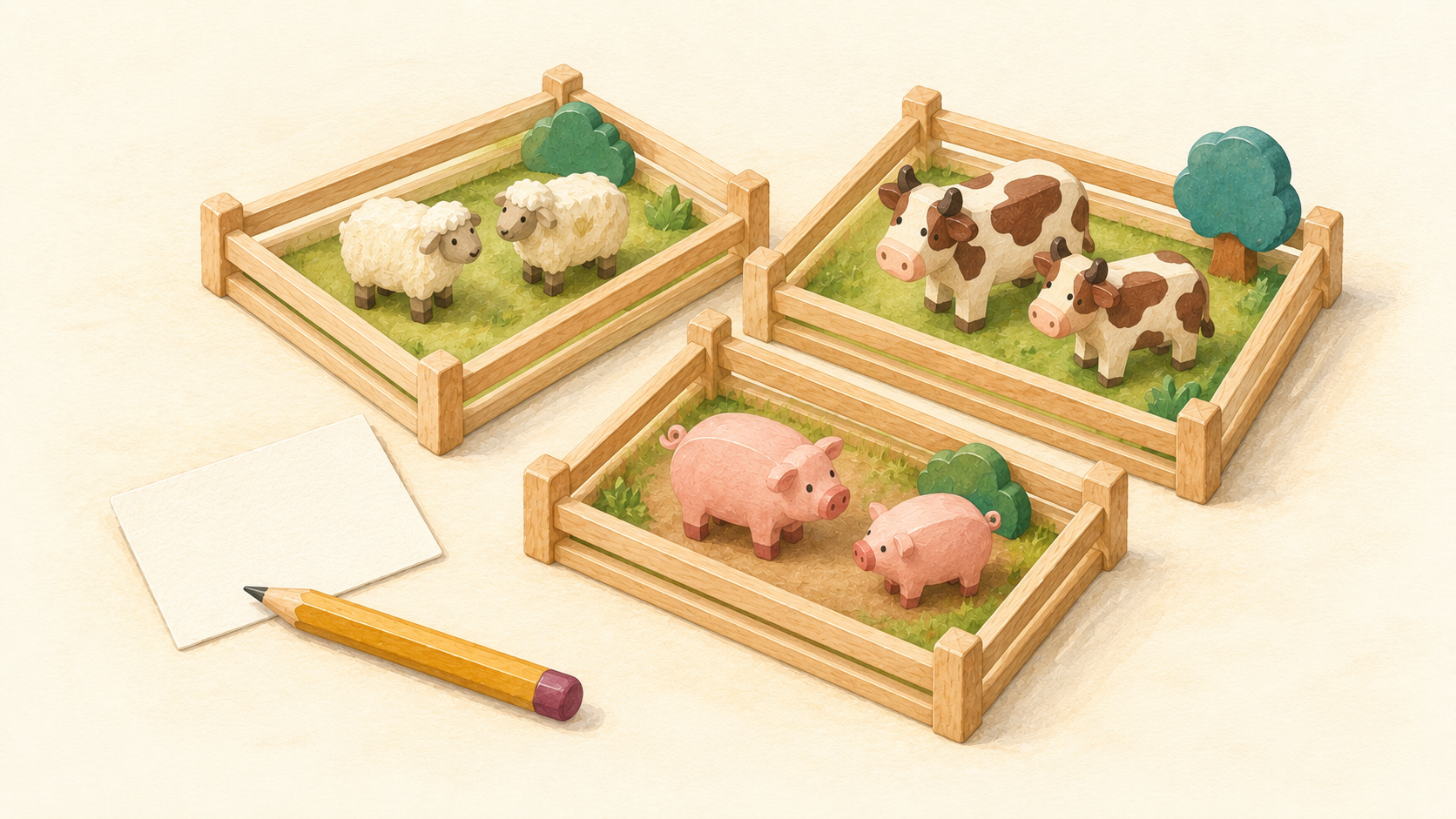
Become the meadow inspector
Place a fence under the challenge’s rules, explain which animals share a meadow and draw a tiny farm report.
Smart Farmer: Become the Meadow Inspector
Historical profile and play idea

Explain one useful slide
Notice what space a vehicle creates and what it blocks, then discuss a possible next move.
Rush Hour
Topic guide and paper activity

Become a route designer
Draw a working path and two tempting branches, invite a tester, then revise one junction.
Mazes: Make a Route, Then Make a Choice
Notice a shape or a letter
Historical profile and play idea
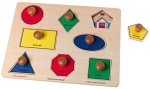
Change the sorting clue
Draw circles, squares and triangles in two colors, then compare grouping by outline with grouping by color.
Geometric Shapes Puzzle
Historical profile and play idea
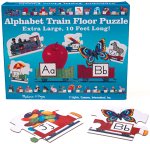
Take a passenger along the picture
Use a recognizable letter or image as a landmark and tell what a traveler sees along the finished train.
Alphabet Train Floor Puzzle
Build a scene, then tell its story
Historical profile and play idea

Sort a fleet and plan a journey
Group drawn vehicles by one visible clue, change the rule, and choose a traveler for a three-stop story.
Vehicles in a Box Puzzle
Historical profile and play idea
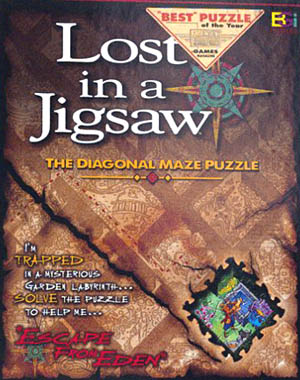
Keep a garden-route notebook
Separate picture clues from route guesses, or draw an independent garden maze with one useful dead end.
Escape from Eden: Puzzle Maze Game
Explore the collection
Find a closer look at each toy, activity or historical report, grouped by what you would like to explore. The original index remains below with its earlier titles and wording.
Routes and changing arrangements
- Cube It Up
- Escape from Eden: Puzzle Maze Game
- Lights Out 2000
- Mazes: Make a Route, Then Make a Choice Play guide and historical archive
- Rubik’s Magic
- Rubik’s Slide: The Electronic Light Puzzle Historical puzzle profile
- Rubik’s Snake and Cube: Two Different Puzzles Historical puzzle profile
- Rush Hour Historical puzzle profile
- Smart Farmer: Become the Meadow Inspector Researched toy profile
- Spider-Man Puzzle Maze
Shapes, pegs and picture matching
- Boat Puzzle
- Dinosaurs Puzzle
- Dress Up Puzzle
- Farm Animals Puzzle
- Farm Puzzle
- Fuzzy Farm Puzzle
- Geometric Shapes Puzzle
- Girl Dress Up Puzzle
- Magnetic Fishing Game
- Noah's Ark Puzzle
- Pets Peg Puzzle
- Transportation Puzzle
- Wooden Knob Puzzles
Letters, words and picture journeys
- ABC Learning Puzzle
- Alphabet Art Puzzle
- Alphabet Train Floor Puzzle
- Glow in the Dark Puzzles
- Pokémon 60-Piece Puzzle
- Scrabble Flash Historical puzzle profile
- Spelling Puzzle
- Spherical 3D Jigsaw Puzzle Globe
- United States Map Puzzle
- Veggie Tales Floor Puzzle
- Vehicles in a Box Puzzle
Keeping puzzles together
Choose a satisfying challenge
Piece count is only one clue. Compare the image, piece size, shape, handling and available space with the solver's experience. The useful question is whether this puzzle offers an inviting next step.
Pick the kind of puzzle first
A puzzle can be a picture to assemble, a shape to fit, a route to discover or a set of rules to work through. Decide which activity interests the player. A familiar subject may attract attention, but the way the puzzle works determines what the player will actually do.
| Format | What the player does | What to check |
|---|---|---|
| Inset or peg puzzle | Match pieces to spaces in a board | Grip, distinct shapes and whether pictures appear underneath |
| Jigsaw or floor puzzle | Use image and shape clues to build a picture | Piece size, image detail and finished dimensions |
| 3D construction puzzle | Assemble a standing object | Instructions, orientation clues and how pieces hold together |
| Logic or sliding puzzle | Change a position within a set of rules | Clear setup, graded challenges and a way to reset |
| Twist or mechanical puzzle | Manipulate parts to reach a target arrangement | Comfortable movement, understandable goal and useful guidance |
On a narrow screen, scroll the table sideways.
Look at the picture as closely as the number
For a jigsaw, compare how many clues each area offers. Distinct objects and changes in color can provide starting points. A broad area of similar sky, water or repeating texture asks the solver to rely more on subtle differences and piece shapes. Two puzzles with the same piece count can therefore offer very different experiences.
Measure the finished puzzle and leave room for loose pieces. Larger pieces are not the same thing as a smaller finished puzzle. Look at the printed image, surface reflections and how easy the pieces are to grip. A high-contrast picture or a comfortable work surface may matter more to a particular player than a higher challenge rating.
Use the manufacturer's age guidance and warnings, then consider the person's actual experience within those limits. There is no need to turn each birthday into a compulsory increase in piece count. Repeating a familiar puzzle or choosing an easier image can be an enjoyable choice.
Offer a starting point without taking over
Build one recognizable part together
With an age-appropriate jigsaw, let the solver choose an object in the picture. Find a few pieces that might belong to it and compare their colors and edges. Offer a small group of possibilities if the full pile is overwhelming. Ask before placing a piece for someone else. The aim is a useful clue, not a race to finish.
Edges are one possible route, not a rule every solver must follow. Some people prefer a recognizable character, lettering or a patch of color. Let different approaches coexist when working together, and leave room for someone to build a small section away from the main board.
If the puzzle becomes frustrating, pause or reduce the task: put aside unrelated pieces, return to an easier challenge or continue another day. Do not force a piece that seems almost right. Check the picture and neighboring shapes instead.
Plan for pauses, storage and missing pieces
Before opening the bag, choose where the work can stay. A rigid board can help move an unfinished jigsaw if it fits the completed size and has a safe resting place. A roll-up mat and a rigid case are different arrangements; check the product instructions and whether the puzzle's pieces will remain secure.
Keep different puzzles' pieces separate and retain the box or a clear reference image. For a secondhand set, ask about completeness and the condition of pegs, connectors or moving parts. For a missing piece, contact the maker with the exact product details rather than assuming another copy will have an identical cut.
Ravensburger's puzzle FAQ discusses piece counts and other product questions. Support arrangements vary by maker and edition, so check the actual policy before relying on replacement parts.
Keep the invitation comfortable
Follow age labels and small-part warnings, and keep loose pieces away from younger children who share the space. Check for damaged wooden edges, loose pegs or broken components. The CPSC's toy guidance explains age suitability and toy hazards.
This guide recommends ways to compare and enjoy puzzles; it does not promise changes in intelligence, mood, memory or health. Choose the image, format and pace the player wants. If turns and a shared set of rules sound more appealing, try Board Games. If the pleasure is making a new structure, compare Building Toys.
For a puzzle woven into a shared story, Spy Toys includes a paper clue trail with an agreed mystery and roles for the players.
Reading references from the earlier page
The original collection also mentioned World of Puzzles magazine for pencil puzzles and 1000 Playthinks, a collection of puzzles, paradoxes, illusions and games. These references remain part of the page's history. Editions, subscriptions and current availability have not been checked for this renovation.
From the Toysit archive
Earlier coverage, with the original article titles. These pages document toys described in past seasons; availability, pricing, safety status and app support have not been reverified. Use exact model information when researching an older toy.
- Electronic Scrabble Flash
- Rubik's Slide
- Rubik's Magic
- 3D Farm Puzzle
- ABC Learning Puzzle
- Alphabet Art Puzzle
- Alphabet Train Floor Puzzle
- Bibleman Puzzle Game Toy
- Blues Clues Puzzle
- Boat Puzzle
- Connect Four Game by Milton Bradley - Regular and Electronic
- Counting Hands Puzzle
- Counting Puzzles
- Cube It Up Game
- Dinosaurs Puzzle
- Dolphins Puzzle
- Dress Up Puzzle
- Farm Animals Puzzle
- Farm Puzzle
- Geometric Shapes Puzzle
- Girl Dress Up Puzzle
- Glow in the Dark Puzzles
- Hebrew Alphabet Puzzle
- Lights Out 2000 Game
- Magnetic Fishing Game
- Nature Puzzle
- Noah's Ark Puzzle
- Pets Peg Puzzle
- Puzzle Maze Game
- Puzzle Storage Case
- Rubiks Cube - Rubix, Rubik Puzzle
- Rush Hour Puzzle Game
- Spelling Puzzle
- Spherical 3D Jigsaw Puzzle Globe
- Spiderman Puzzle
- Toddler Tote Puzzle
- Transportation Puzzle
- United States Map Puzzle
- USA Map Puzzle
- Veggie Tales Floor Puzzle
- Vehicles in a Box Puzzle
- Wooden Knob Puzzles
A guide to evaluating toys, not a hands-on product test. Read our editorial approach.
Created for Toysit by Tabbloza — the artwork in our header.