
Play ideas to start with
Choose something to sort, describe, count or tell. These historical profiles begin with a concrete action and give players room to change a rule, explain a choice or carry a character into another story.
Explore earlier toys through their play ideas and historical context. Each article explains its evidence and edition limits; these selections are reading routes, not a current buying list.
Sort a group and change the rule
Historical profile and play idea
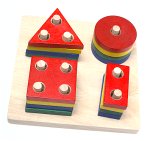
Let the holes explain the fit
Compare a piece with its pegs, turn it gently into place, then sort the loose shapes by a different shared feature.
Geometric Sorting Board
Historical profile and play idea
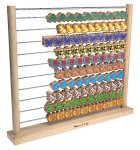
Tell two stories about five beads
Choose a group of five, separate it into two parts, then change the split and describe what stayed the same.
Abacus Counting Toy
Turn a visible detail into a message
Historical profile and play idea
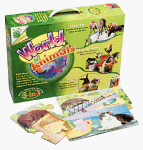
Send a picture clue on a postcard
Draw a detail from one animal picture, add an imagined greeting, and invite a partner to find the matching image.
Animals Matching Game
Historical profile and play idea

Change a scene with one word ticket
Choose three words for an invented sentence, draw the scene, then swap one word and tell what changed.
Magnetic Word Wall
Give a character a turn
Historical profile and play idea

Let a soft toy predict the next page
Read a picture book with a favorite soft toy, take turns guessing the next event, and invent another ending together.
Read with Pooh Interactive Storybook
Historical profile and play idea

Plan a three-stop puppet day
Draw three pretend invitations with whole-hour times, act out the visits, then move one event and retell the day.
Magnet Learning Clock
Explore the collection
Find a closer look at each toy, activity or historical report, grouped by what you would like to explore. The original index remains below with its earlier titles and wording.
Shapes, fitting and sorting
- Clipo Creativity Table
- Crazy Legs Learning Bug: a rolling character with shapes to match
- Fit the Shapes Toy — Whose House Shape Sorter
- Geometric Sorting Board
- Shape and Color Sorter
- Sorting Pull Toy Truck
- UNO Moo!
Counting, clocks and pretend quantities
- Abacus Counting Toy
- Bilibo Dots: Sort, Count and Deliver Color Mail Researched toy profile
- Cookie Monster Count and Crunch
- Learning Resources Calculator Cash Register Historical pretend-play toy
- Magnet Learning Clock
- My Cheerios Learning Mats: letters and numbers across the table
- Talking Clever Clock
Letters, sounds and word play
- Alphabet Apple
- Alphabet Magnets Board
- Alphabet Pal
- LeapFrog Phonics Pond
- Magnetic Word Wall
- Phonics Flash Cards
- Phonics Writing Desk: letters, a small screen and a tethered pen
- Play with Letters Desk: roll a tile and give a letter its turn
- Turbo Phonics
Pictures, prompts and questions
- Alphie Learning Robot
- Animals Matching Game
- Discovery Fact Attack
- iQuest by LeapFrog
- Kasey the Kinderbot
- Name That State Game
- School Zone Preschool Learning Set
- Turbo Twist Fact Blaster
Books and narrated stories
- LeapFrog Spanish LeapPad
- LeapPad Plus Writing
- My Little Firehouse
- Quantum Pad Learning System
- Read With Me DVD
- Read with Pooh Interactive Storybook
Handheld and TV activity systems
- Fisher-Price iXL
- InteracTV
- LeapFrog Leapster Historical launch report
- Leapster 2
- MobiGo Touch
- V.Smile TV Learning System
Keyboards and historical computer connections
- Barbie Laptop Computer
- Children’s Beginner Laptop Computer
- Computer Pal Electronic Learning Aid
- Hot Wheels Laptop Computer
- LeapFrog Mind Station
- V-Tech Skill Builder Handheld Computer
- V-Tech Starter Notebook Computer for Kids
Sound, rhythm and response
- LeapFrog Learning Table: a little band around a turning page
- Learn Through Music Plus
- Pounding Bench Toy
- Simon 2 (Simon Square)
Fastenings and performance stories
Start with what the player does
“Educational” is a description to investigate. Look for a clear activity, a manageable challenge and a reason to return. A toy that invites sorting, building, explaining or experimenting gives you more to evaluate than a long list of promised benefits.
Match the activity to an interest
Begin with something the child already enjoys: making a pretend shop, arranging objects, telling stories or finding out how a mechanism works. Then ask what the toy adds. Does it offer useful pieces, a new question, feedback that makes sense, or simply more lights and sounds?
The National Association for the Education of Young Children's toy-selection discussion emphasizes children's interests, variety and opportunities for open-ended play. Those ideas are useful starting points; they do not establish that a particular product will produce a particular learning result.
| Activity | What to look for | A question before buying |
|---|---|---|
| Sort, count or match | Clear differences between pieces; rules that can change | Can we sort in more than one way? |
| Build or investigate | Parts that invite changes and repeat attempts | What can the player alter and compare? |
| Read, listen or tell stories | Understandable language and room for conversation | Does the player make choices or mostly listen? |
| Practise a specific skill | A clear task, useful feedback and suitable difficulty | Does the activity match the skill we want to practise? |
| Pretend and explain | Props that support a child's own ideas | Can the story change after the first play? |
On a narrow screen, scroll the table sideways.
Choose a challenge the child can enter
Separate the manufacturer's age and safety guidance from the difficulty of the activity. A child may understand a task but struggle to grip its pieces, distinguish its pictures or hear its instructions. Another may operate the toy easily but find the task repetitive. Check both the physical controls and the thinking the game asks for.
- A starting point: can the child begin with a short explanation or demonstration?
- Useful feedback: does a response help explain what happened, or only announce right and wrong?
- Room to adjust: can you reduce the number of pieces, slow the pace or choose a simpler challenge within the instructions?
- Control: can the player pause, repeat or try a different approach without a timer taking over?
Look at the materials together when possible. A readable display, comfortable grip and tolerable sound level matter more than a generic claim that a toy suits everyone.
Make room for a second idea
A pretend shop with changing rules
For a child old enough to handle the chosen materials, set out a few suitable toy foods or large picture cards. First arrange them into a shop. On another turn, sort them by color or choose what belongs in a pretend picnic. Let the child explain the grouping and invent a new one. Use pieces appropriate to everyone who can reach the play area; small counters are not necessary.
This is an activity idea, not a test of development. Notice whether the child wants to continue, change the rules or do something else. You can describe what you see and ask about a choice without turning every play session into a quiz.
Read learning claims carefully
Separate a feature from an outcome. “Includes letter-matching cards” describes contents. “Improves reading” requires evidence about what was measured, with whom and under what conditions. A testimonial, award or attractive demonstration does not answer those questions by itself.
If a maker cites research, check whether it concerns this exact product, a similar activity or a broad topic such as play. Look for the ages studied, the adult involvement and the actual result. Treat an unexplained claim as unverified; you can still choose the toy for an appealing activity without accepting the larger promise.
Connected products also need a service check: required devices, accounts, subscriptions, data controls and what works offline. See Kids Electronics and the AI Toy Guide before treating an electronic response as evidence of understanding or learning.
Before bringing it home
Check instructions, age labels, small parts, storage and replacement materials. The CPSC's toy guidance explains the importance of age suitability and toy hazards. For older or secondhand products, identify the exact model and check recall information; an intact box does not establish current safety or software support.
A useful final question is: “What will we actually do with this next week?” Compare that answer with a simpler option you already own. Building toys, science activities, puzzles and art materials offer different starting points without needing the same educational label.
From the Toysit archive
Earlier coverage, with the original article titles. These pages document toys described in past seasons; availability, pricing, safety status and app support have not been reverified. Use exact model information when researching an older toy.
- ABC Flash Cards
- Alphabet Apple
- Alphabet Magnets Board
- Alphie Learning Robot
- Animals Matching Game
- Barbie Laptop Computer
- Barbie Math Bracelet
- Bella Dancerella Home Ballet Studio
- Bella Dancerella Popstar Studio
- Children's Beginner Laptop Computer
- Clipo Creativity Table
- Computer Pal Electronic Learning Aid
- Crazy Legs Learning Bug
- Discovery Fact Attack
- Early Learning Toys
- Educational Placemats
- VSmile
- Fit the Shapes Toy
- Geometry Sorting Toy
- Hooked on Phonics Toys
- Hot Wheels Laptop Computer
- Interact TV
- iQuest by LeapFrog
- iXL learning tool
- Kasey the Kinderbot
- Kindergarten Learning Software, Workbooks, Flashcards Set
- Leapfrog Mind Station
- Alphabet Pal
- LeapFrog Leapster Multimedia Learning System
- Leapfrog Learning Table
- LeapFrog Phonics Pond
- LeapFrog Spanish LeapPad
- Leapfrog Books and Toys
- LeapPad Plus
- Leapster 2
- Learn to Dress Cube Toy
- Learn to Tell Time Talking Clock
- Learning Cash Register Toy
- Magnet Learning Clock
- MobiGo
- Abacus Counting Toy
- Learn through Music Plus
- My Little Firehouse
- Name That State Game
- Numbers Learning Book
- Phonics Flash Cards
- Phonics Writing Desk
- Play with Letters Desk
- Pounding Bench Toy
- Preschool Learning CD, Flashcards, Books
- Quantum Pad Learning System
- Read With Me DVD
- Read with Pooh Interactive Storybook
- Cookie Monster Count and Crunch
- Shape Sorting Toy
- Simon Square Game
- Sorting Pull Toy Truck
- Turbo Phonics
- Turbo Twist Fact Blaster
- Uno Moo
- V-Tech Skill Builder Handheld Computer
- V-Tech Starter Notebook Computer for Kids
- Word Learning Toy Vocabulary Building Game
A guide to evaluating toys, not a hands-on product test. Read our editorial approach.
Created for Toysit by Tabbloza — the artwork in our header.