
From the Toysit archive
Are You for Real?
Discover Are You for Real?’s story cards, private answer controls and shared reveal, then invent two journeys for an everyday object.
The play at a glance
Tell a story, make a choice, share the reveal
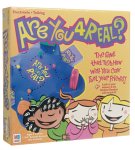
Are You for Real? places a blue central unit among cartoon storytellers on its yellow box. The unit, called the Reality Checker, helps organize the turns: one player tells a story, the others make private guesses, and colored lights accompany the reveal. Small scoring pegs mark progress around the unit.The reveal comes from the players’ inputs
A card offers three story starters, and the storyteller chooses one. The electronic host allows about a minute and a half for a real or invented story, with prompts to bring it to a close. After telling it, the storyteller privately opens a Secret Beeper, sets its knob to real or unreal and returns it to the unit.
The other players use their own beepers to record their guesses. The host reveals those votes, then the storyteller’s recorded answer. Correct guesses move scoring pegs ahead, and the storyteller advances for each listener fooled. The first player to reach the final hole in their path wins, with a shared finish possible.
Choosing a comfortable story starter gives the teller room to enjoy the telling. A simple beginning can become vivid through one small detail: the weather, an unexpected sound or what someone was carrying.
Try object travel stories
In this original Toysit activity, both stories are openly fictional. Choose an ordinary object—a spoon, a mitten or a small box—and imagine two journeys it might have taken.
- Write two brief stories. A spoon might have served soup in a cloud café or rowed a walnut-shell boat across a puddle.
- The storyteller privately marks one journey as the chosen story before reading both aloud.
- Listeners guess which journey was selected, then the storyteller shows the mark.
- Draw a postcard from each place and add the object’s imagined travel stamp.
Take turns as writer, reader and illustrator. The question is which fictional tale was chosen, so the activity can stay entirely within the group’s invented world.
The historical record
Original Toysit coverage
The original product account and commentary are preserved below as historical coverage.
The fool your friends game from Milton Bradley.
The game that tests how well you can fool your friends. Every question a chance to know each other. Lock in your answer and the reality checker will reveal it.
Party games that incorporate elements of bluffing and guessing offer a unique and exhilarating experience for players. These games thrive on social interaction, strategy, and the thrill of uncertainty, making them a fantastic addition to any gathering. The combination of bluffing and guessing creates an engaging dynamic that keeps players on their toes and encourages lively participation.
Bluffing: One of the most entertaining aspects of these games is the art of bluffing. Players have the opportunity to deceive their opponents by presenting false information or pretending to have a different intention than they actually do. This skill adds an element of unpredictability, as everyone tries to read each other's intentions while carefully guarding their own. The tension created by the possibility of someone successfully bluffing their way to victory brings a level of excitement that's hard to replicate in other types of games.
Guessing: The guessing component of these games challenges players to read between the lines and make educated predictions based on the limited information available. Whether it's deducing who's telling the truth, deciphering a hidden message, or figuring out a concealed identity, the guessing element requires analytical thinking and observation. Players must pay attention to verbal and nonverbal cues, adding an extra layer of depth to the gameplay.
Social Interaction: Bluffing and guessing games thrive on the interactions between players. Engaging in conversations, trying to detect lies, and forming alliances or rivalries all contribute to the social excitement of the game. Players often find themselves in hilarious or tense situations as they negotiate, persuade, and second-guess each other. This not only creates a sense of camaraderie among participants but also fosters laughter and memorable moments that make the game truly enjoyable.
Strategic Thinking: Successful players must employ strategic thinking to outwit their opponents. Balancing the risk of bluffing with the need to make accurate guesses requires careful planning and adaptation. This strategic layer deepens the gameplay experience, allowing players to refine their tactics with each round and adapt to changing dynamics within the group.
Thrilling Uncertainty: The uncertainty surrounding the true intentions of players and the outcomes of their bluffs generates a thrilling atmosphere. The thrill of not knowing who to trust or which move to make next keeps everyone engaged and invested in the game. This suspenseful feeling is what makes these games stand out and ensures that every round remains exciting and unpredictable.
In conclusion, party games that incorporate elements of bluffing and guessing offer an immersive, interactive, and memorable experience. The combination of social interaction, strategic thinking, and the element of surprise makes these games a surefire way to bring laughter, excitement, and a sense of camaraderie to any gathering.
Sources and editorial notes
Hasbro’s 2002 Milton Bradley guide 40736 matches the yellow packaging artwork and Reality Checker shown in the original image. All three PDF pages were reviewed; the middle PDF page contains two printed pages. The unit reports the real/unreal choices entered with the Secret Beepers—it does not detect lies or read minds. Historical social and strategic claims remain commentary. The object-story activity is original fiction, and no physical testing was performed.
- Original Toysit image — Existing same-site photograph reviewed and retained unchanged.
- Milton Bradley Are You for Real? instructions, 40736 — Complete three-page PDF reviewed, covering four printed pages: controls, story turns, voting, scoring and device care.
- Original Toysit coverage — Complete original product account and historical commentary preserved.

Images and descriptions are retained as historical material. How Toysit covers toys.
Created for Toysit by Tabbloza — the artwork in our header.