
From the Toysit archive
Barbie Light-Up Kitchen
Explore Barbie’s miniature kitchen furniture, the original light-up rotisserie description and a paper dinner-service activity for dolls.
The play at a glance
A whole dinner scene at doll scale
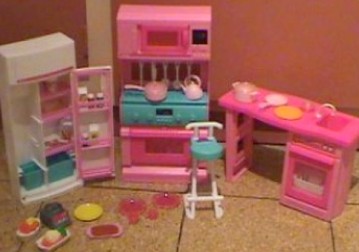
An open refrigerator stands beside a pink cooking tower, with a microwave above the hob and an oven below. Across the little room is a sink counter with dishes ready to use. Toysit’s Barbie Kitchen photograph invites a doll-sized dinner story: choosing ingredients, arranging plates and carrying a meal from the kitchen to the table.
Small places for each part of the meal
The refrigerator shelves, cooking area and sink counter create three clear destinations. Loose plates and pans help suggest what happens at each one. Imagine a doll opening the café for breakfast: ingredients come from the refrigerator, a pretend dish is prepared at the cooker and a plate waits on the counter.
The player can arrange a serving place nearby and decide who will arrive first. A stool becomes a spot for a quick snack; a paper table gives friends room for a longer meal. Moving one dish through the scene helps connect the separate pieces of furniture.
The original light-up kitchen idea
Toysit’s short product account describes a furniture collection with different illuminated features and singles out a turning, light-up rotisserie in the kitchen. Original Light-Up Kitchen packaging reviewed for this renovation also presents an oven that lights when its button is pressed. The pictured arrangement on that package is recorded separately in the source notes.
For an imagined dinner story, the oven can be the place everyone checks while setting the table. One character folds paper place cards, another chooses plates and a third announces the menu. The scene grows from the furniture and the players' choices.
Draw a dinner-service plan
- Draw four spaces on paper: refrigerator, cooking area, serving counter and table.
- Choose a pretend meal and draw one ingredient card for it.
- Move the card through the preparation and serving spaces.
- Give each guest a paper place card and a plate drawn to suit the meal.
- Tell the after-dinner scene as the characters return their dishes.
This original activity works as a flat paper room or as a plan beside doll furniture. Try a birthday dinner and a quiet breakfast using the same four spaces.
The historical record
Original Toysit coverage
The original toy description and broader play discussion are preserved below as historical coverage.
Barbie play kitchen.
A collection of beautifully detailed furniture was refreshed in 2000. Each room of furniture had a different light-up feature. The kitchen has a light-up rotisserie that turns.
There's an undeniable charm in miniatures, and when combined with interactive elements like lighting, kitchen playsets for dolls become a wonderland of imagination for children. Here's why light-up kitchen playsets designed for dolls hold a special allure:
- Realism and Immersion: The addition of lights brings a level of authenticity to the playset. A glowing oven light or a blinking microwave timer can make the entire play experience feel more "real," allowing children to immerse themselves deeply in imaginative play.
- Enhanced Play Narratives: The light-up features can add depth to the stories kids create. Perhaps the doll is baking a midnight snack or preparing a festive meal, and the glowing lights set the mood for these narratives.
- Visual Appeal: There's something inherently magical about lights, especially for children. The soft glow emanating from a tiny doll-sized fridge or stovetop can be utterly enchanting.
- Learning Through Play: Such playsets can subtly introduce concepts of cause and effect. For instance, when a particular button is pressed, the stove light comes on, teaching children that specific actions produce certain results.
- Enhanced Motor Skills: Interacting with small components, such as turning on tiny switches to light up the kitchen appliances, can help refine a child's fine motor skills.
- Sensory Stimulation: The combination of tactile play with visual stimuli from the lights can offer a rich sensory experience, keeping children engaged for longer periods.
- Encourages Role-Playing: With a light-up kitchen, children can role-play various scenarios, from everyday cooking routines to special occasions, fostering creativity and imagination.
- Builds Responsibility: Just as in a real kitchen where one turns off the lights and appliances after use, children learn the importance of conserving energy and being responsible through play.
- Social Play: Kitchen playsets are often a communal activity where kids can play together, taking up different roles, and the light-up features add another layer of interaction and communication.
- Safe Exploration: A light-up kitchen playset allows children to mimic adult behaviors in a safe environment. They can "cook," "bake," and "grill" without any real hazards.
Light-up kitchen playsets for dolls combine the joy of imaginative play with the wonder of light, creating a captivating play environment that delights, educates, and inspires young minds.
Sources and editorial notes
The retained photograph and original description are the basis for this profile. The light-up, turning rotisserie is a feature reported in the original text. A photograph of original 67554-94 Light-Up Kitchen packaging confirms a lighted oven for that version, but shows a different layout from the Toysit image. The complete three-page 1997 and two-page 1998 Mattel 67554 guides were reviewed as comparisons; the exact pictured edition and matching guide remain unresolved. The paper-room activity is original; no physical testing was performed.
- Original 67554-94 Light-Up Kitchen package photograph — Printed light-up oven feature; a comparison edition with a different furniture layout.
- Mattel 67554 kitchen support record — Earlier Living in Style kitchen and links to two comparison guides; neither identifies the exact Toysit photograph.
- Original Toysit coverage — Source for the turning rotisserie and 2000 collection wording.

Images and descriptions are retained as historical material. How Toysit covers toys.
Created for Toysit by Tabbloza — the artwork in our header.