
Play ideas to start with
Make rooms and miniature landmarks useful to the story: somewhere to arrive, do something and leave with a memory.
Explore earlier toys through their play ideas and historical context. Each article explains its evidence and edition limits; these selections are reading routes, not a current buying list.
Make a place for a visitor
Historical profile and play idea
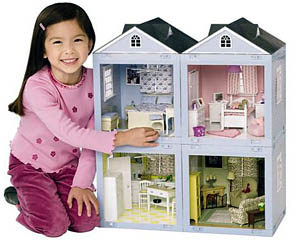
Arrange four rooms
Draw room cards, try two layouts and give a visitor a route through the home.
Laura Ashley Dollhouse
Historical profile and play idea

Imagine a home in a familiar shape
Turn a drawn kettle or acorn into three tiny spaces for a fairy house tour.
Tinker Bell’s Tea Kettle House
Historical profile and play idea

Follow a café order
Move a drawn order from oven to counter to guest table, adding a greeting at each stop.
Strawberry Shortcake Berry Café
Give the setting a story
Historical profile and play idea

Welcome a toy patient
Tell a short miniature-clinic visit with an arrival, a waiting place and a goodbye.
Playmobil Take Along Pet Clinic
Historical profile and play idea
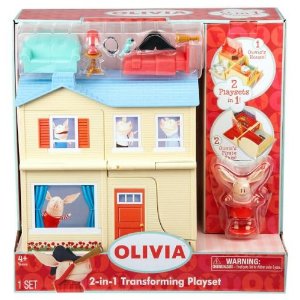
Bring a story home
Give a character a reason to leave home, an imagined voyage and something to tell on returning.
Olivia 2-in-1 Playset
Historical profile and play idea
Connect four story stops
Trace a winding route, adding a meeting, discovery or choice at each destination.
Wizard of Oz Playset
Explore the collection
Find a closer look at each toy, activity or historical report, grouped by what you would like to explore. The original index remains below with its earlier titles and wording.
Homes, rooms and decorating
- 4Ever Best Friends Party Playhouse
- Barbie Deluxe Dream House
- Dora Window Surprise Dollhouse
- Fashion Polly Sparkle Style House
- Happy Family Sounds Like Home Smart House
- Key Charm Cuties PJ Party
- Laura Ashley Dollhouse
- Loving Family Home and Stable
Shops, cafés and pretend appointments
- Littlest Pet Shop Cozy Care Adoption Center
- Littlest Pet Shop Tail Wagging Fitness Club
- My Little Pony Cotton Candy Café
- Playmobil Take Along Pet Clinic
- Polly Pocket Designables
- Strawberry Shortcake Berry Café
- Strawberry Shortcake’s Filly Grooming Salon
Fantasy places and story routes
- Ariel’s Princess Palace
- Cinderella Musical Castle
- Little People Dance ’n Twirl Palace
- Olivia 2-in-1 Playset
- Tinker Bell’s Tea Kettle House
- Wizard of Oz Playset
Stages, rides and traveling settings
Measure the world you want to make
A doll house needs to fit three things: the dolls, the room and the way the player reaches into it. Compare usable spaces and access before counting rooms. Include assembly, open doors and loose furniture in the space it will occupy.
Compare kinds of houses without assuming a material wins
The earlier Toysit page distinguished wooden, plastic, fabric, do-it-yourself and collector houses, alongside Barbie and Playmobil examples. Those remain useful starting points. Material alone does not establish durability, age suitability or safety; the construction and instructions of the particular house matter.
| House type | What may appeal | Before choosing |
|---|---|---|
| Wooden house | Rooms and surfaces for arranging a miniature world | Assembly, finish, weight, stability and access to upper rooms |
| Molded plastic house | Built-in details, moving features or a folding layout | Hinges, working space, cleaning directions and included furniture |
| Fabric or portable house | A setting that can be carried or packed away | How it stays open, what fits inside and care instructions |
| House for a particular figure range | A familiar world, such as Barbie or Playmobil | The exact figure size, accessory fit and model's included pieces |
| DIY house or kit | Decisions about layout, decoration and construction | Required skills, tools, adult tasks and suitable materials |
| Collector miniature | Detailed rooms intended for careful arrangement or display | Intended use, fragile fittings and age restrictions |
On a narrow screen, scroll the table sideways.
Use a measure-before-buying checklist
Write the following on paper or print this page. Use the assembled dimensions from the exact model's instructions. A photograph with small furniture in the foreground is not a reliable way to judge the finished size.
- Available location: width ___; depth ___; height ___; nearby doors or walkways ___.
- House fully open: width ___; depth ___; projecting stairs, balconies or doors ___.
- Room for players: front access ___; side or rear access ___; space for two people ___.
- Doll fit: standing height ___; seated height ___; chair seat and doorway clearance ___.
- Storage: location for loose pieces ___; whether the house must move between sessions ___.
- Preparation: assembly time to allow ___; tools ___; adult installation or securing steps in the manual ___.
Use the manufacturer's placement and securing instructions. A child should not need to climb on the house or nearby furniture to use a room. If the upper spaces are out of comfortable reach, consider a lower or more accessible layout.
Test one doll and one room
A chair, a doorway and a conversation
Start with a doll you already own. Measure it standing and sitting in its normal pose. Compare those measurements with the proposed house's doorway and a chair's usable seat. Leave room for hands to move the doll. If dimensions are missing, ask the maker rather than treating a matching height label as proof of fit.
A doll may fit through a door but be unable to bend into the furniture. Clothing, hair and a stand can also take up space. Decide which mismatch matters to the intended play: a comfortably usable room may be more valuable than perfectly matching decorative details.
Scale is a helpful clue, not a complete compatibility promise. Keep the Dolls guide's handling and accessory questions alongside the house measurements.
Know what arrives in the box
Distinguish the pictured scene from the contents list. Identify furniture, dolls, batteries and tools that are supplied separately. Before giving an assembled-house gift, allow time to read the manual, identify the parts and complete every required step.
Mattel's customer-service site provides instruction sheets and product support for its ranges. Use the exact product identifier when looking up a house; similar names or later editions may have different construction. Other makers have their own instructions and parts arrangements.
For a used house, check that structural pieces, fasteners and any required securing parts are present. Review CPSC recalls by model. Preserve the manual and parts list with your purchase record. Avoid improvising missing structural parts.
Leave a room open to invention
Try furnishing one room first and let the player decide who lives there and what happens next. A bedroom can become an office or a shop without buying a whole new building. Rotate a few suitable props rather than filling every floor immediately.
Follow age guidance for the house and its accessories, including any younger child sharing the play area. Keep collector miniatures distinct from toys intended for children. For making scenery, visit Art Toys; for a larger pretend-cooking setting, compare Kitchen Toys. The archive below retains the earlier houses and their original descriptions.
From the Toysit archive
Earlier coverage, with original titles and descriptions preserved as historical material. These descriptions include the promotional wording and claims of their time; they are not current operating instructions, safety assurances or product recommendations. Availability, pricing and app support have not been reverified. Identify the exact model and consult its current instructions and recall information.
- 4Ever Best Friends Party Playhouse chill out room dollhouse with balcony, vanity, game room, library, juice bar, and furniture.
- Cinderella Castle - Disney Princess Magical Musical Castle
- Musical Castle
- Disney Princess Palace - Water comes out of the fountain in front of Disney's Eric's castle
- Dora Window Surprise Dollhouse - Dora the Explorer doll house with interactive magical changing windows.
- Strawberry Shortcake's Filly Grooming Salon stable playset with play pony doll whose color changing hair you can brush for the parade.
- Hanging Out House Set - Polly Pocket Treetop Clubhouse and Hangin Out House Gift Set
- Happy Family Sounds Like Home Smart House interactive dollhouse features real-world sounds and dialog in a play neighborhood.
- Laura Ashley Dollhouse - Classy Doll House
- Little People Dance and Twirl Palace - Princess Sarah Lynn and Prince Andrew are getting ready for the ball.
- Littlest Pet Shop Cozy Care Adoption Center - Take care of pets until they are placed in a good home.
- My Little Cotton Candy Cafe - My Little Pony: Cotton Candy Cafe with Meadowbrook, Sparkleworks, Star Swirl, and Cotton Candy
- Olivia 2-in-1 Playset - Two-in-one transforming play set changes from house to pirate ship.
- Tail Wagging Fitness Club - Now your littlest pets can work out and play in whole new place.
- Polly's Groovy Getaway Jet - Polly Pocket Groovy Getaway Jet
- Polly Pocket Designables - Flexible doll house: rooms light up, build house above mall, connect different rooms.
- Sparkle House - Polly Fashion house includes a pink plastic closet, tube of glue, and two tubes of glitter.
- Strawberry Shortcake Berry Cafe - Help make smoothies and yummy looking cupcakes.
- Take Along Pet Clinic - Help creatures with the mobile pet clinic from Playmobil.
- Tinker Bell's House - Pop up tea kettle house for tiny Disney fairies.
- Littlest Pet Shop Whirl Around Playground toy pet playset.
A guide to evaluating toys, not a hands-on product test. Read our editorial approach.
Created for Toysit by Tabbloza — the artwork in our header.