
From the Toysit archive
Barbie Volkswagen Microbus
A pink-and-white Barbie Microbus makes room for doll outings and an original traveling miniature museum with three paper exhibits.
The play at a glance
A doorway onto the next little outing
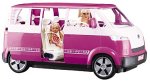
The pink-and-white Microbus has a broad windshield, rounded corners and a side doorway that makes the passengers part of the picture. Dolls fill the tiny cabin in Toysit’s original image. Imagine the bus arriving at a town square, where someone has prepared a small display and every passenger has a different favorite thing to see.
A small cabin for a shared adventure
The sliding side door turns an arrival into a little scene of its own. Mattel’s guide shows seats that move and swivel, a removable child-doll seat and a folding windshield shade. The electronic horn adds another detail to the vehicle’s pretend journey.
A passenger might become the guide, another the keen observer and another the person who asks unexpected questions. Set the bus at a stationary stop while arranging a scene. Follow the matching instructions for the actual vehicle, including its small parts and battery setup.
The outing can begin with a destination rather than a long road. A museum, garden or town fair gives the passengers something to talk about when they arrive.
Make a traveling miniature museum
Draw three exhibits on separate paper cards: a spotted moon rock, an unusually shaped leaf and a clock with a smiling face. Give each a name and one invented fact. Perhaps the clock belongs to a village where everyone stops for a story at four o’clock.
Sketch a town map with three stops. Put one exhibit beside each stop and give the route a title, such as “The Museum of Small Surprises.” Keep the cards beside the vehicle so they are easy for everyone to see.
At each stationary arrival, let a passenger introduce the exhibit. Another passenger asks one question, and the guide invents an answer. Try changing the voices: the leaf expert might speak thoughtfully, while the clock enthusiast cannot wait to explain the hands.
Finish with a favorite-exhibit announcement. Each passenger chooses one card and explains the choice in a sentence. Rearrange the stops for a second tour, or use a drawn bus and paper passengers to take the same journey.
The historical record
Original Toysit coverage
The complete earlier product account and commentary are preserved below as historical coverage.
New Barbie Volkswagen Micro bus.
With this trendy Microbus, Barbie and five friends can cruise around town in style. Heads will turn and hearts will pound as this gorgeous vehicle drives by. There's a working horn, sliding door, sun shade, and removable car seat for Kelly doll.
The 1970s Allure of the Volkswagen Micro Bus: Prelude to Van Life
The 1970s was a time of cultural shifts, and amidst the backdrop of societal change, the Volkswagen Micro Bus became an iconic symbol of freedom, exploration, and counter-culture. This emblematic vehicle was more than just a mode of transportation; it represented an ethos, a lifestyle, and a longing to break free from societal norms. Here's why the Volkswagen Micro Bus of the 1970s resonated with so many and how it foreshadowed the contemporary "van life" movement:
- Symbol of Freedom: The open road has always symbolized freedom, and in the 1970s, this idea was intensified with the emergence of countercultural movements. The Micro Bus, with its spacious interior and easy drivability, encapsulated the dream of spontaneous travel and boundless exploration.
- Counter-Cultural Icon: The 1970s was a time of societal upheaval, with the rise of the hippie movement, protests against the establishment, and a surge in artistic expression. The Volkswagen Micro Bus became synonymous with these changes, often painted with vibrant colors, peace signs, and symbols of love.
- Community and Camaraderie: The bus's spacious design made it ideal for group trips, promoting a sense of community and shared experience. Festivals, beach outings, or cross-country adventures became communal journeys of self-discovery and bonding.
- Simple Living: Echoing sentiments that would later shape "van life," the Micro Bus encouraged minimalist living. Its limited space meant occupants often traveled with only essential items, emphasizing experiences over materialism.
- Connection to Nature: Many owners of the Micro Bus were drawn to nature, using the vehicle as a base for camping trips, beach excursions, or mountain getaways. This provided an escape from urban life and a chance to reconnect with the natural world.
- Accessibility: Compared to other vehicles of its size and utility, the Volkswagen Micro Bus was relatively affordable. This made the dream of hitting the open road accessible to a broader segment of the population.
- Craftsmanship and Durability: The Micro Bus was known for its durability and craftsmanship, making it a reliable companion for long road trips and adventures. Its longevity contributed to its iconic status.
- Birth of Modern "Van Life": While contemporary "van life" has its unique characteristics, the 1970s Volkswagen Micro Bus laid the groundwork. It introduced the allure of life on the road, self-sufficiency, and the freedom to roam.
In many ways, the Volkswagen Micro Bus of the 1970s was a statement, an emblem of a generation seeking change, freedom, and connection. Its legacy can still be seen today in the modern van life movement, proving its lasting influence and timeless appeal.
Sources and editorial notes
All three pages of Mattel’s 54251 guide were visually reviewed. Its body and doorway match this vehicle family; Mattel’s product photograph is blue, while Toysit’s is pink. The guide allows color variations and documents the horn, sliding door, movable seats and folding shade. Pictured dolls do not establish package contents. The earlier six-passenger wording and full 1970s real-bus essay remain historical coverage, distinct from this toy’s specifications. The museum activity is original to Toysit; no physical testing was performed.
- Original Toysit image — Existing same-site image reviewed and retained unchanged.
- Mattel Microbus 54251 product record — Manufacturer description and blue product photograph; color qualification above.
- Mattel Microbus 54251 instructions (PDF) — Complete three-page manufacturer guide and diagrams visually reviewed.
- Original Toysit coverage — Complete historical account retained, including its original claims and wording.

Images and descriptions are retained as historical material. How Toysit covers toys.
Created for Toysit by Tabbloza — the artwork in our header.