
From the Toysit archive
Bead a Bug Kit
Explore Bead a Bug Kit through colored beads, insect shapes and patterned wings, then draw a mirrored wing design in an original paper activity.
The play at a glance
Little pots of color become wings, stripes and spots
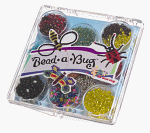
Round containers of beads sit inside the clear case in Toysit’s photograph. Insect illustrations spread across the lid, suggesting how those small dots of color can become a body, a pair of wings or a set of markings.
The original account describes four projects—a dragonfly, ladybug, bumblebee and butterfly—with illustrated weaving directions. Their different outlines give the maker a choice between long bodies, broad wings, stripes and spots.
Find the shape before choosing the colors
A dragonfly design can begin with a long central body and narrow wings. A butterfly can begin with two broader wing shapes. A ladybug suggests a rounded outline, while a bee’s stripes provide an easy starting pattern. These are drawing choices inspired by the creatures named in the original kit account.
Try making a small outline first, then decide which parts should attract attention. A bright body can stand out against darker wings. A few large spots can give a broad wing a different character from a row of tiny dots.
Repeat a pattern across the center
Draw a vertical line through the middle of a wing design. Place a colored dot on one side, then add a matching dot at the same height and distance on the other. Working outward in pairs creates a balanced arrangement.
Once the outline is complete, try a second palette. Yellow and dark brown might suggest a bee, while purple and green could belong to an invented garden visitor. Give the imaginary insect a name and a favorite flower to turn the pattern into a little character.
Make a wing-pattern sketchbook
- Draw a center line and a simple insect body.
- Add wings on either side, keeping their outlines similar.
- Place three colored dots on one wing and mirror them on the other.
- Copy the outline and try a different set of colors.
- Label both designs and draw a flower where each imaginary insect might land.
This original Toysit activity uses paper and coloring materials. For a real bead project, follow its matching weaving instructions; an adult can help with small findings and any pin components.
The historical record
Original Toysit coverage
The original product account and commentary are preserved below as historical coverage.
The attractive clear case contains enough supplies to make four beautiful beaded bugs.
Beadwork is an ancient art form. And like so many art forms, the designs in this bead set take their inspiration from nature. The attractive clear case contains enough supplies to make four beautiful beaded bugs: a dragonfly, a ladybug, a bumblebee, and a butterfly. Little pillboxes hold the beads, which are sorted by color; there are blues, yellows, greens, and reds, and a color mix for variety. Illustrated instructions demonstrate two weaving techniques and guide young beaders from the easier dragonfly to the more complicated butterfly design. Once the bugs come into being, kids can use the tools supplied to turn them into pins or a necklace and show off their handiwork.If bugs are your thing, here is a chance to wear one on your sleeve or hand one around your neck. Use your imagination after you've learned the techniques we show you in our easy-to-follow instructions.
Nature has always been a potent muse for artists and creators. A beading kit that channels the intricate beauty of bumblebees and butterflies taps into several layers of appeal, mesmerizing crafters of all ages. Here's what makes such a kit enchanting:
-
Connection to Nature:
- The vibrant colors and intricate patterns of bumblebees and butterflies are not only aesthetically pleasing but also evoke feelings of tranquility, wonder, and a deeper connection to the natural world.
-
Creativity and Imagination:
- The kit offers crafters the opportunity to channel their creativity and imagination, allowing them to craft their interpretations of these delicate creatures, whether they opt for realism or a more fantastical approach.
-
Educational Value:
- As crafters engage with the beading kit, there's potential for learning. They can delve into the biology and symbolism of bumblebees and butterflies, enhancing the crafting experience with layers of knowledge.
-
Therapeutic Crafting:
- Beading, with its repetitive and intricate motions, can be meditative and therapeutic. The act of bringing tiny beads together to form a beautiful representation of nature can be a calming and fulfilling experience.
-
Tangible Artistry:
- Once completed, the beadwork serves as a tangible testament to the crafter's patience, skill, and artistry, often becoming cherished keepsakes or meaningful gifts for loved ones.
-
Versatility:
- The finished beadwork, inspired by bumblebees and butterflies, can adorn various items, from jewelry pieces like necklaces and earrings to decorative items for homes, amplifying the kit's allure for various crafting preferences.
A nature-inspired beading kit capturing the essence of bumblebees and butterflies offers a multi-faceted allure, bridging the gap between the natural world and human artistry. It provides crafters with an avenue for expression, learning, and connection, making it a cherished activity for many.
Sources and editorial notes
Toysit’s original clear-case photograph and four-project account are preserved. A Bead Shop To-Go-Go package photograph was reviewed as a comparison; it describes five bug pins and has different packaging. Exact directions for the source clear-case edition remain unrecovered. The mirrored-wing activity is an original paper design, with the older therapeutic and educational claims retained only as historical commentary. No physical testing was performed.
- Original clear-case Bead a Bug image — Existing Toysit image of the case, illustrated lid and color pots; retained unchanged.
- Bead Shop To-Go-Go comparison package — Manufacturer-printed five-pin package photographed by a seller; a different package configuration from the source clear case.
- Original Toysit coverage — Original photograph, product account and historical commentary preserved.


Images and descriptions are retained as historical material. How Toysit covers toys.
Created for Toysit by Tabbloza — the artwork in our header.