
Toy profile
Carcassonne Labyrinth: Shift a Maze, Build a Landscape
Follow a tile from Carcassonne Labyrinth’s shifting maze into a personal landscape, then make an original landscape postcard.
The play at a glance
A tile with two jobs
A tile slides into the maze, a road changes direction, and another tile emerges on the far side. In Carcassonne Labyrinth, that outgoing piece becomes part of a landscape growing beside the board.
Follow the connection between moving through a shared maze and building your own little world, then give one of its roads a visitor’s story.
Find the Toy on Amazon: Carcassonne Labyrinth (25176; German-market edition) (paid link)
The buying link identifies model 25176 from the German-market product record. Check the listing's package and instruction languages before choosing an edition. Ravensburger also provides official English rules (PDF).
One table, two places to watch
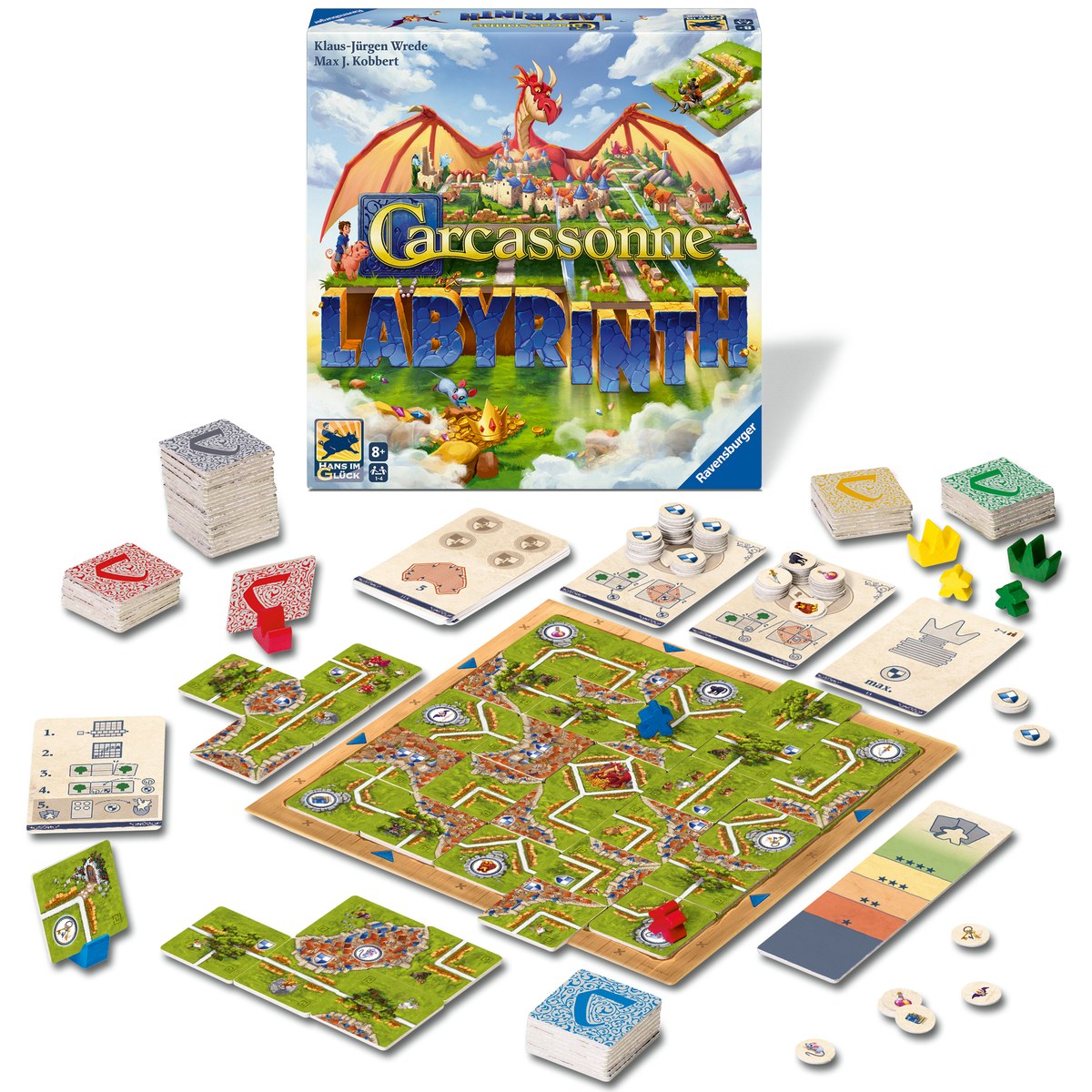
Carcassonne Labyrinth spreads a shared maze across the middle of the table while each player builds a personal landscape alongside it. The supplied photograph shows green tiles crossed by roads, small walled-city sections, colored figures and crowns. Tiles, treasure markers and shield tokens wait around the board.
A new tile changes the maze when it enters a row. Another tile slides out on the opposite side, ready for a different job in the active player's landscape. That journey is the heart of this game: the same illustrated piece can help reshape a route and then become part of a growing place.
Ravensburger identifies this standalone game as model 25176, for ages eight and older. The official rules include a two-to-four-player game and a solo tutorial. Its small parts carry a choking-hazard warning on the manufacturer page; keep the pieces and age guidance in mind when setting up a shared family table.
Follow a tile through a turn
The English rules give the base game four actions in a fixed order. First, insert a new land tile into an indicated row of the maze. Then you may move your figure along connected roads to seek the treasure shown on your own treasure tile. Next, add the tile pushed out of the maze to your personal landscape, along with a treasure tile if you earned one. Finally, resolve any roads or cities you completed.
Inserting a tile and extending the landscape are the required parts of that sequence. Movement and completing a feature depend on the situation. The full rules explain the details, including what happens when a figure is pushed off the board and how treasure is collected.
There are two questions to hold in mind: “Where could this shift take my figure?” and “Where could the outgoing tile fit in my landscape?” A road that opens on the shared board may lead to a tile that asks for a different kind of planning beside it.
Build a place from the pieces that emerge
In your personal landscape, adjoining edges must agree: roads meet roads, cities meet cities, and meadows meet meadows. You can turn a tile before placing it. The official examples distinguish this matching requirement from the arrangement of tiles inside the shared maze.
Completed roads and cities can earn shield or treasure tokens when the relevant symbols appear. The final comparison has a physical flourish: players stack the tiles and tokens from their landscapes, then add the figure or crown specified by the rules. The tallest resulting tower wins. That makes the landscape's growth visible in another form at the end.
The base multiplayer game gives each player ten turns. Advanced quests and the solo game add other choices; the linked rulebook is the place to explore those variations after learning the main sequence. This profile concentrates on the shared-maze and personal-landscape connection.
Try a landscape postcard
An original Toysit after-game activity: choose a road or city from the landscape you built and imagine someone arriving there. Draw a little postcard of the place. Give the visitor one reason to make the journey: delivering bread, meeting a musician or finding a quiet spot beside a field.
- Pick a route. Trace a road with your eyes and choose a starting place and a destination in your drawing.
- Notice a detail. Add one thing your visitor might pause to look at. Your imagined detail belongs to the story, rather than to the printed game rules.
- Write two sentences. Tell where the visitor went and what happened on the way.
- Compare possible additions. On another sheet, sketch two different tiles that could extend the scene. Explain which connection each would make.
Share postcards once the game is over, keeping its scoring intact. For a paper-only variation, draw a few squares containing roads and city edges, arrange a small landscape and invent a journey through it. The pleasure is choosing a connection and giving that connection a reason in the story.
Sources and editorial notes
Researched November 6, 2026 for German-market Carcassonne Labyrinth 25176. The official English PDF contains printed pages 7-12; core setup, turn and endgame pages 8-10 were visually reviewed, with the solo and advanced sections read in extracted text. The manufacturer lists 1-4 players; its solo mode is omitted from some retailer descriptions. The matched Amazon listing has a German title and does not establish included languages. The postcard activity is an original Toysit suggestion; no hands-on play or physical component count is claimed. The buying link is an affiliate link.
- Carcassonne Labyrinth: official product information — Exact model, age label and manufacturer description; checked November 6, 2026.
- Manufacturer launch announcement — Dated source for the described features; promotional claims are attributed.
- Ravensburger: Carcassonne Labyrinth English rules (PDF) — Printed pages 8-10 support the setup, turn sequence and endgame; pages 11-12 describe further modes.
Created for Toysit by Tabbloza — the artwork in our header.