
Toy profile
Lowercase Architectural Blocks: Build a Room, Change the View
Explore Lowercase Toys’ Architectural Set, build a small felt room and compare its plan with the view through its entrance.
The play at a glance
A small room with a changing view
A flat felt panel becomes a wall when it joins another piece. An opening appears between them, and suddenly there is a place to look into.
Lowercase Toys’ Architectural Set invites that shift from loose shapes to a small construction. Build a room, draw it from above and see what changes when one wall moves.
Panels that join at their edges
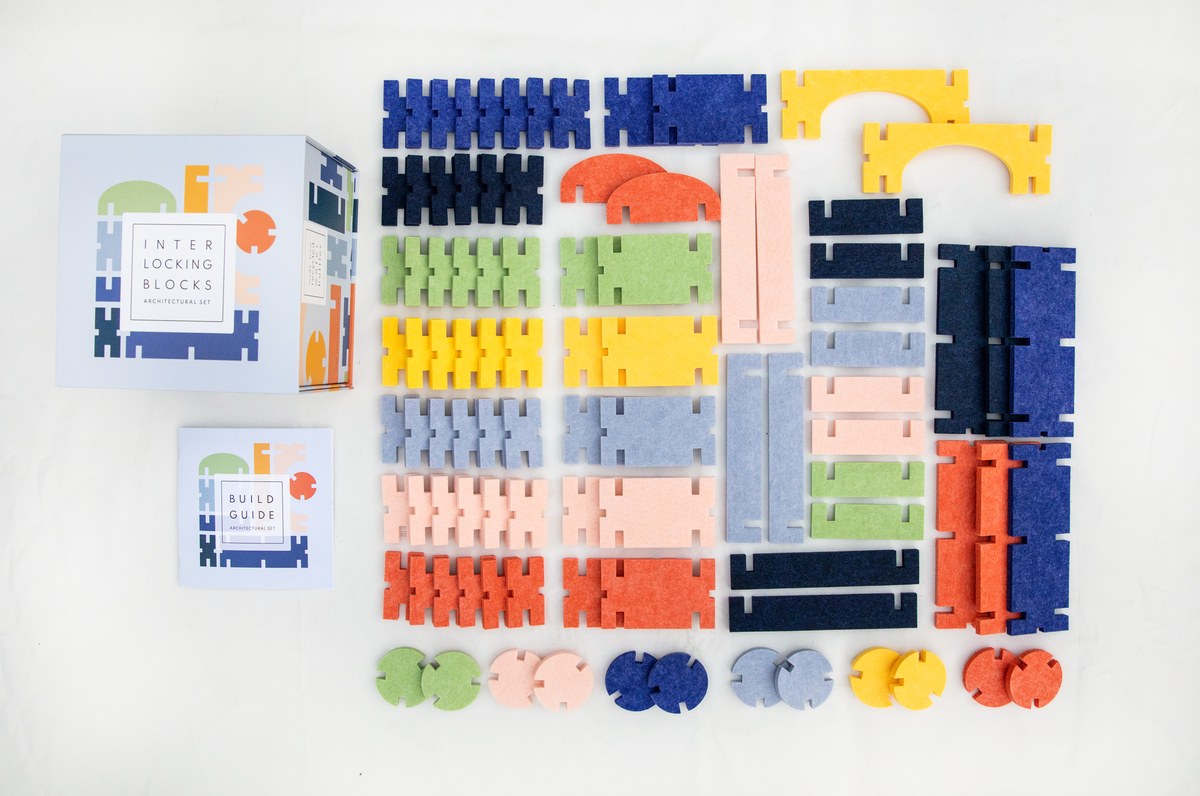
Lowercase Toys' Interlocking Blocks Architectural Set uses slotted felt pieces to make constructions that extend upward and outward. The B403 set contains 92 pieces, including several sizes of panels, arches, domed shapes and round joiners. Lowercase recommends it for ages three and up.
Start with a few pieces and the supplied guide. Look at where their slots meet and try a small connection before deciding what to build. The different outlines suggest different jobs: an arch might frame an opening, while a broad panel might mark the edge of a room.
This profile covers the Architectural Set. The maker's smaller Classic and Pocket sets have different inventories, so match the set name when looking at examples or choosing a package.
A room has more than one view
A little room can look like a collection of lines from above and a doorway between walls from the side. Try giving those two views separate drawings. Which drawing shows the floor space most clearly? Which lets you imagine standing at the entrance?
The Smithsonian's Science in Pre-K building exploration asks learners to notice their materials, sketch structures and consider a change. That general approach provides useful context here. With these felt panels, the question can be very specific: what becomes visible when one wall moves?
Keep the model small enough to inspect from the table edge. An adult can help interpret the set's joining instructions. A sketch only needs to record the arrangement; straight lines and a mark for the entrance are plenty.
Build a room, then change its view
- Use a few connected pieces to suggest a small room with an entrance. Follow the supplied guide for connections.
- Draw its arrangement from above on a sheet of paper. Mark the entrance with an arrow.
- Make a large paper picture to stand beside the model as pretend scenery. Decide whether a visitor looking through the entrance should see it.
- Look from the entrance side and describe the view. Move or reconnect one wall panel, then look again.
- Draw the revised arrangement beside the first. Explain the one change using words such as beside, behind, open or hidden.
The aim is to compare two arrangements, so a low, simple model is enough. If a connection resists, pause and check the guide rather than forcing it. The paper scenery is an added story prop, and this two-view activity is an original Toysit suggestion.
Give the next builder a clue
Hand a partner one of the drawings and describe where its entrance belongs. See which details need another line or a few words. A drawing that makes sense to its author may need a doorway arrow before someone else can use it.
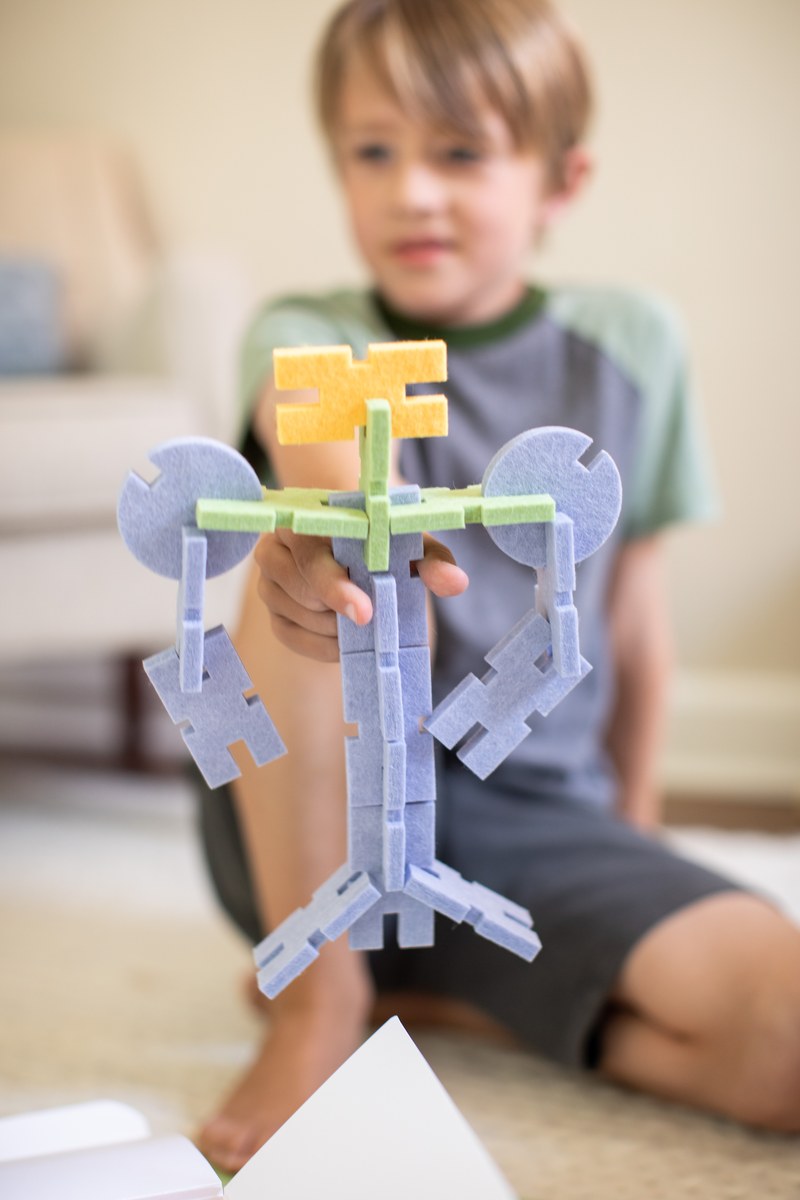
For a different finish, arrange the loose pieces beside the model by the jobs they performed: walls, openings and connections. A piece can move to a different group next time. The supplied robot photograph is a reminder that the same construction system can also suggest characters.
Keep the set's packaging and care guidance with the pieces, and check the actual components before play. These are miniature constructions for handling and arranging; follow the maker's instructions for their use.
Sources and editorial notes
Researched November 12, 2026 using current maker specifications, the retained B403 press sheet and supplied images, with Smithsonian Science in Pre-K context for observing and sketching constructions. This is the 92-piece Architectural Set. No complete printed assembly guide or physical product was tested. The two-view room is an original Toysit suggestion, not a measured learning claim. No sample/sponsorship arrangement or exact Amazon listing was verified.
- Lowercase Toys: Architectural Set — Exact set, piece inventory and maker age recommendation; reviewed November 12, 2026.
- Smithsonian Science in Pre-K: Building Structures — General context for observing materials, sketching a structure and discussing a change; official indexed text reviewed.
- Lowercase Toys: maker and press resources — Official source of the linked press kit and supplied images.
Created for Toysit by Tabbloza — the artwork in our header.