
From the Toysit archive
Fisher-Price Compose ’n Play Orchestra
Add an animal performer, compare voices with instruments and hear a familiar piece change as the ensemble grows.
The play at a glance
Build the ensemble one performer at a time
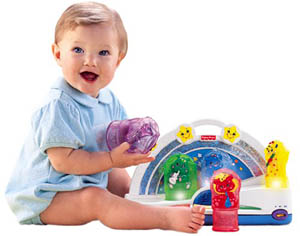
Compose ’n Play Orchestra makes musical layers visible. Each animal has a place on the base, so adding or removing a performer gives a player a physical way to change the sound.
The original photograph matches the design shown in Fisher-Price’s product 73767 manual. Its three modes offer a focused comparison: animal voices, instruments, or the two together.
Start with a small ensemble
Choose one animal and find its matching place, then add a second. Let the sound continue long enough to notice the difference before removing one again.
The manufacturer’s manual explains that a correctly placed figure adds its musical part and removing it stops that part. It also identifies five built-in classical compositions. These are prepared performances that the figures help arrange.
Compare the modes with the same figures
Leave the performers in place while switching between voices, instruments and their combination. Holding the arrangement steady makes the mode change easier to notice.
Ask what changed rather than asking for the “right” answer. A player might imitate a sound, point to a figure or simply choose a favorite mode. Then let that player decide which animal joins or leaves next.
Make finding a place part of the play
Set the loose figures beside the base and compare their shapes and sizes with the available spaces. Give the player time to try a fit without forcing it. An adult can name the figure or point to a possible place when help is welcome.
For a shared turn, one person chooses a performer and the other finds its place. On the next turn, swap. The toy offers a way to connect an action with a sound; it does not prove a particular developmental result.
Give the music a clear ending
The front power switch provides low and high volume positions as well as off. Choose a comfortable setting for a short session. The documented sleep behavior after inactivity is separate from deliberately switching the unit off.
Gather the figures at the end so the next player starts with the available ensemble together. For an older unit, use the matching manual for battery replacement and cleaning, and check the pieces and compartment before play.
The historical record
Original Toysit coverage
The original product account and complete benefits section remain below. Their prodigy language, combination count and broad developmental claims are historical material, not results of a Toysit test. The new explanation treats the toy as a way to arrange existing music rather than record a newly composed piece.
An orchestra for baby.
This musical toy, from the Fisher-Price Sparkling Symphony collection, makes almost any parent feel as if there is a little prodigy in the house. The collection of five colorful creatures, each playing an instrument, is so bright and engaging even you won't be able to keep your hands off it. With the flip of the on-off switch (which has two volume levels--hurrah.), you are treated to the soothing, classical masterpieces of Beethoven, Mozart, and others. The fun and learning come into play when your child picks up each of the animals and the song changes a bit. Your child actually controls the melody by adding or taking away the various members of this five-piece symphony. The bright green hippo can do a solo, but the song sounds much differently than when he plays with giraffe, elephant, or the whole crew. There are three nodes of play--voice, instrument, or both--and baby can switch among them by pressing one of the three big buttons on the front piece. The animals themselves are large, easy-to-grasp pieces that almost beg for you to pick them up and begin. The flashing lights beneath each animal add an element of surprise for growing babies. Starting with five basic classical works, babies can remove or add orchestra members to change the music and create new masterpieces. Each animal plays a different instrument, with over 100 musical combinations to mix and match. Three settings are available--instruments, voices, or a combination of both. The entire orchestra can play together, individually, or in various combos. Switch to the voice setting to hear the band members sing in different pitches. High-quality orchestral sound, dancing lights, and size-sorting fun, too.
Benefits of Musical Toys for Young Children
Musical toys have a magical way of captivating young children's hearts and minds. Beyond the joyful sounds they produce, these toys offer a range of developmental benefits that contribute to a child's overall growth and learning:
Sensory Stimulation: Musical toys engage multiple senses—sight, touch, and hearing. The combination of vibrant colors, varied textures, and enchanting melodies stimulates sensory exploration and development.
Aural Development: Exposing children to musical sounds from an early age enhances their auditory skills. Different tones, rhythms, and melodies help children recognize and differentiate between sounds, laying the foundation for language and communication skills.
Fine Motor Skills: Many musical toys involve pressing buttons, turning knobs, or manipulating objects to produce sound. These actions refine fine motor skills, hand-eye coordination, and finger dexterity.
Cognitive Stimulation: Exploring musical toys introduces children to concepts such as cause and effect. They learn that their actions can produce specific outcomes, promoting early understanding of basic principles of physics and logic.
Language Development: Listening to songs and musical patterns exposes children to rhythm, rhyme, and repetition—essential elements of language development. These experiences lay the groundwork for building vocabulary and language comprehension.
Emotional Expression: Music has the power to evoke emotions and moods. Playing with musical toys allows children to express themselves and explore a wide range of feelings through sound and rhythm.
Creative Exploration: Musical toys encourage children to experiment with different sounds and melodies, sparking their creativity and fostering a sense of curiosity and exploration.
Social Interaction: Sharing musical toys with peers or family members can lead to collaborative play, turn-taking, and shared enjoyment. Musical activities provide opportunities for social bonding and cooperation.
Memory and Pattern Recognition: Many musical toys feature recognizable tunes or patterns. Listening to and imitating these melodies strengthens memory skills and pattern recognition abilities.
Relaxation and Calmness: The soothing melodies of musical toys can have a calming effect on children, helping them relax and find comfort during times of stress or restlessness.
Cultural Exposure: Musical toys that incorporate different styles of music introduce children to cultural diversity and expand their musical horizons.
Positive Association with Learning: Playing with musical toys makes learning enjoyable and fun, setting a positive foundation for future academic pursuits.
Musical toys offer far more than mere entertainment—they contribute to a child's holistic development by engaging their senses, stimulating cognitive skills, fostering creativity, and enhancing social interactions. Through the world of melodies and sounds, young children embark on a harmonious journey of growth and discovery.
Sources and editorial notes
The retained image was compared with the cover photograph and control diagram in Fisher-Price instruction sheet 73767a-0920 on October 15, 2026. The manual supports the product-family match and mode descriptions. Its 2001 copyright is not assigned as the Toysit page’s publication date. No physical unit or learning outcome was tested.
- Fisher-Price: Compose ’n Play Orchestra 73767 instructions (PDF) — Manufacturer manual with the matching design, mode controls and care directions.
Images and descriptions are retained as historical material. How Toysit covers toys.
Created for Toysit by Tabbloza — the artwork in our header.