
From the Toysit archive
Digital Blue Movie Creator
Digital Blue Movie Creator’s camera and editing concept inspire an original three-scene film about a traveling paper hat.
The play at a glance
A small camera for a story with a beginning and an end
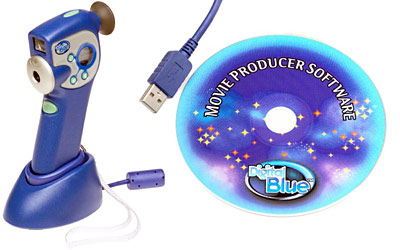
The blue-and-cream camera stands upright on a rounded base, with a USB lead and a software disc beside it. Digital Blue Movie Creator brought recording and arranging scenes into one children’s filmmaking package. Its shape suggests both parts of the job: carry the camera to a small scene, then bring the pieces together into a movie with a title and an ending.
Choose the moment before pressing record
The original guide shows separate snapshot and video controls, an eyepiece, a built-in microphone and a base with a USB cable. Its software examples show a scene being recorded, named and placed in a collection. A name helps a filmmaker remember which piece belongs where.
Those choices can begin on paper. Decide what the audience should notice first, what changes in the middle and what makes the ending feel complete. A tabletop, a toy figure and a small prop can provide enough material for all three scenes.
Use a suitable working camera if one is available and an adult has checked its setup. Otherwise, drawings and spoken narration make a complete picture story. There is no need to install the old Digital Blue software to try the idea.
Film the traveling paper hat
Draw a small hat on paper and cut it out with age-appropriate help. Give it a bold stripe or a star so it is easy to recognize. Plan three scenes: the hat waits on a chair, a toy character carries it across the scene, and it arrives at a celebration.
Sketch each scene in a storyboard box. Under the first, write where the hat is waiting. Under the second, name the traveler and the destination. Under the third, explain why the hat matters: perhaps it belongs to the guest who is about to open the garden party.
Rehearse the journey with the toy and paper prop. If recording, agree who will handle the camera and who will move the character; keep people out of the picture unless they want to take part. Capture the three short scenes using the working camera’s instructions.
Present the scenes in order, as recordings or drawings. Add an original title and credit the participants for their chosen jobs. Watch or read the story together, then change one scene and see how the hat’s adventure changes.
The historical record
Original Toysit coverage
The complete earlier product account and commentary are preserved below as historical coverage.
Capture video and audio, then edit the clips on your computer, making your own films
Get ready to make your own movies with the Digital Blue Movie Creator and your PC. This exciting movie camera lets you direct and record, capturing digital video and audio at or away from your computer; edit your movies with the included software doing cool transitions between scenes; add special effects and animations, plus titles and credits; premiere and share your movies, screening them on your computer or sending them in e-mails; and take hundreds of snapshots like a digital camera, even create stop-motion animated movies. Start making your own movies. Even star in them. Then turn your computer into a digital video editing suite.
Toys that introduce children to filmmaking hold a unique and inspiring appeal, offering young minds the opportunity to delve into the world of storytelling, technology, and artistic expression. The allure of these toys stems from various factors that contribute to their inspiration:
Immersive Exploration: Filmmaking toys allow children to step into the shoes of a director, writer, and actor, immersing themselves in the creative process of crafting narratives and scenes.
Empowerment: By providing the tools for filmmaking, these toys empower children to be the creators of their own stories, fostering a sense of agency and ownership over their ideas.
Visual Literacy: Through filmmaking play, children learn about shot composition, camera angles, lighting, and other elements of visual storytelling, enhancing their visual literacy skills.
Storytelling Skills: Creating scripts, characters, and plots encourages children to develop their narrative and communication skills, enabling them to convey ideas effectively.
Problem-Solving: Filmmaking involves overcoming challenges, such as coordinating scenes, editing footage, and crafting a cohesive story, promoting critical thinking and problem-solving abilities.
Creative Expression: Filmmaking toys provide an outlet for self-expression, allowing children to convey their thoughts, feelings, and imagination through a visual medium.
Technological Proficiency: Using filmmaking toys introduces children to basic technology such as cameras, editing software, and recording devices, fostering early technological literacy.
Team Collaboration: Filmmaking often involves teamwork as children take on various roles. Collaboration and communication skills are developed as they work together to bring their ideas to life.
Time Management: Planning and executing a film project teaches children valuable time management skills as they coordinate scenes, organize shots, and adhere to a production schedule.
Attention to Detail: Filmmaking requires careful attention to detail, from set design to costumes to editing. Children develop an eye for detail and aesthetics.
Personal Growth: Engaging with filmmaking sparks a sense of achievement as children see their ideas come to life, contributing to their self-esteem and confidence.
Visual and Auditory Learning: Children engage with visual and auditory elements as they plan scenes, compose shots, and incorporate sound effects, enhancing their sensory learning experiences.
Cultural and Historical Awareness: Filmmaking encourages children to explore different genres, styles, and historical contexts, fostering an appreciation for cultural diversity.
Long-Term Learning: As children grow, their interest in filmmaking can evolve into a lifelong passion that extends into film studies, media production, and creative pursuits.
Inspiration for Future Careers: Filmmaking toys may spark an interest in film, animation, directing, producing, and other related professions, inspiring career aspirations.
Toys that introduce children to filmmaking are not only entertaining but also inspirational. They nurture creativity, critical thinking, collaboration, and artistic expression, providing a platform for children to explore the world of storytelling and technology in a way that can shape their creativity and aspirations for years to come.
Sources and editorial notes
Selected pages of the original Digital Movie Creator Quick Start Guide were visually reviewed: printed pages 1–3, 6 and 13–14. The camera diagram matches the pictured form. These pages document historical recording, software and Windows-era requirements, not modern compatibility or later 2.0/3.0 editions. The complete earlier product account and fifteen-part benefits essay remain below. The paper-hat activity is original to Toysit; no legacy software was installed and no camera was tested.
- Original Toysit image — Existing same-site image reviewed and retained unchanged.
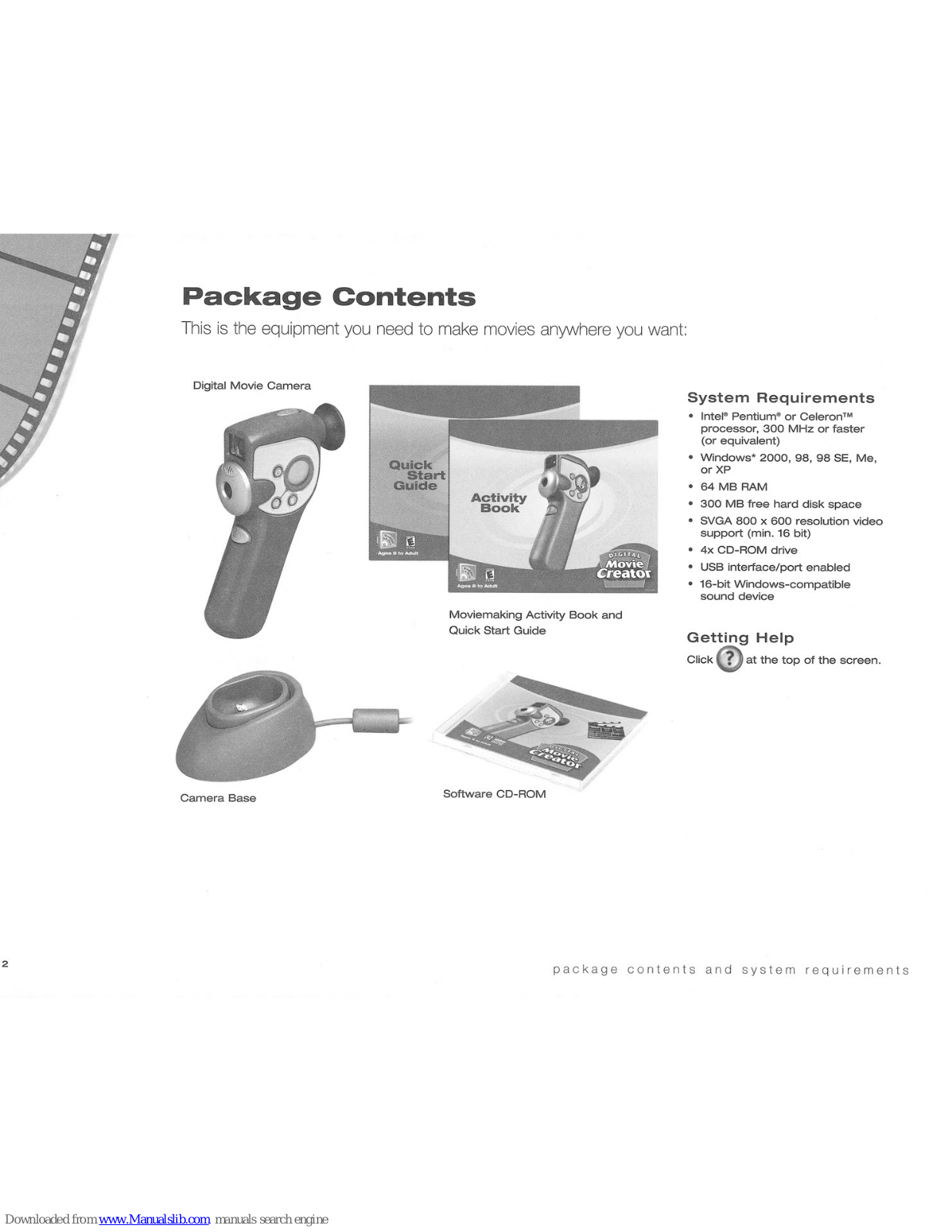
- Digital Blue Quick Start Guide: package and system requirements — Original manufacturer page, printed page 2, preserved as a scan by ManualMachine.
- Digital Blue Quick Start Guide: camera parts — Original manufacturer diagram, printed page 13, visually matched to the Toysit image.
- Original Toysit coverage — Complete historical account retained, including its original claims and wording.


Images and descriptions are retained as historical material. How Toysit covers toys.
Created for Toysit by Tabbloza — the artwork in our header.