
From the Toysit archive
Discovery Fact Attack
Explore Discovery Fact Attack’s historical multiple-choice and clue games, with guidance for discussing answers and an independent two-player clue activity.
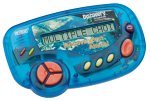
The play at a glance
Knowing a fact and interpreting a clue
Discovery Fact Attack offers a useful contrast in its original description: choose an answer from a list, or work toward an answer as clues arrive. The first asks which option fits; the second asks when the evidence is strong enough to make a guess.
Two ways to arrive at an answer
The original account calls the multiple-choice activity Fact Attack and the successive-clue activity Fast Fact. It describes both solo and two-player play. These names explain the reported idea of the game; they are not a replacement for instructions matched to a particular unit.
Multiple-choice answers let a player compare possibilities. Successive clues invite a player to revise an early guess. When playing together, ask which clue mattered most or which option was easiest to rule out.
A clue can fit more than one thing
A clue such as “has four legs” leaves many possibilities. Add “people sit on it” and a chair becomes likely, though a stool could still fit. Add “has a back” to narrow the intended answer further.
That is a chance to discuss the wording, not a reason to dismiss a reasonable guess. A good clue set can become more precise after another player points out an alternative.
Keep the question in its time
A stored quiz reflects the information and wording supplied when it was made. If a question depends on a changing record or a word such as “largest,” check what is being measured and when. A brand name does not remove the need to examine the question.
The archived essay discusses Discovery more broadly, including digital and immersive media. It provides historical commentary around the toy; it is not evidence that the photographed handheld connects to those services.
Write three clues, then test them
Each person chooses an ordinary object and writes three clues, moving from broad to specific. Read one clue at a time. Let the listener offer a guess or ask for the next clue, then explain what changed their mind.
Swap roles and revise a clue if more than one answer fits. This independent Toysit game can be cooperative and untimed; it does not reproduce the handheld’s scoring or buzzer rules.
The historical record
Original Toysit coverage
The original product description and full Discovery-brand essay are preserved below. Question counts, player modes, dimensions and the account of speed and sound controls remain attributed to that coverage. The general discussion of newer media and technology does not describe verified features of this handheld.
700 questions about science, nature, technology, exploration, and history
Over 700 questions based on popular Discovery Channel themes: science, nature, technology, exploration and history. 2 different modes of play, 1 or 2 player, built-in speaker and timer. Compact, hand-held portablility, easy-to-read screen. With this handy, handheld trivia tester from the Discovery Channel, kids can test their knowledge of nature, science, exploration, technology, and history. Small enough to slip into a backpack or a desk drawer (it's about 7 by 4 inches), the compact game supports both solo studying and timed head-to-head matches between two players. Budding geniuses can strut their stuff in either multiple choice Fact Attack! mode (Deep Freeze: What's the coldest place on Earth? A. North Pole, B. Antarctica, or C. Canada?) or in fast-paced Fast Fact mode, for more hyper minds competing to see who can buzz in first (Clue 1: Measured by hands. Horse? Lion? Mule? Clue 2: Tail and mane. Clue 3: People ride them.). Fact Attack! includes musical sound effects and fun animations on its 4-inch-long LCD screen, and players can adjust the speed of the questions and toggle sound effects on or off.
The Discovery Channel brand has achieved remarkable success in the realm of science toys, captivating young minds and fostering a deep love for learning and exploration. The brand's achievement in this area can be attributed to several key factors:
Trusted Authority: The Discovery Channel is known for its commitment to factual and informative content. This credibility translates to its science toys, establishing a trust among parents and educators seeking enriching learning experiences for children.
Educational Engagement: Discovery Channel science toys offer a bridge between entertainment and education, infusing playtime with captivating scientific concepts that spark curiosity and engagement.
Real-World Connections: The brand leverages its extensive knowledge of the natural world to create toys that mirror real-world phenomena, allowing children to experiment and observe principles of science firsthand.
Hands-On Exploration: Discovery Channel toys encourage hands-on learning through experiments, building models, and interactive activities, promoting experiential learning that cements scientific concepts.
Innovative Concepts: The brand's commitment to innovation is reflected in its toy lineup, which includes cutting-edge technologies, augmented reality, and interactive components that enhance the learning experience.
Engaging Narratives: Discovery Channel science toys often incorporate exciting narratives that draw children into the subject matter, inspiring them to explore and discover scientific wonders on their own.
Multi-Disciplinary Approach: Discovery Channel toys cover a wide spectrum of scientific disciplines, from astronomy and geology to biology and engineering, offering a comprehensive exploration of the world around us.
Inspiring Role Models: The brand's science toys introduce children to historical figures, explorers, and scientists who have shaped our understanding of the world, fostering admiration and curiosity for those who have made groundbreaking discoveries.
Interactive Learning: Discovery Channel toys often come with digital components, such as apps and online resources, enhancing the learning experience and allowing children to delve deeper into scientific topics.
Parental Involvement: Discovery Channel science toys provide opportunities for parent-child interaction, fostering conversations about scientific concepts and encouraging collaborative learning experiences.
Curiosity Ignition: The toys ignite children's innate curiosity, encouraging them to ask questions, seek answers, and develop a lifelong passion for science and exploration.
Global Reach: The Discovery Channel brand's global presence ensures that its science toys reach a wide audience, inspiring children around the world to engage with scientific concepts.
The Discovery Channel's success in the realm of science toys is a testament to its ability to blend education and entertainment seamlessly. By fostering curiosity, hands-on exploration, and a genuine love for learning, Discovery Channel science toys empower children to become young scientists and explorers, eager to unravel the mysteries of the world.
Sources and editorial notes
This profile uses Toysit’s retained source and product photograph. No exact manufacturer manual was verified, so it does not supply new setup, battery, age or scoring instructions. The historical category and affiliate identifiers are preserved; they are not used to infer a manufacturer or model. No device was tested.
Images and descriptions are retained as historical material. How Toysit covers toys.
Created for Toysit by Tabbloza — the artwork in our header.