
From the Toysit archive
Don’t Wake Daddy
Follow a turn from spinner to board space to picture card, with room to understand the surprise in the older Don’t Wake Daddy game.
The play at a glance
The suspense makes more sense when the turn is clear
Don’t Wake Daddy puts a surprise in the middle of a simple journey across a board. A spinner directs movement, picture cards affect what happens on some spaces, and the bed may pop up when a player presses the alarm button.
Walk through one turn before starting a full game. Understanding the sequence leaves more room to enjoy the suspense.
Look at the route before you spin
Use the matching instructions to set up the board, bed, movers and cards. Find the starting beds and the refrigerator together. Point out a plain space and a space with a picture and number so the players know what to look for.
Before operating the bed, explain that the character can suddenly sit up. Let a new player watch a demonstration or simply follow the board while someone else handles the button. That introduction is a choice for the group, not a change to the competitive rules.
Walk through a color turn
In the 1999 rules, a color spin sends the mover to the next space of that color. A plain space ends the turn safely. On a numbered picture space, a matching card avoids the alarm; without it, the player presses the button the indicated number of times.
For a practice turn, say the steps aloud: find the color, examine the space, check the card. Pause between them and let the player point to the next thing to inspect. This is a way to learn the sequence before adding the pace of a full round.
Separate the story from the mechanism
The board’s noisy obstacles belong to its midnight-snack story. The documented action is pressing the alarm button, not keeping the room quiet enough to fool a sound sensor.
If Daddy pops up, the 1999 rules send the player back to their starting bed and give them the matching picture card from its holder. The purple-star result has a special movement rule. Consult the complete sheet for that exception, setup and the refrigerator finish.
Keeping the guide nearby is useful while everyone learns. There is no need to turn a remembered family rule into the rule for every edition.
Give each turn a clear ending
After resolving the space, say whose turn comes next. The spinner supplies a result to follow; the players do not need to invent a strategic choice where the rules provide none.
For a quiet rehearsal, take turns narrating imaginary spins and finding the corresponding spaces without operating the bed. Label that as practice. Then decide together whether to begin a complete game.
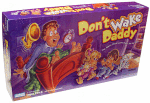
At the end, collect the cards and movers before packing the game. The old box image is retained at a modest size because it is a small historical asset; use the actual set and its instructions to identify missing pieces or setup details.
The historical record
Original Toysit coverage
The complete original game description and the full essay about spinners remain below. The essay describes spinners in general; it does not establish that this game offers strategic movement choices or that the bed detects actual noise.
The game includes Daddy in a 9-by-5-inch plastic bed, gameboard, mover bases, deck of cards, spinner, and instructions.
Shhh. If you can sneak past sleeping Daddy without waking him, you can have that midnight snack you're craving. But it's going to be tough--there are roadblocks everywhere. Don't step on the cat's tail. And watch out for those roller blades that didn't get put away. The first person to slip around all these obstreperous obstacles to get to the fridge wins. Players spin a spinner to determine what color space they'll move to. If the player's card doesn't match the picture on the space, Daddy's alarm clock button must be pushed the number of times indicated. Just hope that Daddy will sleep through the alarm. If not, he'll pop up and make his nightcap fly off. The game includes Daddy in a 9-by-5-inch plastic bed, gameboard, mover bases, deck of cards, spinner, and instructions (English and Spanish). For two to four players.
Spinners in Board Games
Spinners, also known as game spinners or spin dials, have become a clever and interactive component in many board games, adding an element of chance and excitement to gameplay. The use of spinners enhances the gaming experience in various ways:
- Randomization: Spinners introduce an element of randomness to the game, ensuring that each spin produces unpredictable outcomes. This randomness keeps players engaged and creates suspense as they wait to see where the spinner's arrow will land.
- Physical Interaction: The act of spinning the dial physically involves players in the game. This tactile engagement adds a sensory dimension to gameplay, making it more immersive and enjoyable.
- Simple Mechanics: Spinners are easy to understand and operate, making them suitable for players of all ages. Their straightforward mechanics make them accessible to young children and beginner gamers.
- Decision-Making: In games where players need to make decisions based on the spinner's result, strategic thinking comes into play. Players must weigh their options and choose the best course of action based on the outcome.
- Added Challenge: Spinners can introduce challenges that players must overcome. For example, landing on specific sections could result in obstacles, rewards, or setbacks, adding depth and complexity to the game.
- Thematic Integration: Spinners can be designed to match the theme of the game, enhancing its overall aesthetic. This thematic integration adds an element of storytelling and immersion.
- Engaging Moments: The suspense leading up to a spin and the excitement of discovering the result create memorable moments that players enjoy and often reminisce about.
- Adaptability: Spinners can be incorporated into a wide range of board games, from children's games to strategy games. Their versatility allows game designers to tailor their use to fit the game's objectives.
- Multiplayer Interaction: Spinners often involve multiple players in a single spin, fostering friendly competition and interaction as players eagerly anticipate the outcome.
- Element of Surprise: The spinner's ability to produce unexpected results keeps players on their toes and adds an element of surprise that can alter the course of the game.
From classic games like "Twister" to educational board games and beyond, spinners contribute to the dynamic and unpredictable nature of gameplay. Their inclusion adds an element of chance, engagement, and enjoyment that enhances the overall board game experience.
Sources and editorial notes
Reviewed October 16, 2026 using the original small box image and Hasbro’s 1999 Don’t Wake Daddy rules, identifier 00455-I R3. The illustrated bed, nightcap and described picture-card game correspond to the earlier coverage, though the box image alone does not identify every production variation. The English rule sheet was visually reviewed. The placeholder ASIN and like=dad remain intact. The narrated practice is an editorial suggestion; no physical game was tested.
- Hasbro: Don’t Wake Daddy, 1999 rules (PDF) — Original assembly, turn sequence, special spaces and winning condition.
Images and descriptions are retained as historical material. How Toysit covers toys.
Created for Toysit by Tabbloza — the artwork in our header.