
From the Toysit archive
First Act Student Guitar
A small sunburst acoustic guitar invites gentle sounds and a shared story, with an original one-note doorway activity.
The play at a glance
A little guitar can open a scene
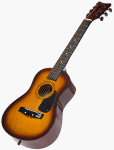
Warm color glows at the center of this small guitar, fading into a dark outline around its curved body. Strings cross the round sound hole, and a dark pickguard follows one side. Before a whole song comes a smaller pleasure: hearing one sound, letting it fade and imagining what might happen next.
Listen for the space after a sound
An acoustic guitar gives a sound a visible starting point: a string moves above the body, and the note hangs briefly in the room. With an adult checking the instrument and helping the player hold it comfortably, a gentle ordinary pluck can become a small listening moment.
Try listening until the sound fades before deciding what comes next. One player might hear a door opening in an imaginary house; another might picture the first light over a harbor. Let the actual instrument and its matching care guidance determine handling and setup.
Make a one-note story doorway
Choose a place together: a moonlit garden, a tiny station or a cabin beside a lake. The guitar player makes one gentle sound. A companion supplies one sentence that opens the scene: “At the garden gate, a traveler found a blue envelope.”
Before the next sound, decide what it will mean. It could announce someone arriving, mark a surprising discovery or bring the scene to a close. The storyteller responds with one more sentence. Leave pauses long enough for everyone to picture the place.
After three or four turns, set the guitar safely aside and draw the doorway from your story. Give it a title and add a tiny symbol for each sound cue. On another day, the same doorway can lead to a different adventure. The activity works with a few sounds and your own words; it does not require a finished tune.
The historical record
Original Toysit coverage
The complete earlier product account and commentary are preserved below as historical coverage.
Good first guitar.
First Act's Student Guitar is an excellent choice for children who are just beginning to play the guitar. It's a reduced 30 inches long, rather than a full-size model adults would use. Made with lightweight wood and steel strings, the guitar features a steel-reinforced neck and a high-gloss protective finish that wears well and looks good for the long haul. The low string action design of the fret board makes it easy for small fingers to strike chords without discomfort. A smaller, kid-friendly guitar makes the whole learning experience less stressful and more fun. It comes complete with strap button and pick guard. The strap and pick are not included. Start your child on the path to a lifetime's enjoyment of music. The First Act student acoustic guitar is designed especially for children to learn and grow on. Its stell reinforced neck prevents warping, twisting and snapping. The steel neck also allows the neck to be thinner which makes the guitar easier to hold for a child's smaller hand. Individual steel gears provide longer lasting tuning. The guitar comes with a zero fret for easier play action, scratch resistant pick guard and a beautiful, hi-gloss sunburst finish. The perfect first guitar for a child to learn to play. ASTM tested and approved for child safety standards.
Steps to Learning How to Play Guitar
Learning to play the guitar is an exciting journey that many people undertake for both pleasure and artistic expression. Here's a step-by-step guide to help you get started:
- Choose the Right Guitar: Decide whether you want to play an acoustic or electric guitar. Acoustic guitars are generally better for beginners, but your choice might depend on the style of music you want to play. Make sure the guitar is comfortable for your size and hand shape.
- Gather Necessary Accessories: Purchase a guitar tuner, picks, a capo, and possibly a guitar strap and stand. A tuner is essential for keeping your guitar in tune.
- Find a Teacher or Teaching Method: Enroll in lessons with a guitar teacher, use online tutorials, or get a beginner's guitar book. Different methods work for different people, so find what suits you best.
- Learn Basic Chords and Scales: Start with fundamental chords like G, C, D, E, and A, and practice basic scales. These are the building blocks of most songs.
- Practice Regularly: Like any skill, practice is essential. Aim for at least 15-30 minutes daily to build muscle memory and coordination.
- Start Playing Simple Songs: Begin with simple songs that use the chords and scales you've learned. There are plenty of beginner-friendly songs available online.
- Learn Proper Technique: Focus on correct finger placement, strumming, and picking techniques. Proper technique will make playing more comfortable and sound better.
- Play Along with Others: If possible, find friends or local musicians to play with. Playing with others can be motivating and help you learn new skills.
- Set Goals: Having clear, achievable goals will keep you motivated and provide a clear path for progress.
- Consider Recording Yourself: Recording your playing can be a great way to track your progress and identify areas for improvement.
- Stay Patient and Persistent: Learning guitar takes time and effort, so don’t get discouraged if progress seems slow at times. Keep practicing, and enjoy the process!
Remember, everyone learns at a different pace, so what's most important is finding a routine and approach that works best for you.
Sources and editorial notes
The original photograph and complete account are preserved. A later First Act acoustic quick-start guide provides general instrument context, but does not identify this 30-inch model. The old steel-string, neck, action, accessory and ASTM statements remain historical claims, not newly verified specifications. The story activity is an original Toysit suggestion; no physical testing was performed.
- Original Toysit image — Existing same-site image reviewed and retained unchanged.
- First Act acoustic guitar quick-start guide — Manufacturer-authored 2008 guide reproduced by ManualsLib; general context only, not an exact match to this historical model. Text read through the web reader; direct retrieval blocked.
- Original Toysit coverage — Complete historical account retained, including its original claims and wording.

Images and descriptions are retained as historical material. How Toysit covers toys.
Created for Toysit by Tabbloza — the artwork in our header.