
From the Toysit archive
LEGO Master Model Builders: From an Idea to a Recognizable Model
Turn a familiar shape into a small brick model, then look at it from two sides. Revisit Toysit’s 2003 builder-search report and try an original design challenge.
The play at a glance
Which detail makes the model recognizable?
A long neck might suggest a giraffe before you add its spots. A handle can turn a little brick shape into a recognizable mug. Building from an idea means choosing the features that matter and finding a way to express them with the pieces in front of you.
Toysit’s 2003 report followed a search for a LEGOLAND California model builder. That historical challenge offers an inviting starting point for a smaller project: choose a subject, make a first version and let a fresh pair of eyes help you see it.
From a brief to a first version
A design brief can be as simple as “make a bird with a long beak.” It gives you something to aim for while leaving room to choose the color, size and pose. LEGO’s own building guidance describes designers trying ideas, changing them and working toward a sturdy final version. Revision belongs to the process.
At park scale, LEGOLAND California describes a sequence of ideas and digital designs, models built in sections, strength checks and installation. A small tabletop model has a more modest audience: someone who can turn it around, notice a detail and tell you what it suggests.
Try this: the two-view brief
Use suitable bricks from a collection you already own and follow their age guidance. This original Toysit activity works at your own pace.
- Choose a subject. Pick a familiar animal or object. Before building, name two features you hope someone will recognize: perhaps a duck’s beak and tail, or a chair’s seat and back.
- Make a small first version. Choose pieces for the main shape. Keep it simple enough that you can change a feature easily. Set it on a clear surface and choose which side is the front.
- Invite two views. Ask another player to look from the front, then from the side. Let them guess the subject and describe the detail that helped them decide.
- Revise a few bricks. Strengthen one recognizable feature. A longer beak, a wider seat or a different position for the tail might change the impression. Compare both views again.
- Give it a gallery label. Write the model’s name and a sentence beginning “Look for…” Point the viewer toward the feature you enjoyed making.
Playing alone? Sketch the front and side views, then compare the sketches with your intended subject. If the model suggests something unexpected, that can become the next brief: perhaps the duck has turned into a friendly dragon.
A historical search, a lasting invitation to make
The original report below describes a 2003 recruitment tour that asked applicants to respond to a theme with bricks. Its quoted builders talk about imagining something and bringing it into three dimensions. You can enjoy that same question at a much smaller scale: what is the simplest shape that makes your idea visible?
Keep a drawing or photograph of a version you like before reusing the pieces. A collection of gallery labels can become a record of the subjects you have explored, even as the bricks move on to new models.
The historical record
Original Toysit coverage
The complete report retains its October 10, 2003 publication date and September 2, 2023 update. Recruitment invitations, staffing, park totals and plans for a 2004 final belong to that historical account.
Build Lego Models for Park
In 2003, LegoLand California left no brick unturned in the national search for the next member of the Lego Master Model Builder team. In an eight-city tour that spanned the country, LegoLand representatives interviewed thousands of adults who desired to join the elite 6-member team that brainstorms, then builds, the models that make the Carlsbad family theme park one of the nation's most popular and unique vacation destinations. LegoLand California has partnered with The Art Institutes, America's leader in creative education, as the official host location in each city.
"We're looking for someone who is passionate about playing with Lego bricks," said Courtney Simmons, LegoLand spokesperson. "For anyone 18 or older who can take an idea and recreate it in a three-dimensional form out of rectangular bricks, we would love to talk with you!"
Prior to the start of the competition, candidates will have the opportunity to pre-register on line for an interview. "Participants will have 2,000 Lego bricks, and 45 minutes, to create a model. The specific theme of the project will not be announced until the clock starts, so contestants will truly have to exhibit creativity, strategy and calmness under pressure," said Patrick DeMaria, head of the building team and a Master Model Builder himself. "Each city's competition will have a different theme."
After kicking off at The Art Institute of California - San Diego on Thursday, Oct. 30, the official LegoLand Master Model Builder Search will head to Art Institutes in Washington D.C., Boston, Charlotte, Las Vegas, Phoenix, and Los Angeles before its final stop in Orange County, California. Winners from each city will be invited to travel to the LegoLand theme park in Carlsbad in February 2004 to interview for the ultimate job -- and the chance for the coveted spot as the seventh Lego Master Model Builder.
Currently six Master Model Builders work their magic at the park, maintaining more than 5,000 models composed of more than 30-million regulation Lego bricks, and constantly dreaming up new creations.
"We're all excited about what we've built here at the park," said DeMaria, "but we're more excited about what we haven't done yet. It's the thrill of dreaming something up and creating it that makes this the coolest job imaginable."
As a creative group, Master Model Builders have defied labels. They've studied architecture, sculpture, media design and art history; they've been postal workers, graphic artists and homemakers. They have been special effects technicians who built, then blew up, models for movies; they skydive, camp, play music and travel. They do have two things in common -- they've all been playing with Lego bricks since they were kids, and they're passionate about their work.
Sources and editorial notes
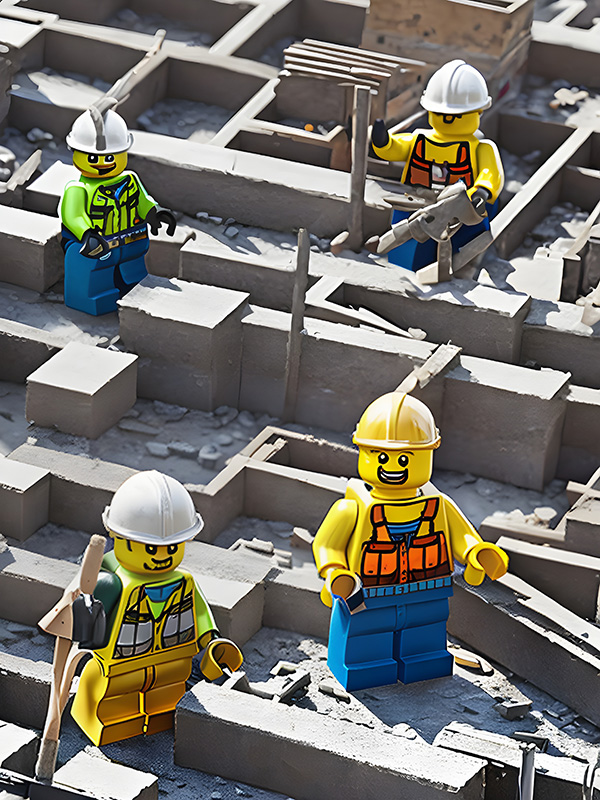
LEGO’s help article and LEGOLAND’s 2026 account support the new design-process context. Wired’s October 2003 report corroborates the search but gives late January for the next round, while Toysit records February 2004; the original account is preserved. The retained construction scene illustrates the theme and is not identified as a contest photograph. The two-view activity is an original Toysit suggestion; no physical product testing was performed.
- LEGO: Building tips for Master Builders — Manufacturer guidance on trying, revising and completing an original model.
- LEGOLAND California: Behind the Scenes — March 30, 2026 account; design, building and installation context reviewed separately from the 2003 story.
- Wired: Wanted: Master Lego Model Builder — Daniel Terdiman, October 14, 2003; contemporary corroboration with a different next-round date.
- Original Toysit coverage — Complete substantive text, recorded dates and historical illustration retained.
Images and descriptions are retained as historical material. How Toysit covers toys.
Created for Toysit by Tabbloza — the artwork in our header.