
Play ideas to start with
What would you like to make with the pieces in front of you? Start with an assortment, sketch a place for it to stand, or give a finished scene a visitor with a reason to arrive.
Explore earlier toys through their play ideas and historical context. Each article explains its evidence and edition limits; these selections are reading routes, not a current buying list.
Loose bricks and design ideas
Historical profile and play idea
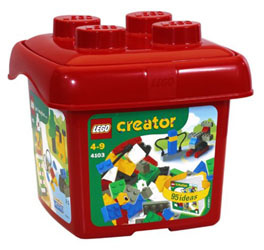
Begin with an assortment
Give the same handful of suitable bricks three jobs: a seat, a creature and an imagined vehicle.
Bulk Bucket of LEGO Bricks
Historical profile and play idea
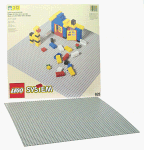
Plan a footprint
Draw building footprints and leave room for a delivery route before building upward.
LEGO Flat Gray Base
History and building activity
Make an idea recognizable
Explore the 2003 builder-search story, then try a small model from two viewpoints.
LEGO Master Model Builders: From an Idea to a Recognizable Model
Places for a story
Historical profile and play idea

Give a town a purpose
Invent a clock check, a window greeting and a doorway welcome for Bob’s opening day.
LEGO Clock Tower Bob (3282)
Historical profile and play idea

Welcome a new visitor
Draw a three-stop visitor map through the hall, owl roost and office of the 4842 castle.
LEGO Hogwarts Castle (4842)
Historical profile and play idea
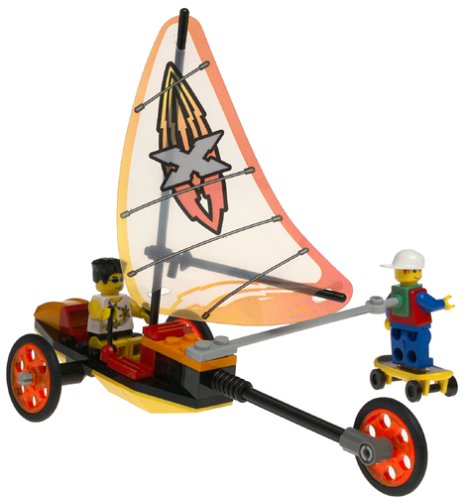
Send a vehicle on an outing
Sketch two beach routes and change one when a pretend delivery or closed path changes the journey.
LEGO Beach Cruisers
Explore the collection
Find a closer look at each toy, activity or historical report, grouped by what you would like to explore. The original index remains below with its earlier titles and wording.
Assortments, bases and design ideas
- Bulk Bucket of LEGO Bricks
- LEGO Bulk Tub
- LEGO Flat Gray Base
- LEGO Master Model Builders: From an Idea to a Recognizable Model Historical feature and building activity
Vehicles, routes and mechanisms
- LEGO Agents Aerial Defense Unit (8971)
- LEGO Alpha Team Mobile Command Center (4746)
- LEGO Atlantis Neptune Carrier (8075)
- LEGO Beach Cruisers
- LEGO Dino Attack Iron Predator vs. T-Rex (7476)
- LEGO Mindstorms Robotics Invention System — RCX and Instructions
- LEGO NINJAGO NinjaCopter
- LEGO Power Miners Stone Chopper (8956)
- LEGO Racers Monster Jumper (8165)
- LEGO Roadside Repair
Buildings, characters and story settings
Loose bricks, a detailed model and a moving mechanism offer different reasons to build. Start with what the builder wants to do, then check the system, instructions, handling and space needed to keep or rebuild the result.
What happens after the box is opened?
Picture the first session and the next one. Some builders enjoy following a sequence toward a recognizable model; others want a supply of pieces for their own inventions. A finished scene may become a setting for stories, while another model may stay on display. None requires choosing the biggest box.
Read the age marking and inspect the kind of assembly involved. Piece count alone does not describe how fiddly a build will be, how much repetition it contains or how much adult help the builder wants. Compare the size of the smallest pieces, the clarity of the steps and the space needed to leave work in progress.
Match the set to the builder
| Experience | Look for | Check before choosing |
|---|---|---|
| Inventing with loose bricks | A useful mix of shapes for the builder's ideas | Existing pieces, storage and age suitability. |
| Following a model | A subject and construction process the builder enjoys | Instructions, session length and room for unfinished work. |
| Playing in a finished scene | Accessible spaces and features the player can operate | Handling, figure fit and how easily parts detach. |
| Building mechanisms | Movement the builder wants to understand or change | Connection types, required components and troubleshooting instructions. |
| Displaying a model | A subject worth keeping on the shelf | Finished dimensions, supports and moving it after assembly. |
Use the set number
Save the number printed on the box or instructions. LEGO's official building instructions service is the starting point for finding the correct build. Check that the pictured model and set number match; similar names and later editions can lead to a different sequence or parts list.
For a used or mixed box, distinguish a collection of useful pieces from a complete named set. Ask whether the instructions, figures and specialized parts are included. Consult LEGO customer service about parts or support rather than assuming every older component remains available.
If electronics are involved, identify the exact hub, motor, controller and required software. Confirm current device compatibility and service availability before relying on a connected feature. An older Toysit announcement describes the product at that time; it does not verify that an app or accessory still works today.
Check the pieces you plan to combine
Do not judge fit by the LEGO name alone. Look at the actual connection and the instructions for the intended combination. LEGO's guidance on LEGO and DUPLO bricks addresses those systems; it does not mean every shape or specialist component joins every other piece.
Keep small pieces separate from play areas used by children for whom they are unsuitable. Follow each product's age and safety information even when combining collections. Also plan how the builder will find a useful piece: broad containers by shape may suit invention, while keeping a particular set together may suit repeat builds. Choose a system the household will actually maintain.
Try changing one part
With pieces already appropriate for the builder, choose a simple existing model and change one feature: widen a doorway, make a vehicle longer or add a second room. Keep the original instructions nearby if the builder wants to return to the first version. Ask what the change makes possible in the story or design.
There is no need to complete a whole alternative model. One successful change can be enough for a session, and a change that does not work can be taken apart. Avoid improvising electrical connections or modifying powered components; use their intended instructions.
For construction materials beyond this brand, see Building Toys. Explore Robot Toys when sensing and programmed behavior are the main interest, or Puzzles for a different kind of assembly challenge. The historical LEGO coverage below is not a current set ranking or an investment guide.
To browse earlier LEGO coverage alongside other toys from the same season, visit the 2013 season archive. Its building route leads into the original reports; it is not a list of sets currently for sale.
From the Toysit archive
Earlier coverage, with original titles and descriptions preserved as historical material. These descriptions include the promotional wording and claims of their time; they are not current operating instructions, safety assurances or product recommendations. Availability, pricing and app support have not been reverified. Identify the exact model and consult its current instructions and recall information.
- Lego Agents - New 2.0 action adventure building set from Lego.
- Attack of the Clones Legos - Build your own Star Wars adventure.
- Lego Atlantis - Interconnected undersea building set.
- Bob the Builder Legos - Help Bob and Scoop surprise Muck and give him a good wash down.
- Bulk Bucket of Legos - 70 interlocking pieces. Extra Duplo bricks for building bigger creations.
- Lego Alpha Team mobile command center includes 420 pieces to form four agents, ice orbs, snow scooters, and ray unit.
- Lego Bionicle
- Lego Bulk Tub - Nice variety of lego pieces.
- Lego Cars Roadside Repair - Great for kids who like both cars and legos.
- Lego Dino Attack defeat the Legos building set dinosaur.
- Lego Duplo Western Set - Classic Duplo blocks.
- Lego Flat Gray Base - Each durable baseplate forms a solid base for all your Lego building bricks.
- Hogwarts Castle Lego - Harry Potter building playset.
- Lego Jack Stone - Jack Stone, Lego hero, fights crime using a vast array of vehicles and gadgets.
- Lego Knight's Kingdom classic battle playset mounts siege engine against imaginary kingdom's castle walls with mini figure of king.
- Lego Life on Mars - The perplexing question of whether human beings could survive Mars's icy atmosphere is answered with an affirmative in Lego's Solar Explorer set, part of the Life on Mars series.
- Lego Mindstorms Robotics Invention System - Build and program your own Lego Robots.
- Lego Power Miners - Building block and character set based on underground mining.
- Lego Racers - Toy racing cars with pull-back action.
- Spiderman Legos - The Spiderman movie comes alive with the Spiderman Legos Action Studio.
- Lego Star Wars - Ten years after the fight to save Naboo from invasion, the galaxy is on the brink of civil war.
- Lego Toys
- Lego Universe - Online video game that combined building and battle.
- Lego Vikings building adventure set.
A guide to evaluating toys, not a hands-on product test. Read our editorial approach.
Created for Toysit by Tabbloza — the artwork in our header.