
From the Toysit archive
Musical Fingerpaint
Revisit Fisher-Price Musical Fingerpaint: drawing, sound and a fresh start, with a simple rhythm-and-line activity to try away from the original toy.
The play at a glance
Make a mark, hear a response, start again
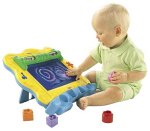
Musical Fingerpaint brought drawing and music together on a reusable surface. A movement could leave a visible trail and trigger sound, while clearing the board made room for another attempt. The enduring play idea is the back-and-forth between an action and its response: make a line, pause, listen and choose what comes next.
Drawing and listening are separate choices
Fisher-Price’s guide describes drawing with fingers or the four supplied tools. Music responds as the child draws; the music button plays an entire song. That gives two different experiences: sound linked to a movement, or a tune that continues while someone makes marks.
Leave space for either approach. A child may want to repeat a short line, press a shape several times or simply watch a mark appear. Naming what happened—“a long curve” or “three little marks”—can begin a conversation without turning the picture into a test.
A reusable board has its own kind of finish
The guide shows an eraser roller traveling up and down the screen. Clearing a drawing is part of this toy’s design, but it need not be the adult’s decision. Invite the maker to describe the picture before starting again.
A temporary picture can still have a title or a story. If the child wants to remember it, an adult can make a quick sketch on paper. The sketch records an idea rather than trying to reproduce every mark.
Keep the surface and the paint essay distinct
This board is not an invitation to add ordinary fingerpaint. The manufacturer instructs owners to discard it if its screen breaks or leaks, and not to immerse or dismantle it. Those specific directions matter more than the old description’s playful word “goop.”
The separate essay below celebrates conventional fingerpainting. Its descriptions of smearing and blending wet paint should not be read as operating instructions for the pictured device.
Make a little rhythm picture
On a large sheet, an adult draws a long curve, three dots and a short zigzag. Hum a slow sound for the curve, tap three times for the dots and invent a bouncy sound for the zigzag. Trace the shapes with a finger as the sounds happen.
Let the child choose which shape comes next, or add a mark with a drawing tool suited to them. Take turns following each other’s choices. This independent Toysit activity explores marks and rhythm; it needs neither wet paint nor the historical board.
The historical record
Original Toysit coverage
The complete original product description and fingerpainting essay remain below. The essay describes ordinary paint and makes broad developmental and therapeutic claims; those are historical commentary, not evidence about this toy’s surface or measured results.
Musical Fingerpaint by Fisher-Price
This baby-sized easel brings out a little one's creative genius while keeping the mess contained! Its special goop surface is not only fun to touch, it magically responds by rewarding baby with fun music and colorful designs. Baby can draw with fingers or the four drawing tools included. Music starts when the surface is touched; stops when touch is removed or press the musical note button to hear three lively songs play. Prop it up, lie it flat, or carry it anywhere and when new inspiration strikes, slide the roller bar to erase the screen for a fresh masterpiece!
Fingerpainting is a joyous activity that taps into our innate desire for sensory exploration, allowing both children and adults to engage with art in a playful and tactile way. The sheer freedom of smearing, mixing, and blending colors with one's fingers liberates the creative spirit, making the process as rewarding as the end result. It encourages experimentation and fosters an understanding of colors and shapes, without the constraint of brushes or tools. For young children, it's not just fun but also educational, aiding in the development of fine motor skills and hand-eye coordination. The textural experience of the paint and the sensory satisfaction derived from 'feeling' your art adds an extra layer of engagement. In many cases, fingerpainting serves as a child's first interaction with art, creating a positive association that lasts a lifetime. The immediacy of the medium, where every movement leaves an instant visual impact, provides a sense of accomplishment and boosts self-esteem. Fingerpainting also offers a therapeutic outlet for expressing emotions, facilitating cognitive development, and enhancing creativity. The hands-on nature of fingerpainting makes it inclusive, making art accessible to people of all ages and abilities.
Sources and editorial notes
Fisher-Price’s instruction sheet for product 73437 was read and its drawing and eraser diagrams compared with the retained photograph. The board shape, roller and tool arrangement correspond. Match the number on a surviving unit before applying the guide. No physical toy, screen material or learning outcome was tested.
- Fisher-Price Musical Fingerpaint instructions, product 73437 — Manufacturer guide; drawing and erasing diagrams on pages 4–5.
Images and descriptions are retained as historical material. How Toysit covers toys.
Created for Toysit by Tabbloza — the artwork in our header.