
Toy profile
KOSMOS Robotic Flower: Watch the Petals Respond
Current buying option
On Amazon KOSMOS Robotic Flower 621230 — German edition (paid link)
This link identifies model 621230, the German-language edition covered here. Plan for German instructions and adult assembly help. A small Phillips screwdriver and a DC 5V USB power adapter with USB-C cable are separately required.
Explore the German-edition KOSMOS Robotic Flower, its sensor-controlled petals and an original prediction-and-observation activity.
The play at a glance
A petal movement worth watching twice
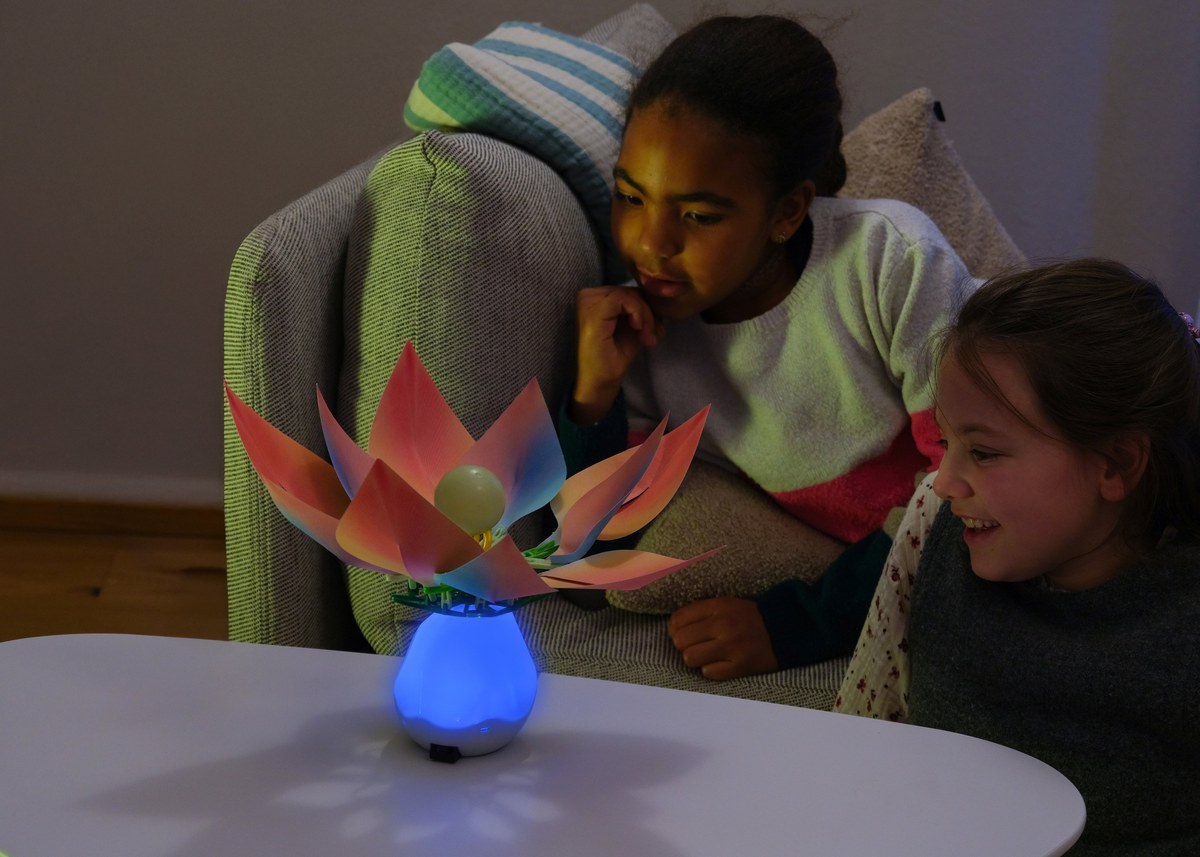
The petals open around a bright center, then fold inward as a hand approaches the sensor. A little movement can make the whole flower look different.
Build the KOSMOS Robotic Flower with adult help, then give a partner a prediction to test by watching.
Build a flower that answers a signal
Colorful petals surround a central sphere above a glowing base. The KOSMOS Robotic Flower combines a small mechanism with light and infrared sensors, giving its flower shape a visible response to the space around it.
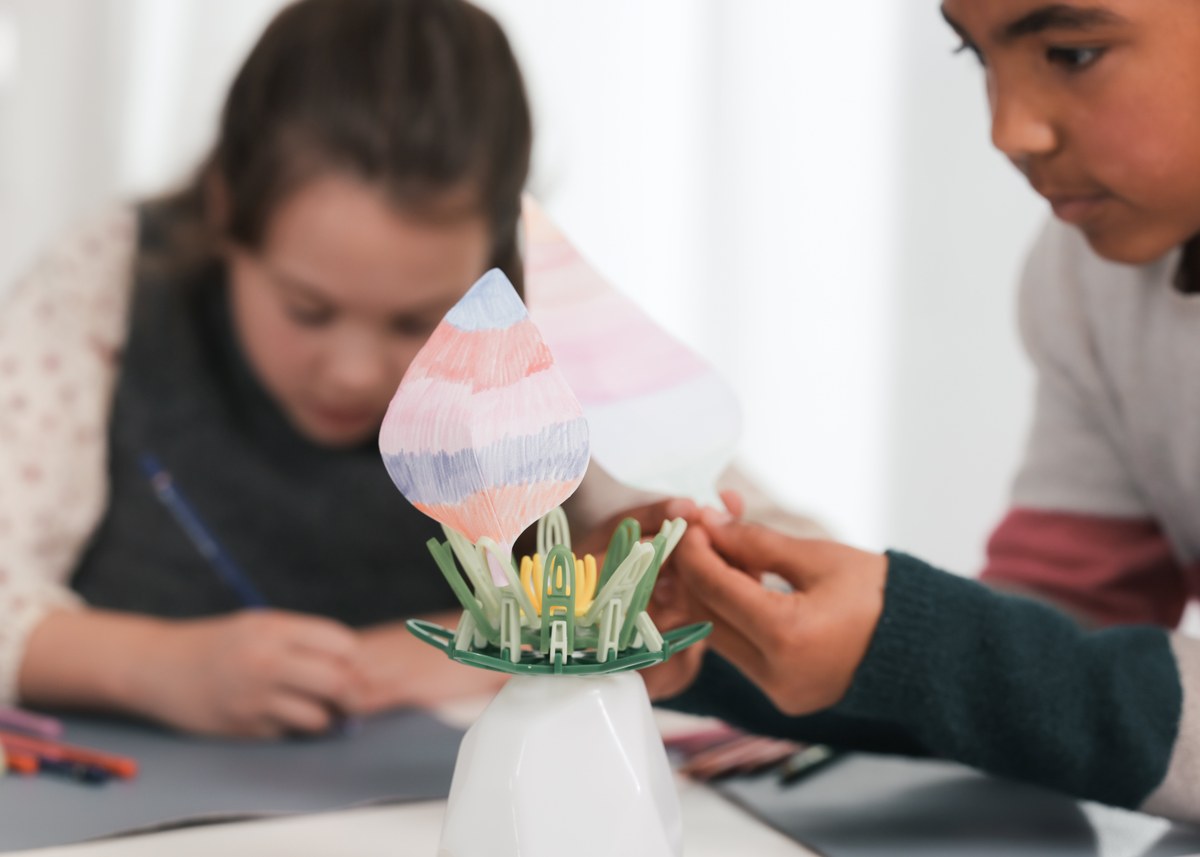
This profile covers German-language model 621230, identified by KOSMOS as article 62123, for ages eight to fourteen. Supplied printed and blank petals invite a personal design. Assembly comes first: a grown-up should follow the illustrated German instructions with the child and check the completed build before use.
The kit separately requires a small Phillips screwdriver and a DC 5V USB power adapter with a USB-C cable. The manual assigns USB connection to an adult. Use the assembled flower with clear space around the petals; small parts and accessible electronics make the stated age guidance important.
Choose a mode, then watch
The switch selects day, off or night mode. In day mode, ambient light influences how far the petals open. Blocking the motion sensor for more than a second closes them; moving away allows them to open again according to the light. Night mode has different controls: a brief sensor interruption toggles its illuminated display, while the button controls color cycling. Follow the matching manual’s diagrams when finding the controls.
That connection between an input and a visible movement gives a visitor something to investigate. A flower sitting in one place can become the center of a little demonstration: make a prediction, show the signal and watch what actually happens.
Try a two-sketch prediction card
An original Toysit observation activity: once an adult has checked the finished build, leave the flower on a stable surface with room for its petals. Keep pencils and paper beside the demonstration space.
- Record the starting view. With the adult selecting day mode, look at the petals in ordinary room light. Sketch their opening on the left half of a card. Use a few simple lines to capture what you see.
- Make a prediction. Below that sketch, draw what you think will happen when a hand approaches the sensor. Add an arrow to show the movement you expect.
- Give one signal. Following the manual’s sensor diagram, bring a hand near the sensor and pause, keeping clear of the petals. Move it away and watch the response. Keep the flower, lighting and surrounding objects in the same places.
- Draw the observation. On the right half, sketch what happened. Add a short sentence about one detail: perhaps when the movement began or how the petals looked after the hand moved away.
- Invite another observer. Show a partner the starting sketch and let them predict before repeating the same demonstration. Compare the two descriptions afterward.
A difference between prediction and observation is a useful addition to the card. Circle it and write a question for a later demonstration. Make changes one at a time, using the manual’s intended operating modes and keeping the moving parts clear.
For an illustration-only variation, draw a flower with two possible petal positions and invent a sign that invites it to open. Give the imagined flower a name and make a tiny exhibition label. Keep this fictional signal distinct from the controls of the assembled kit.
Sources and editorial notes
Researched November 12, 2026 from KOSMOS product and press information, the matching German manual and the actual Amazon listing for model 621230. Manual safety, equipment and operating sections were visually reviewed; the complete assembly sequence and physical product were not tested. The instructions and covered edition are German-language. The observation-card activity is an original Toysit suggestion. No sample/sponsorship arrangement is recorded.
- KOSMOS: Robotic Flower product information — Edition, recommended age range, included parts and separately required equipment.
- KOSMOS: matching German instructions (PDF) — Safety and adult guidance, components and operating sections reviewed; the complete construction sequence was not independently checked.
- KOSMOS: Robotic Flower press information (PDF) — Dated maker introduction retained with the library product record.
Created for Toysit by Tabbloza — the artwork in our header.