
Toy profile
ReBotz Halfpipe: Give a Skating Robot Two Dance Moves
Meet ReBotz Halfpipe, a mechanical skating robot, and try an original dance-studio activity with movement sketches and one documented arm adjustment.
The play at a glance
Robot Dance Studio
A little skater rolls into the spotlight, and you give its movement a name. Watch Halfpipe in action, sketch what happened, then change one documented setting and introduce a second move.
Find the Toy on Amazon: Thames & Kosmos ReBotz Halfpipe Skating Robot Kit (paid link)
A little skater with an unusual pair of props
Halfpipe stands on a blue skateboard base with orange wheels. Its gray body and green arms give it the look of a small workshop character, especially when you notice what it is holding: a broom in one hand and a folded umbrella in the other. Those props are part of the action. As the arms move, their ends meet the floor and help the skater along.
The pleasure is in watching the whole arrangement work together. Follow an arm, then a prop, then the wheels. A slight change in the setup can give the next journey a different shape. That makes a short performance worth watching twice.
Build one working movement
Use the matching Halfpipe manual for assembly, including the arm positions, prop heights and rubber caps. The motor module takes three AAA batteries; an adult should fit or change them and close the compartment as directed. Follow the package age guidance and keep the small parts away from children under three.
Choose a clear, level floor space with room for a short run. Start with the manual's basic arrangement, watch where the skater goes, then switch it off before handling or adjusting it. Keep the drawing materials for the activity beside the working space.
The manual's experiment section shows a staggered arm arrangement for a zigzag movement. Use that illustrated adjustment as the second setup in the game below. Let the actual movement guide your description.
Try this: Robot Dance Studio
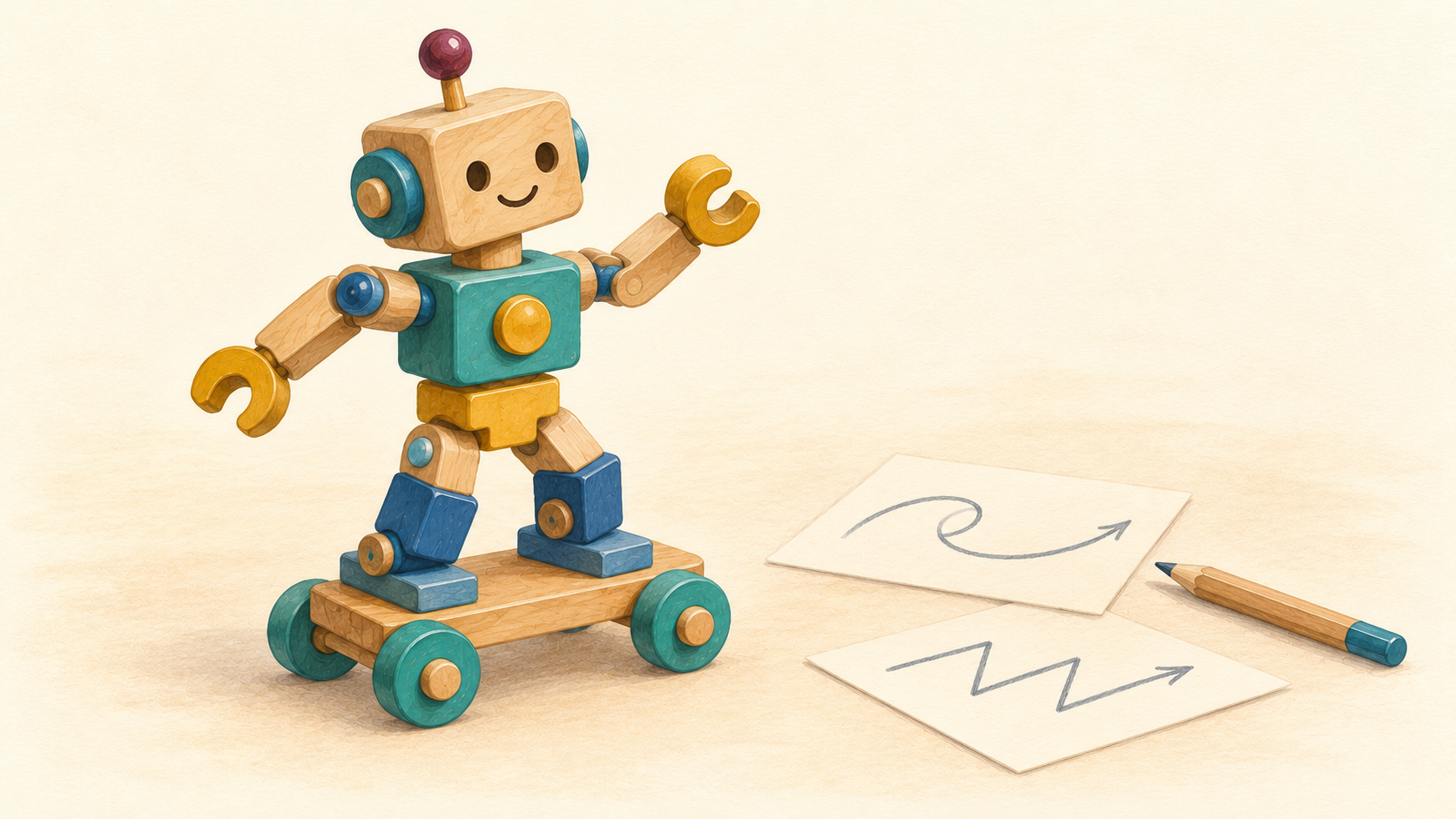
Imagine that this small skater is preparing two moves for a show. You are the movement designer and the person making its programme. You will need two paper cards and a pencil, kept separate from the robot.
- Sketch an opening move. Before switching on, draw a line on the first card to show the movement you expect. Give the sketch a playful name, such as Morning Shuffle. The name belongs to your imagined show.
- Watch one short performance. Start the skater in your chosen clear space. Notice a detail you can describe: a turn, a wobble or a change in direction. Stop the toy, then draw the movement you actually saw beside your prediction.
- Change one setting. With the toy switched off, follow the manual's staggered-arm example. Keep the floor space and starting position the same so you can concentrate on the effect of this one adjustment.
- Make a second card. Predict again, observe another short run and add a sketch afterward. Choose a name that fits this performance. Perhaps the skater has invented the Zigzag Greeting.
- Introduce the show. Place the cards side by side, away from the moving toy. A partner announces each move and describes one difference they noticed. Swap jobs so each person gets a turn at observing and explaining.
A surprising result can become the most interesting card. Add a small star beside the moment that caught your attention and tell the audience why it earned one. The aim is a pair of observations you can share, rather than a perfectly repeated routine.
Give the cards a performance of their own
You can also begin with just paper. Draw a little skater and two possible movement lines. Take turns tracing one line with a finger while the other person invents a title and an announcement. Add a third card for an encore: perhaps a tiny bow, a grand entrance or a very cautious turn.
Keep these imagined moves in the drawing. When you return to the kit, use the movements and adjustments described in its manual, and let your story grow around what you observe.
Sources and editorial notes
Researched October 29, 2026 for Thames & Kosmos Halfpipe 552003 using English manual 552003-02-090221 and manufacturer imagery. Robot Dance Studio is an original Toysit suggestion built around a documented adjustment; no hands-on testing is claimed. The editorial illustration shows a generic toy robot, not the actual kit.
- Thames & Kosmos: Halfpipe — Model 552003 identity and product imagery; checked October 29, 2026.
- Halfpipe English experiment manual — Contents, battery/safety guidance, assembly and experiments; manual 552003-02-090221. Refreshed copy matches the inspected planning source.
Created for Toysit by Tabbloza — the artwork in our header.