
From the Toysit archive
Turbo Phonics
Explore Turbo Phonics: selecting letters, hearing sounds and changing a word to a rhythm, with an independent paper word-building activity.
The play at a glance
Change a letter, change the sound
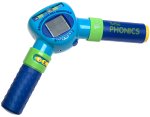
Turbo Phonics turned three letter choices into something to hear. Its handlebar shape invited twisting and pressing, while the selected letters became part of a musical pattern. The interesting question is what changes when one letter changes: the spelling, the sound, the meaning, or all three.
From a letter choice to a song
The parent guide describes turning the letter-selector handle, placing letters in three positions with numbered Enter buttons, and pressing Go. A letter can be changed while the song continues. This separates choosing a symbol from listening to the result.
In Jammin’ mode, the Beat Bar advances the letter sounds at the player’s pace. The guide says the bar does not operate in the other rhythm modes. A steady background rhythm and a beat made by the player are different experiences.
A name, a sound and a word
When sharing the toy, distinguish saying a letter’s name from making its sound and saying the complete word. On paper, point to m in mat, say its name, then try its sound before reading the word together. A familiar picture or object can give the word a meaning beyond the toy’s response.
The original report describes different feedback for words and nonwords. Treat that as part of its account of the toy, not a complete dictionary test. A response from an old electronic vocabulary does not settle whether an unfamiliar word exists.
Let the listener choose the pace
Ask whether the child wants to hear the same word again or change one part. If the music makes it difficult to notice the sound, pause the toy and say the word together. An enjoyable sound experiment does not need to become a speed or spelling test.
For a found unit, identify its controls against the guide before assuming the archived feature list describes every revision. The original photograph and all of the earlier wording remain available below for comparison.
Make a one-letter word trail
Write cat on three paper cards. Replace the first card to make hat, then replace the last to make ham. Say each word and draw or describe what it means. Invite the child to suggest the next change, checking an unfamiliar result together.
This is an independent Toysit activity, not a built-in game or manufacturer rule. Keep the trail short enough that each change can be noticed and discussed.
The historical record
Original Toysit coverage
The complete original description is preserved below. Its claims about literacy, manual dexterity, word totals and a warp dial are historical coverage, not results of new testing.
Teaches letters, phonics, spelling, and rhyming
Phonics with a beat. Enter 3 letters and pick a beat. While you conduct the music, letter sounds and words play back in rhythm. Teaches letters, phonics, spelling, and rhyming. Create more than 450 words. Create amazing rhythms with sounds and letters. Turbo Phonics is phonics with a pulse! Enter three letters and pick a beat. Next, get ready to swing - letters sounds and words play back in rhythm, while you conduct the music. Change the word mid-rhythm and Turbo Phonics blends in new letters without missing a beat.
Choose from five energetic rhythms. And that's not all: in rhyming mode, the beat never stops as you enter in one rhyming word after another. Or use the beat bar to tap out your own rhythm. Grab hold of the handlebars and go on a musical journey with letters and sounds. To start, choose one of five background rhythms and enter three letters to make a word. Next, turn one handle and scroll through the alphabet to enter each letter. After three letters are entered, push the go button, and the cheerful computer voice says each letter, then blends the three sounds together to a rhythmic beat. A nice feature is how Turbo Phonics differentiates between words and nonwords. When a real word is created, it says great word. When three letters are entered that don't form a word, it says great sounds.
Turbo Phonics is a clever way to help kids develop early linguistic skills, and its handlebar grip encourages manual dexterity. Along with two levels of volume control, there is a headphone jack for quiet play, which could be especially useful if Turbo Phonics is taken on the road. Teaches letters, phonics, spelling, and rhyming. Features warp dial that goes from slow and low to fast and high; five fun built-in rhythms-from hip hop to jazz; rhythms that incorporate letter names, phonetic sounds, and whole words; an easy-grip rubber turning handle; and is a hand-held unit for portability.
Sources and editorial notes
The manufacturer-authored Turbo Phonics parent guide, carrying a 2000 copyright, was read as indexed PDF text on a third-party host. Its control descriptions correspond to the archived toy, but direct PDF retrieval failed and its diagrams could not be visually inspected. No device or learning outcome was tested.
- LeapFrog Turbo Phonics parent guide (PDF mirror) — Period instructions; indexed PDF text verified, direct download unavailable during review.
Images and descriptions are retained as historical material. How Toysit covers toys.
Created for Toysit by Tabbloza — the artwork in our header.