
From the Toysit archive
Sesame Street: Sing the Alphabet
Sesame Street’s Sing the Alphabet pairs colorful letters and familiar characters with an original paper-window neighborhood activity.
The play at a glance
A neighborhood with a letter in every window
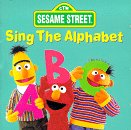
Bert, Elmo and Ernie gather among oversized letters on the turquoise Sing the Alphabet cover. The original program gives each letter its own stop: a sandwich, a question, a machine or a curious character. Together, the titles suggest a neighborhood where opening the next window might reveal something wonderfully unexpected.Follow a parade of letters
The sequence opens with “ABC-DEF-GHI” and then travels from A through Z. A letter can have an object beside it, a sound to explore or a person to introduce. The archived credits bring together such familiar names as Big Bird, Grover, Bert and Ernie.
Choose a letter from the list and look for its shape on the cover or on a page of your own. Someone might draw a tall letter beside a tiny doorway; another might turn a rounded letter into a window. Leave space for the people who will live there.
Build a letter-window theater
Fold a strip of paper into three panels so it can stand on a table. Draw a window and a large letter on each panel. Begin with letters that offer easy names and objects: M could belong to Mina, who has a map; B could belong to Ben, who carries a basket.
Invent the third neighbor together. Give that person an object beginning with the window’s letter, then pretend to open the windows one at a time. Each resident introduces themself and shows what they have brought.
Now connect the three windows with one small problem. Perhaps a visitor needs directions to a picnic, and the neighbors can offer a map, a basket and a blanket. Let each player add a sentence, point to a picture or draw the next detail.
Welcome a new neighbor
Turn the strip around and make three more windows on the back. A fresh set of letters can bring a different cast and a new errand. These residents and their dialogue belong to your own neighborhood story.
The historical record
Original Toysit coverage
The complete original track list and commentary follow as historical coverage.
Sing the Alphabet by Sesame Street
Rhythm and Repetition: Songs often have a rhythmic quality that makes them catchy and memorable. The repetitive nature of songs, especially the alphabet song, reinforces the sequence of letters, aiding in retention.
Melodic Patterns: The melody of a song can help children remember sequences. In the case of the alphabet song, the tune provides a melodic pattern that corresponds with the order of the letters, making it easier for children to recall.
Engagement and Enjoyment: Children are more likely to engage in activities that they find enjoyable. Singing is a fun activity that captures children's attention, making the learning process feel less like a chore and more like play.
Mnemonic Device: Songs serve as mnemonic devices, aiding in memory retention. The combination of melody and rhythm creates a pattern that helps children remember information, in this case, the sequence of the alphabet.
Active Participation: Singing the alphabet song encourages active participation. As children sing along, they are actively practicing the sequence of letters, reinforcing their learning.
Multi-sensory Learning: Songs engage multiple senses. Children hear the song, sing it out loud, and often accompany it with hand movements or gestures. This multi-sensory approach caters to different learning styles and enhances memory retention.
Social Interaction: Singing songs, including the alphabet song, is often a group activity. When children sing together, they learn from each other, correct each other, and reinforce the sequence of letters collectively.
Songs, with their combination of melody, rhythm, and repetition, provide a powerful tool for teaching children the alphabet. They transform learning into an enjoyable and interactive experience, making it easier for children to remember and recite the sequence of letters.
- ABC-DEF-GHI - Elmo
- A-The Sound Of The Letter 'A' - Big Bird
- B-Oscar's 'B' Sandwich - Oscar The Grouch
- C-'C' Is For Cookie - Cookie Monster And The Company
- D-Dee, Dee, Dee - Ernie
- E- What's My Letter? - Guy Smiley And Prairie Dawn
- F-Four Furry Friends - Grover, Herry Monster, Oscar The Grouch And Cookie Monster
- G-Two 'G' Sounds - Grover And George
- H-Ha Ha - Harvey Kneeslapper, Herry Monster And Big Bird
- I-I Stand Up Straight And Tall - Grover
- J-'J' Friends - The Anything People
- K-Herb's Silly Poem - Herbert Birdsfoot
- L-La La La - Bert and Ernie
- M-MMM Monster Meal - Herry Monster And Cookie Monster
- N-The Noodle Story - Big Bird And Oscar The Grouch
- O-Would You Like To Buy An 'O'? - The Salesman And Ernie
- P-My Favorite Letter - The Anything People
- Q-The Question Song - Grover And A Little Girl
- R-The 'R' Machine - Ernie And Bert
- S-Sammy The Snake - Sammy The Snake
- T-The Tale Of Tom Tattertall Tuttletut - Herbert Birdsfoot And The Anything People
- U-'U' Lecture - Professor Hastings
- V- Very, Very Special Letter - Big Bird
- W-The National Association Of 'W' Lovers - Bert
- X-'X' Marks The Spot - Sherlock Hemlock
- Y-Just Because - Grover And A Little Girl
- Z-The Zizzy Zoomrs - The Anything People
Sources and editorial notes
The licensed Apple Music listing supplies a 27-track sequence, a 1996 date and a 2018 Sesame Workshop license. Its final title uses “Zizzy Zoomers”; the original Toysit spelling is retained below. Exact CD packaging and detailed performer credits were not recovered, so the original Noodle Story attribution is preserved without an asserted correction. Older learning-style and memory claims remain historical commentary. The window theater is an original Toysit activity; no audio playback or physical testing occurred.
- Apple Music: Sesame Street — Sing the Alphabet — Licensed album metadata and all 27 track titles reviewed; later digital listing distinguished from the archived CD.
- Original Toysit coverage — Complete original track list and historical commentary preserved.
Images and descriptions are retained as historical material. How Toysit covers toys.
Created for Toysit by Tabbloza — the artwork in our header.