
From the Toysit archive
Alphabet Train Floor Puzzle
Build an illustrated train, follow its letter sequence and use the finished picture as a starting point for conversation.
The play at a glance
Build the picture, then follow the letters
This floor puzzle combines a long train picture with an alphabet sequence. A player can look for the next part of the picture, compare connecting edges or notice a familiar letter.
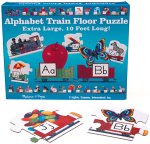
The photograph shows illustrated jigsaw sections. They are not individual letter-shaped pieces fitted into letter-shaped slots, despite the generic explanation in the earlier text.
Make room for the route
Use the box for your own edition to judge how much clear floor space the finished train needs. Turn its pieces picture-side up and find an end or another recognizable section to begin with.
Let the picture do some of the work. Look for colors or lines that continue across an edge, then try the connection gently. If a fit needs force, set that piece aside and compare another.
Use the alphabet as another clue
A familiar letter can become a landmark: find it, then look at the sections before and after it. The box picture can help when the next letter or connection is uncertain.
A child may build from the images before knowing the whole alphabet. An adult can name a letter as it appears without requiring a recitation before the next piece goes in.
Keep letter names and sounds distinct
Say a letter’s name when you point to its printed form. If you then talk about a word in the picture, make that a separate observation. Naming a letter and noticing a sound in a spoken word are different activities.
Do not assume every pictured word begins with its featured letter. Look at the actual printed word and where the letter occurs. Invite the child to find a familiar letter from their own name, whether or not they want to discuss sounds.
Travel along the finished picture
Choose a passenger and describe what it might see along the train. One player can point to the next stop while another adds a sentence. Keep the pieces in place so the finished work becomes a shared scene.
When putting the puzzle away, compare the pieces with the inventory for that exact box. The archive’s old count is not a reliable missing-piece checklist. A photo of your completed puzzle can be a useful reference for the next session.
The historical record
Original Toysit coverage
Both original paragraphs remain below, including the 21-piece count and self-correcting description. That count has not been confirmed for the pictured edition. The references to letter-shaped pieces, fixed learning styles and assured literacy benefits should not be read as verified descriptions or outcomes of this puzzle.
Alphabet train puzzle with thick, self-correcting pieces.
The Alphabet Train puzzle includes 21 extra thick pieces. The self correcting pieces make learning the alphabet easy and fun. Puzzles designed with letters of the alphabet are an effective and engaging way to introduce children to letters and their corresponding sounds. By manipulating letter-shaped pieces, children gain a tactile understanding of the shapes and forms of each letter, enhancing their recognition and memorization.
Alphabet puzzles often include pictures that correspond to the beginning sound of each letter, reinforcing the association between the letter and its sound. This multisensory approach caters to different learning styles, allowing children to see, touch, and hear the letters as they play. The process of fitting letters into their corresponding slots also promotes hand-eye coordination, fine motor skills, and concentration. By integrating learning with play, alphabet puzzles make the process of learning the alphabet enjoyable and accessible, laying a strong foundation for reading and writing skills.
Sources and editorial notes
The original image, product identifiers and prose were reviewed on October 15, 2026. Later listings for similarly named Melissa & Doug puzzles do not establish the pictured revision or resolve its piece count. No exact manufacturer sheet was matched. NAEYC’s puzzle-play guidance supplies general context for giving a child time to try a fit. No physical puzzle or literacy outcome was tested.
- NAEYC: How to Support Children’s Approaches to Learning? Play with Them! — General guidance on allowing exploration and persistence during puzzle play, not specifications for this train.
Images and descriptions are retained as historical material. How Toysit covers toys.
Created for Toysit by Tabbloza — the artwork in our header.