
From the Toysit archive
Animals Matching Game
Explore the animal photographs in a three-in-one matching set, then invent illustrated postcards and trade picture clues with a partner.
The play at a glance
Animal pictures with more than one connection
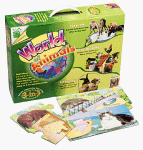
A green World of Animals box stands behind a spread of animal photographs. Its white handle and bright picture panels give the set the look of a little collection ready to be unpacked. The three-in-one label hints at several ways to connect the pictures.
Toysit’s original account describes three matching themes: animals and their food, their homes, and the names of their young. The pictures also invite a slower kind of play—looking for a distinctive outline, comparing two photographs and explaining what caught your eye.
Start with a few pictures
Spread out a small selection with the pictures facing up. Choose one image and describe something visible: a patch of color, the position of a head or a shape in the background. A partner can find the picture that fits, then offer a detail you have not mentioned.
When using the set’s food, home or young-animal pairings, follow the information supplied with the particular edition. A single food or habitat picture can start a conversation; it does not describe everything an animal eats or every place it lives. Keep questions that need more information for a zoo, museum or wildlife reference.
Try an animal postcard exchange
For this original Toysit activity, gather paper and crayons and imagine that the pictured animals are sending greetings.
- Choose an animal photograph without announcing your choice.
- Draw one detail from it on a paper postcard. Add an invented greeting, such as “Hello from the picture with the long tail!” An adult can write a dictated message.
- Hand the postcard to a partner, who looks for the matching photograph and explains the clue.
- Let the partner add a second visible detail before sending a reply.
Keep the greetings playful and imaginary. If a postcard includes a fact about food, habitat or young animals, check that fact separately. Players can also make a paper-only version using animal pictures they draw themselves.
Make a small picture gallery
Arrange the finished postcards beside their photographs. Give the gallery a title chosen by the players, then take turns being the guide. Each guide can point out a favorite detail and explain how the postcard led to its picture.
The historical record
Original Toysit coverage
The original product account and commentary are preserved below as historical coverage.
Learn where they eat and live and what their young are named
Learn about animals - what they eat, where they live, and the names of their young in 3 fun matching games. Below are some of the key educational benefits:
1. Vocabulary Enhancement
As children play the game, they are introduced to and become familiar with new words, such as names of animal habitats, specific names of young animals like 'calf' or 'kit', and various foods that animals consume.
2. Cognitive Skills Development
Matching games inherently boost memory and concentration. Remembering the traits and characteristics of each animal and matching them appropriately exercises the brain and improves cognitive functions.
3. Introduction to Animal Biology
By learning what animals eat and where they live, children gain insights into animal biology and ecology. This foundational knowledge can foster a deeper interest in biology and environmental sciences in the future.
4. Improved Observation Skills
Discerning subtle differences and similarities among animals to make the correct matches sharpens observational skills. Over time, this can lead to a more attentive and detail-oriented approach in other areas of learning.
5. Cultural and Geographical Awareness
As children learn about where animals live, they also gain insights into different geographical regions and habitats around the world. This can spark curiosity about different cultures and geographical areas.
6. Enhancing Curiosity and Imagination
Imagining the life of a polar bear in the Arctic or a lion in the African savannah can stimulate a child's imagination. Such games often lead to further questions and exploration outside the game itself.
An animal matching game that goes beyond simple visual pairing offers children a rich and engaging learning experience. It combines fun with education, ensuring that learning is a joyful and memorable process.
Sources and editorial notes
The retained Toysit text and small original photograph are the evidence for this profile. An exact-edition instruction sheet and reliably readable maker mark were not recovered. The three matching themes come from the original account; rules, card counts and a complete animal list are not inferred. Similarly named modern games were excluded. The earlier developmental claims remain historical commentary. The postcard activity is original editorial play, without physical testing or measured outcomes.
- Original Toysit image — Existing same-site photograph reviewed and retained unchanged.
- Original Toysit coverage — Complete original product account and historical commentary preserved.

Images and descriptions are retained as historical material. How Toysit covers toys.
Created for Toysit by Tabbloza — the artwork in our header.