
From the Toysit archive
Basic Microscope Kit
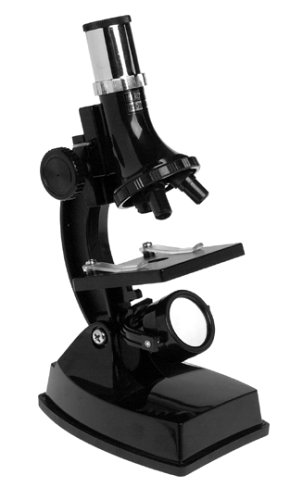
Look for a clear, repeatable view of a small detail, with the Edu Science microscope from Toysit’s archive as a starting point.
The play at a glance
Start with something you can describe
A useful first microscope session can be a close look at one prepared slide: find a shape, describe its edges and draw a detail that another person can find again. Seeing something clearly matters more than reaching the largest number on the box.
The original Edu Science account has a useful observation of its own: focusing, lighting and movement of the microscope can make a high-power view difficult to use. Its exact magnification figures conflict, so they need to be checked against the instrument in hand.
Make a small observation notebook
Once an adult has set up the microscope with a suitable prepared slide according to its own instructions, give the observer a simple task:
- Find: choose one visible edge, line or repeating shape.
- Describe: say what is actually visible before guessing what it is.
- Draw: sketch the view and write the slide label beside it.
- Compare: let a second observer find the same feature and add a detail.
Record the marked setting used. A sketch does not need to be polished; its purpose is to make the observation easier to discuss and repeat.
A larger image is not always a clearer image
Magnification describes how much larger a view appears. Resolution concerns the detail that can be distinguished. Nikon’s microscopy guide explains that extra magnification beyond an optical system’s useful range can enlarge a view without revealing more information.
For a beginner, a clear view at a lower setting can therefore be more useful than an indistinct view at a higher one. Follow the instrument’s instructions for beginning at low power and changing objectives; this old page cannot establish its focusing travel or lens-to-slide clearance.
Check the labels before comparing specifications
The old headline and paragraph agree on 100x but disagree on the other two settings. That might reflect mixed product descriptions; the retained photograph does not settle it. Check the model label, lens markings and matching manual rather than choosing one set of numbers from this page.
The original description also mentions textiles and insect parts on prepared slides. It is not a reliable inventory for every box or secondhand collection. Begin with an identified, intact slide intended for the actual instrument rather than the old paragraph’s improvised specimen suggestions.
Give the view time to settle
Use a stable work surface and take turns without leaning or tapping on it. If the view becomes hard to interpret, return to the last clear view using the instrument’s directions, then compare what changed.
Keep the first session short enough to finish with a finding: a repeated pattern, a surprising edge or a question to investigate next. Lamp, mirror, slide-handling and cleaning directions should come from the matching manual.
The historical record
Original Toysit coverage
The complete earlier description and benefits list remain below. The headline gives 100x, 450x and 750x; the paragraph instead gives 100x, 300x and 600x. Neither set of figures is adopted as a verified specification here. The original age, specimen suggestions and learning claims are historical material.
Edu Science Microscope Set 100x, 450x, 750x.
For those with a little training, this high-powered scope reveals a whole new cellular world. Most 8-year-olds will find the prepared slides of various textiles and grasshopper parts fascinating at 100x magnification, but at 300x or 600x magnification the fine-tuned focus and lighting adjustments may prove problematic. The apparatus is so sensitive at 600x that even nearby footsteps can jolt a specimen out of view. However, the set offers worthwhile lessons in microscope function and terminology, as children manipulate the eyepiece, the focus knob, the body tube, the revolving turret, the objective lenses, the arm, the stage, the slide-clips, the mirror, and the lamp. Creative scientific exploration is also encouraged as budding scientists concoct homemade slides of specimens (from algae to earwax).
Microscopes: A Perfect Gift for Scientifically Inclined Children
- Exploration of the Micro World: Microscopes open up a whole new world of tiny organisms and structures, allowing children to explore things that are invisible to the naked eye.
- Educational Value: Microscopes provide hands-on learning experiences, enhancing children's understanding of biology, chemistry, and physics.
- Encourages Curiosity: Using a microscope encourages children to ask questions and seek answers, fostering a natural curiosity about the world around them.
- Develops Critical Thinking: Analyzing microscopic samples requires observation and critical thinking skills, helping children to develop these essential abilities.
- Enhances Creativity: Microscopy allows children to see ordinary objects in extraordinary ways, inspiring creativity and artistic expression.
- Real-World Applications: Understanding how to use a microscope has real-world applications in various scientific fields, potentially sparking an interest in future careers.
- Quality Family Time: Exploring the micro world together can be a fun and educational family activity, strengthening bonds and shared interests.
- Builds Patience and Focus: Working with a microscope requires patience and focus, valuable skills that can translate to other areas of life.
- Endless Possibilities: From examining pond water to looking at plant cells, the possibilities for exploration are endless, providing ongoing engagement and discovery.
- Accessible and Affordable: With various models available, microscopes can be accessible and affordable, making them a practical gift for children of different ages and interests.
Microscopes are more than just a toy; they are a tool that can inspire, educate, and entertain. They make an ideal gift for children who have a passion for science and a desire to explore the world on a microscopic level.
Sources and editorial notes
The original image and text were reviewed on October 15, 2026. Nikon’s MicroscopyU supports the distinction between magnification and resolved detail; it is not a manual for this Edu Science microscope. An exact model and matching instruction sheet were not established, and no instrument was physically tested.
- Nikon MicroscopyU: Useful Magnification Range — Explains why enlarging an image does not necessarily reveal more detail.
Images and descriptions are retained as historical material. How Toysit covers toys.
Created for Toysit by Tabbloza — the artwork in our header.