
From the Toysit archive
Pets Peg Puzzle
Explore Pets Peg Puzzle through matching pictures, animal outlines and descriptive clues, with a simple animal-story activity to try on paper.
The play at a glance
Let a picture become a clue—and then a story
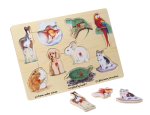
Pets Peg Puzzle pairs animal pictures with matching spaces in a board. The old description reports the same image beneath each removable piece, offering a picture clue as well as an outline. Once an animal is found, the conversation can continue: what detail gave it away, and what might happen in a story about it?
Compare the animal and the outline
Look for a recognizable detail: an ear, a tail, a patch of color or the direction an animal faces. Then compare the outside edge of the piece with the space. An animal name may help someone find the picture, but the outline still matters when placing it.
Begin with two removed pieces and leave the rest in place. Offer a clue rather than immediately pointing to the answer. If the child chooses a different piece, ask what they noticed; the clue may have described more than one animal.
Describe what you can actually see
The title uses “Pets,” while the old description ranges from foals to fish. Treat it as a collection of animal pictures rather than a guide to which animals belong in a home. Use a clear detail in the actual picture before assuming a particular baby-animal name or species.
Descriptions can be short: “I see long ears” or “this one has fins.” Let the child give the next clue. There is no need to turn every placement into a vocabulary question.
Give the finished animal somewhere to go
After matching, invent a small event: an animal finds a shady spot, meets a friend or returns from an outing. Ask what happens next. The story is pretend play, separate from factual questions about an animal’s habitat or care.
The old promise of generations of use does not describe the condition of every remaining board. Its original parts and model information matter more than the name of a current eight-piece puzzle.
Describe, find, continue
Draw three simple animals on paper. One person describes a visible feature without naming the animal; the other points to a picture and explains the choice. If the clue fits two pictures, add another detail together.
Give the chosen animal the first sentence of a story, then let the other person add the next. This independent Toysit game combines observation with invented storytelling and works without the archived board.
The historical record
Original Toysit coverage
The complete original description and animal-puzzle essay remain below. Their age, dimensions, finish, durability and developmental claims are historical copy, not a condition assessment or a guarantee for a surviving set.
Pets 9-piece Peg Puzzle with a beautiful full color matching picture under each piece.
Baby animals from foals to fish are the stars of this wooden peg puzzle. Each baby animal can be lifted out of the natural wood frame using a small red peg embedded in each puzzle piece. The same laminated pictures that appear on the pieces are illustrated on the puzzle board, making it easy for younger preschoolers to match the animal pairs. The puzzle has rounded edges and the pieces are smoothly sanded. Because this high-quality toy is made to last, several generations of children will enjoy playing with it. This 9" x 12" puzzle has a beautiful full color matching picture under each piece. Small hands can easily remove each piece.
Young children are naturally drawn to puzzles featuring baby animals for a variety of reasons. First and foremost, baby animals often evoke a sense of wonder and cuteness that captivates a child's attention. The recognizable shapes and vibrant colors commonly used in these puzzles also help to engage children visually. Moreover, these puzzles offer an excellent opportunity for youngsters to develop important skills such as hand-eye coordination, problem-solving, and spatial awareness in an entertaining context. Completing a puzzle with an adorable baby animal as the end result serves as an immediate reward and affirmation of a job well done, instilling a sense of achievement and boosting self-confidence. Additionally, baby animal puzzles often serve as a gateway to conversations about nature, nurturing a child's curiosity about the animal kingdom. Overall, puzzles with baby animals blend educational value with sheer delight, making them a favorite among young children.
Sources and editorial notes
Toysit’s original nine-piece description and red-peg image anchor this page. Melissa & Doug’s current Pets Peg Puzzle item 9053 has eight pieces; it is a different specification and does not establish the maker or exact edition of the archived board. No matched historical instruction sheet or physical puzzle was verified.
- Melissa & Doug Pets Peg Puzzle, item 9053 — Current eight-piece comparison; not a specification sheet for the archived nine-piece board.
Images and descriptions are retained as historical material. How Toysit covers toys.
Created for Toysit by Tabbloza — the artwork in our header.