
From the Toysit archive
Butterfly Garden: following one transformation at a time
A mesh butterfly habitat makes changing shapes the center of attention, with an original diary that records one day’s observations at a time.
The play at a glance
A small habitat for a changing story
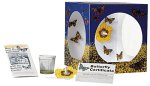
Butterfly Garden gathers the project around a light mesh habitat. The original picture places the enclosure beside a small cup, printed materials and a feeding accessory. Toysit’s earlier description explains the sequence: caterpillars arrive in a supplied container, grow, become chrysalides and eventually emerge as Painted Lady butterflies.
The interest lies in returning to the same view and finding something different. A caterpillar’s outline, a hanging chrysalis and the wings of an adult each give the observer a new shape to draw.
Follow the changes you can see
With a live kit, an adult should read the current instructions supplied for that edition and region, including care, transfer and release arrangements, before beginning. Insect Lore’s current guidance treats this as an observation project: keep the cup settled in an appropriate indoor location and leave the caterpillars undisturbed.
The whole butterfly life cycle includes egg, larva, pupa and adult; a kit arriving with caterpillars begins after the egg stage. The pupa is called a chrysalis. These names make useful labels, while the day-to-day notes can stay simple: what shape is visible, where it is, and what has changed since the last drawing.
Try a same-place change diary
This original Toysit activity needs a notebook and a regular viewing spot. Keep the cup or habitat in the position required by its instructions; move your paper to the view.
- Return at roughly the same time. Add the date and time at the top of a new entry.
- Draw a small window. Sketch what is visible from your usual position. Use the same size drawing box each day.
- Write one observation. Record a visible change, or write “no visible change from this view.” A quiet day still belongs in the diary.
- Add one question. Put it on a separate line beginning “I wonder.” Revisit it when a later observation or the guide supplies more information.
After several entries, place two drawings next to each other. Which difference is easiest to see? Which question is still open? Let the sequence follow the animals’ development rather than a promised completion date.
A paper version of the sequence
Draw four stage cards—egg, caterpillar, chrysalis and adult—and arrange them in life-cycle order. Choose one card for a closer drawing and label the entry “paper model.” This gives the diary a useful version for days when a live kit is unavailable.
For an extra illustration, study a clear butterfly photograph and draw the antennae, wing outline and coiled feeding tube. Butterflies have compound eyes made of many small visual units; a magnified picture is a better guide to that detail than the tiny kit image.
The historical record
Original Toysit coverage
The original product account and commentary are preserved below as historical coverage.
Watch butterflies develop from caterpillars.
Did you know that painted ladies (the butterflies, that is) taste with their feet and have 10,000 eyes? You and your kids will be fascinated by all you learn about these beautiful creatures with the Butterfly Garden from Insect Lore. The kit comes with a relatively easy-to-assemble observation chamber; supplies for feeding the butterflies (you provide only sugar and water); an informative booklet of clear instructions and butterfly facts; and a certificate for three to five free painted lady caterpillars. The metamorphosis from larva to butterfly takes about three weeks from when you receive the caterpillar larvae (which arrive in a small container with all the nutrients they need). Your children can watch the larvae increase dramatically in size, form chrysalides, and finally emerge into full-fledged painted ladies (it's suggested that they release the butterflies after a few days of observation). This would make a wonderful activity for families with kids of any age, but younger children will need help assembling the observation chamber and reading the instruction booklet. Note: Butterflies should not be set free in temperatures lower than 55 degrees Fahrenheit. Witness the miracle of live butterfly metamorphosis first hand. Watch caterpillars mature, change into chrysalides, emerge into butterflies, then release them. The kit includes a butterfly house, a mail-away certificate for live caterpillars, instructions and more.
Learning from the Lifecycle of Butterflies
The lifecycle of butterflies, often referred to as metamorphosis, is a captivating subject that offers a plethora of educational insights. Here's what one can glean from studying this intricate process:
- Stages of Development: Butterflies undergo four distinct stages - egg, caterpillar (larva), chrysalis (pupa), and adult butterfly. This transformation showcases nature's ability to evolve and adapt at different life stages.
- Adaptation & Survival: Each stage has specific adaptations to enhance its survival. For instance, caterpillars often have patterns to deter predators, while adult butterflies possess wings for mobility and reproduction.
- Growth & Transformation: The metamorphosis process is a vivid example of growth and change. It serves as a metaphor for various life processes where entities undergo significant transformation before reaching their full potential.
- Interdependence & Ecosystem Roles: Butterflies play vital roles in ecosystems. As caterpillars, they help control plant populations by consuming leaves. As adults, they pollinate flowers and serve as food for other species, emphasizing the interconnectedness of nature.
- Environmental Indicators: Butterflies are sensitive to environmental changes. Studying their lifecycle, habitats, and population trends can provide clues about broader environmental conditions and the health of an ecosystem.
- Reproduction & Genetics: The study of how butterflies mate, lay eggs, and pass on genetic traits to subsequent generations offers insights into reproductive strategies and genetic inheritance.
- Migration & Navigation: Some butterfly species, like the Monarch, undertake long migrations. Studying these patterns can reveal insights into navigation, environmental cues, and the impact of climate on species behavior.
In essence, studying the lifecycle of butterflies not only reveals the wonders of metamorphosis but also provides broader lessons about ecosystems, adaptation, and the intricate web of life on our planet.
Sources and editorial notes
The archived Insect Lore kit is identified by its original image and account. Its three-to-five-caterpillar certificate, timing, feeding provisions and temperature advice are historical, not current offers or universal care rules; the exact older guide was not recovered. Current US manufacturer guidance is later context. AMNH explains compound eyes composed of many units, which clarifies the archive’s “10,000 eyes” wording; a chrysalis is the butterfly pupal stage, distinct from a silken cocoon. The diary is original Toysit editorial work. No live-kit testing was performed.
- Original Toysit image — Existing same-site image reviewed and retained unchanged.
- Insect Lore: Butterfly Quick Guide (PDF) — Current US help-site link to a 2021 guide. Full ten-page text reviewed; illustrated pages 2, 3 and 6 visually inspected. Later care context, not a match for the archived kit.
- Insect Lore: gentle observation — Current manufacturer guidance on keeping the cup settled and avoiding disturbance.
- Insect Lore: release-day guidance — Current US guidance; use the instructions and regional advice applicable to the kit being used.
- American Museum of Natural History: butterfly anatomy — Compound eyes and the distinction between a butterfly chrysalis and a silken cocoon; general biology, not kit specifications.
- Original Toysit coverage — Complete original product account and historical commentary preserved.

Images and descriptions are retained as historical material. How Toysit covers toys.
Created for Toysit by Tabbloza — the artwork in our header.