
From the Toysit archive
Creature Keeper: a close look through green mesh
A wooden frame, curved green mesh and a carrying strap make a distinctive observation box, paired with an original three-view field-card activity.
The play at a glance
A little house with a view through the sides
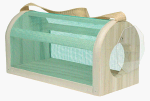
Creature Keeper has the outline of a small rural mailbox: a flat wooden base, rounded wooden ends and green mesh curving over the top. A pale strap arches above it, and a round opening appears at one end. The mesh gives the pictured container its most distinctive feature—a view into the space from several directions.
The original account describes an end that opens and a temporary observation space for insects. A good activity can begin even before a container is used: watch an insect where it is, notice one movement, and put that observation on paper.
Look for one detail at a time
A quiet observer might notice antennae moving, a leg reaching for the next foothold, or the outline of wings at rest. Looking for one detail makes a drawing easier to begin. The Smithsonian’s insect-illustration program similarly connects close observation with drawing visible features.
For the activity here, observing an insect in its existing habitat is the starting choice. An adult can help choose a viewing position that leaves the animal and its surroundings undisturbed. A clear photograph or a paper insect makes an equally workable subject indoors.
Try a three-view field card
This original Toysit activity turns a sheet of paper into a small observation record. Divide it into three boxes and add a date and place.
- Draw the outline. In the first box, sketch the shape you can see. A few lines are enough; leave hidden parts unfilled.
- Choose a feature. In the second box, enlarge one visible detail, such as an antenna, a wing edge or a leg. Add a short caption describing it.
- Map a movement. In the third box, draw the path the insect actually took during your observation. If it stayed still, record “stayed in the same place.”
- Name the kind of record. Mark the card “observed outdoors,” “observed in an appropriate enclosure,” “drawn from a photograph” or “imagined paper insect,” as applicable.
Compare two cards made by different observers. Each may include a detail the other missed. Turn those differences into questions for another look.
Let observation set the pace
If a knowledgeable adult chooses temporary containment, they should first establish the species’ needs and the suitability of that particular enclosure, then arrange a brief observation and appropriate return. Unknown or stinging animals are subjects to watch in place. Keep the viewing position steady and let the animal’s movements supply the interest.
For a pretend version, place a paper insect beside the empty keeper and invent a tiny field station. One person can draw while another writes the caption, then swap roles for the next imagined visitor.
The historical record
Original Toysit coverage
The original product account and commentary are preserved below as historical coverage.
Creature Keeper
Bug and creature houses feature natural wood construction with lots of space to add rocks, plants, water and more. Create a perfect temporary home for favorite creatures. House comes with durable carrying strap. Kids who are fond of nature sometimes enjoy observing an animal or an insect at close range. This mailbox-shaped Creature Keeper makes that a relatively humane and easy activity. Made of natural wood and a fine, green netting, the container opens at one end, allowing for simple access, along with the easy removal of a beetle, a butterfly, or a praying mantis. One can also replicate a creature's customary environment by adding rocks, twigs, grass, and flowers to the box. A strap is attached to the top of the box for easy carrying. The container looks good and provides adequate, temporary housing for interesting critters.
Studying Insects: A Gateway to Science and Exploration
The hobby of studying insects, known as entomology, can be a fascinating and enriching experience that fosters a love of science and may even lead to a career in the field. Here's how:
- Introduction to Biology: Insects are a diverse and complex group of organisms. Studying their anatomy, behavior, life cycles, and ecology provides a hands-on introduction to biological concepts and principles.
- Development of Observation Skills: Careful observation and documentation of insects require attention to detail and patience. These skills are fundamental to scientific inquiry and can be applied to various scientific disciplines.
- Environmental Awareness: Understanding the roles that insects play in ecosystems, such as pollination and decomposition, fosters a deeper appreciation for the environment and the interconnectedness of life.
- Research Opportunities: The study of insects offers numerous opportunities for experimentation and research. Young enthusiasts can design and conduct their experiments, analyze data, and draw conclusions, mirroring the scientific process used by professionals.
- Creativity and Problem-Solving: Identifying and classifying insects, designing experiments, and finding solutions to challenges require creative thinking and problem-solving skills, essential attributes for a successful career in science.
- Community and Collaboration: Engaging with other insect enthusiasts, joining clubs, and participating in citizen science projects provide opportunities for collaboration and networking, reflecting the collaborative nature of scientific work.
- Pathway to Careers: A passion for studying insects can lead to academic pursuits in entomology, ecology, conservation, agriculture, and more. Many professional scientists started as hobbyists, and their early experiences with insects shaped their career paths.
The hobby of studying insects is more than just a pastime; it's an educational journey that nurtures essential scientific skills, fosters curiosity, and can ignite a lifelong passion for science. Whether for personal enrichment or as a stepping stone to a career in science, entomology offers a world of discovery and exploration that can be both rewarding and inspiring.
Sources and editorial notes
The original image and account support the description of the frame, mesh, strap and opening. The maker and exact model instructions for B00000ITTA were not recovered. The archived statements about adding water and providing suitable housing are broad historical claims, not evidence that this enclosure suits aquatic animals or every insect. Smithsonian’s program supplies general observation-and-illustration context, not enclosure guidance. The field-card activity is an original Toysit suggestion; no physical testing was performed.
- Original Toysit image — Existing same-site image reviewed and retained unchanged.
- Smithsonian: Insect Illustration — Program description and transcript reviewed for general drawing context, not guidance for using this enclosure.
- Original Toysit coverage — Complete original product account and historical commentary preserved.

Images and descriptions are retained as historical material. How Toysit covers toys.
Created for Toysit by Tabbloza — the artwork in our header.