
From the Toysit archive
Butterfly Pavilion: sharing a window on metamorphosis
A tall mesh enclosure becomes the focus of shared observation, with an original newsroom activity for drawings, dated captions and questions.
The play at a glance
A tall window for a group of observers
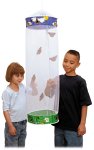
The Butterfly Pavilion’s tall mesh cylinder gives this kit a distinct silhouette. In the original picture, a purple top and green base frame a pale viewing area beside two children. Toysit’s archived description presents a three-foot hanging pavilion, a feeding kit, a guide and a certificate for ten Painted Lady caterpillars.
Imagine a small group taking turns at the same viewing position. One person spots a change, another draws it, and a third finds the words for a caption. The pavilion can be the subject of a growing wall of observations.
A shared view, several jobs
The enclosure’s vertical form invites a drawing with a top, middle and bottom. Observers can describe where a visible detail sits in that view and return to it later. During quiet periods, a careful caption may be as simple as “the chrysalis is in the same position as yesterday.”
Have an adult follow the instructions applicable to the kit, including its placement, care and release arrangements. Insect Lore emphasizes gentle, settled observation during development. For a group activity, keep the habitat undisturbed while people take turns looking.
Try a pavilion newsroom
This original Toysit activity produces one dated observation panel per session. Use a wall or tabletop display away from the habitat so arranging the panels leaves the animals settled.
- Assign three jobs. The observer describes what is visible, the sketcher draws it and the caption writer records it. Two people can share a job, or one person can do them in turn.
- Choose one report. Select a visible change or an unchanged feature. Describe its position from the viewing spot, using words such as “near the top on the left.”
- Check the caption together. Add the date and time. Make sure the drawing and words report the same observation.
- Keep questions on a separate panel. “When will this butterfly emerge?” belongs under “Questions,” while an observed change belongs in the report.
- Rotate roles next time. Compare the new panel with the previous one before adding it to the display.
Some editions begin with caterpillars in cups. Start the newsroom at the stage your kit has reached, then continue when its instructions call for the habitat. The observation record can follow the project across both settings.
Make a gallery of the sequence
Arrange completed panels by date and give the display a title chosen by the group. Visitors can follow the actual sequence, including waiting days and unanswered questions. A paper model or a series of supplied photographs can support the same roles; label those panels to show their source.
The gallery preserves what the group noticed. Each sketch, caption and question has a place, even when the animals’ timetable surprises the observers.
The historical record
Original Toysit coverage
The original product account and commentary are preserved below as historical coverage.
With the butterfly pavilion, kids get to watch butterflies become.
The Butterfly Pavilion gives kids the chance to watch the amazing metamorphosis of the butterfly - from humble little caterpillars, to intricate cocoons, to beautiful Painted Lady butterflies - then set them free! Comes with 36 inch mesh pavilion, feeding kit, fact guide and mail-in certificate for ten caterpillars which arrive by first-class mail in about three weeks. Ah, metamorphosis! The Butterfly Pavilion features ten Painted Lady butterflies soaring to new heights in an attractive 36 inch mesh enclosure. This intriguing, educational activity will fascinate kids of all ages. Includes a 3-foot high hanging pavilion, a certificate for 10 Painted Lady caterpillars (delivered straight to your doorstep), a colorful Painted Lady life-cycle poster, and eyedropper for feeding your butterflies, and a helpful guide bursting with fascinating butterfly facts.
The Fascinating Metamorphosis of Butterflies: Nature's Astonishing Transformation
The metamorphosis of butterflies is a truly captivating process that unfolds with breathtaking beauty and intricacy. From humble caterpillars to graceful winged creatures, this transformational journey is a testament to the wonders of nature and the remarkable adaptations that life undergoes. The metamorphosis of butterflies holds a fascination that spans generations, inspiring awe and wonder in both children and adults alike. Here's a closer look at the enchanting journey of butterfly metamorphosis:
- Egg Stage: The journey begins with the laying of tiny eggs on plants. These eggs, often resembling pearls or specks of paint, hold the promise of new life. The egg stage is a testament to the butterfly's choice of host plant and its intricate reproductive cycle.
- Larva Stage (Caterpillar): From the eggs emerge caterpillars, voracious eaters that continuously munch on leaves to fuel their growth. The caterpillar stage is marked by rapid transformation as they shed their skin multiple times to accommodate their increasing size.
- Pupation Stage (Chrysalis): The most remarkable and mysterious phase, pupation, is when the caterpillar forms a chrysalis around itself. Inside this seemingly lifeless shell, a profound transformation occurs as the caterpillar's body undergoes a complex rearrangement into the adult butterfly's structure.
- Imago Stage (Adult Butterfly): The chrysalis eventually gives way to the emergence of an adult butterfly. The delicate wings gradually expand, and the butterfly emerges, often with vivid colors and intricate patterns. The adult butterfly, ready for flight, embarks on its journey to feed, mate, and continue the life cycle.
- Symbology and Resilience: The metamorphosis of butterflies is laden with symbolism. It represents transformation, rebirth, and resilience—a reminder that change can bring forth newfound beauty and strength. This symbolism resonates with people as they witness the natural world's capacity for renewal.
- Scientific Marvels: The metamorphosis process reveals the intricate biological mechanisms that orchestrate the transformation. The reorganization of tissues, the formation of wings, and the development of sensory structures are awe-inspiring examples of nature's engineering.
- Educational Curiosity: Butterfly metamorphosis often sparks curiosity and inquiry among learners of all ages. Observing the stages, understanding the science behind them, and exploring the interdependence between butterflies and plants contribute to a greater appreciation for ecological systems.
- Artistic Inspiration: The metamorphosis of butterflies has inspired countless artists, writers, and creators. Its visual spectacle, symbolism of transformation, and the narrative of a humble creature's journey resonate deeply with artistic expression.
- Connection to Conservation: Understanding butterfly metamorphosis fosters an appreciation for these creatures' role in ecosystems. It also raises awareness about the importance of protecting habitats, preserving plant diversity, and safeguarding these delicate and vital insects.
The metamorphosis of butterflies is an awe-inspiring journey of transformation that evokes wonder, curiosity, and a deeper connection to the natural world. From the humble beginnings of eggs to the emergence of majestic adult butterflies, this process invites us to marvel at the beauty of life's intricate adaptations and the enduring cycles of growth and renewal.
Sources and editorial notes
This profile concerns the archived three-foot, ten-caterpillar edition described by Toysit. Its original guide was not recovered. The current US Butterfly Pavilion School Kit is explicitly a different two-foot product with 33 caterpillars; its capacity, contents and individual-cup workflow are not specifications for this older kit. Historical delivery times and certificate promises remain attributed. New text uses chrysalis for the butterfly pupal stage; the archive’s cocoon wording is retained as history. Current manufacturer guidance supplies general observation context. No physical testing was performed.
- Original Toysit image — Existing same-site image reviewed and retained unchanged.
- Insect Lore: current Pavilion School Kit — Official two-foot, 33-caterpillar listing reviewed to distinguish this later US school edition from the archived three-foot kit.
- Insect Lore: gentle observation — Current manufacturer guidance on keeping the cup settled and avoiding disturbance.
- Insect Lore: release-day guidance — Current US guidance; use the instructions and regional advice applicable to the kit being used.
- American Museum of Natural History: butterfly anatomy — Compound eyes and the distinction between a butterfly chrysalis and a silken cocoon; general biology, not kit specifications.
- Original Toysit coverage — Complete original product account and historical commentary preserved.

Images and descriptions are retained as historical material. How Toysit covers toys.
Created for Toysit by Tabbloza — the artwork in our header.