
From the Toysit archive
Crayola Paint Can
Explore Crayola Lots-a-Paint Can through its paint pots, apron and sponge shapes, then design a patterned border for a picture of your own.
The play at a glance
Bright colors gathered around a paint can
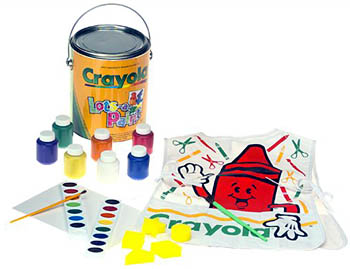
A handled yellow can stands behind paint pots and a colorful apron in the original photograph. “Lots-a-Paint” appears on the can, and a red crayon character spreads across the apron. Brushes, palettes and yellow shapes turn the space in front into a little painting station.
The original Toysit description calls out the apron, paints and sponges. That combination suggests two enjoyable kinds of mark: a brush can carry a line across the page, while a repeated shape can make a border, a row of windows or a trail through a scene.
Give a repeated shape a rhythm
Draw a small circle, leave a space and draw another. Continue across the page. That simple row can become stepping stones, bubbles or the edge of a picture frame, depending on what you add around it.
Change one part of the rhythm. Try two small circles followed by a larger one, or alternate two colors. A repeated shape can make a design feel connected while leaving plenty of room for playful variations.
Let the border frame the story
Imagine a picture of a boat with a border of blue waves. A garden scene might have leaves around its edges, and a night scene might use small yellow stars. Choose a border shape that gives a clue to the picture inside.
Leave a clear space between the border and the main subject. At each corner, turn the shape or change its color. Those small choices help the border travel around the picture as a continuous design.
Design a stamp-pattern border
- Draw a rectangle with room for a border inside its edges.
- Choose a simple subject for the center.
- Pick one small shape that suits the subject.
- Repeat the drawn shape around the border, changing color at each corner.
- Add the central picture and give the whole design a title.
This original Toysit activity uses drawn shapes on paper. If you extend the idea to painting, choose paint and tools intended for the maker and surface, protect the work area and follow the materials’ labels.
The historical record
Original Toysit coverage
The original product account and commentary are preserved below as historical coverage.
Crayola Lots-a-Paint Can by Binney & Smith
Apron, paints, and sponges for kids to get art going for them.
A child's art studio equipped with kid-safe paint offers a world of creative possibilities and numerous developmental benefits. This environment encourages artistic expression, skill development, and a sense of accomplishment while ensuring safety and peace of mind. Here are some of the compelling advantages of incorporating kid-safe paint into a child's art studio:
Non-Toxic Formulas: Kid-safe paints are specially formulated to be non-toxic and free from harmful chemicals, ensuring that children can explore and experiment with colors without exposure to potentially hazardous substances.
Safe Exploration: With kid-safe paint, parents and caregivers can feel confident that children can freely explore their creativity, experimenting with brush strokes, mixing colors, and even using their hands to create art without concerns about safety.
Creative Expression: Kid-safe paint nurtures children's innate artistic abilities, allowing them to freely express their thoughts, emotions, and imagination through colorful masterpieces that reflect their unique perspectives.
Motor Skills Development: Painting with brushes, sponges, and other tools helps children refine their fine motor skills as they control movements and manipulate objects, contributing to hand-eye coordination and dexterity.
Sensory Exploration: The tactile experience of applying paint engages children's senses, offering a valuable sensory exploration that contributes to their understanding of texture, viscosity, and the world around them.
Color Recognition: Through mixing and experimenting with various hues, children learn about color blending, contrast, and recognition, fostering a deeper understanding of the properties of color.
Visual Perception: Creating art with kid-safe paint enhances children's visual perception as they observe how colors interact, notice patterns, and develop an appreciation for visual aesthetics.
Cognitive Development: Engaging in art activities with paint stimulates cognitive functions, encouraging critical thinking, problem-solving, and creativity as children plan and execute their artistic visions.
Emotional Outlet: Kid-safe paint provides a constructive outlet for children to express their emotions, whether it's happiness, frustration, or curiosity, promoting emotional awareness and self-expression.
Confidence Building: Successfully completing a painting or art project boosts children's confidence and self-esteem, reinforcing their belief in their abilities and encouraging them to take on new challenges.
Language and Communication: Creating art opens avenues for children to describe their work, share their thoughts, and communicate their experiences, fostering language development and communication skills.
Focus and Patience: Engaging in painting requires concentration and patience as children work on details, layers, and different techniques, enhancing their ability to sustain attention and stay focused.
Bonding Moments: Painting sessions in a child's art studio provide opportunities for quality bonding between children and parents, siblings, or friends as they collaborate, share, and celebrate their creative endeavors together.
A child's art studio equipped with kid-safe paint is a treasure trove of artistic growth, self-expression, and sensory exploration. This creative haven nurtures children's development, encourages their imagination, and provides them with a space to translate their thoughts and emotions into vibrant works of art while prioritizing their safety and well-being.
Sources and editorial notes
The original photograph identifies Crayola Lots-a-Paint Can; Toysit’s headline credits Binney & Smith. The image and short product account are the edition evidence used here. Crayola’s instruction directory was consulted, but a matching complete guide was not recovered. The older general paint-safety essay remains historical commentary rather than a certification of these materials. The drawing activity is original; no physical testing occurred.
- Original Toysit image — Existing same-site photograph reviewed and retained unchanged.
- Crayola product instruction directory — Manufacturer support starting point; a matching Lots-a-Paint Can guide was not recovered during this review.
- Original Toysit coverage — Complete original product account and historical commentary preserved.

Images and descriptions are retained as historical material. How Toysit covers toys.
Created for Toysit by Tabbloza — the artwork in our header.