
From the Toysit archive
Electronic Battleship Advanced Mission
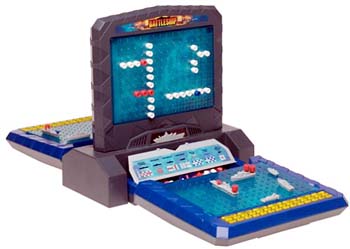
Practice reading coordinates, entering a target and recording the result before adding advanced missions to the folding electronic Battleship game.
The play at a glance
A useful turn connects a coordinate with a recorded result
This version of Battleship combines plastic ships and peg grids with a keypad and spoken prompts. Its electronic unit helps run the game, while players still need to locate positions and keep an accurate record.
Start with a basic mission and a few coordinate-reading examples. Advanced options are easier to understand when selecting a target and recording its result already feel familiar.
Learn the address of a space
Before competitive play, point to several empty positions and read each letter-number pair. Have another person find the same position. Keep this rehearsal separate from a hidden fleet so nobody has to reveal an intended placement.
Use a deliberately simple example such as C4. Trace its letter and number to their intersection, then check the labels again. Saying the coordinate aloud is useful practice, but the documented game input is through the keypad; spoken prompts are not evidence of voice recognition.
Separate setup from the first shot
The guide recommends Territorial Waters as an introduction. With Basic Weapons selected, a turn targets one coordinate. Follow the full setup sequence: the unit does not automatically sense where the plastic ships are placed, so fleet information must be entered.
Give setup its own time. Read the prompts, confirm which player is acting and check the arrangement before beginning. A rushed setup error can make later results confusing even when the players read coordinates correctly.
For a learning session, agree in advance that you may discuss the procedure. Reset before a competitive game if the rehearsal exposed information that should be hidden.
Connect the result to the peg
For basic firing, the guide uses letter and number keys followed by Fire. The upright target grid records the attempt: a white peg remains for a miss and is replaced with red for a hit. Repeat replays a missed voice message.
After a practice turn, point to the record and describe only what it establishes. A hit identifies an occupied position; it does not reveal every neighboring position. Before another attempt, check what has already been tried.
A partner can ask, “What does that mark tell you?” without choosing the next target. That keeps the decision with the player while making the record easier to understand.
Add complexity deliberately
Salvo and Target Plus One change the turn structure. Advanced Weapons adds further procedures. Consult their own sections rather than mixing a remembered special rule into the basic game.
Change one selection between sessions so you can explain what feels different. When you finish, sort the supplied pieces and compare them with the booklet’s inventory. The original photograph is useful for recognizing the design, but cannot establish whether a particular secondhand set is complete.
The historical record
Original Toysit coverage
The original product description and complete history essay remain below. The essay’s Broadsides chronology and historical naming claims were not verified for this renovation and should not be treated as newly established history. Its developmental claims are also retained historical commentary, not measured outcomes.
Electronic Battleship with advanced gameplay.
It's the Classic Naval Combat Game ... updated with advanced gameplay and exciting strategic options. Experience the action-packed thrills and the explosive sounds of real-life warfare when you sign up for the Electronic Battleship Advanced Mission challenge! With instant programming you and your opponent are ready to play in seconds - or take on the computer in solo play. Use radar and sonar to locate your enemy's ships. Now use your special weapons to destroy them!
History of the Game of Battleship
The game of Battleship, a classic naval strategy game, has a fascinating history that traces back to the early 20th century. Here's a brief overview of its origins and evolution:
Early Origins: The precursor to Battleship can be traced back to the pencil-and-paper game "Broadsides" played in the late 19th century. Players would draw their fleet of ships on a grid and take turns calling out coordinates to target their opponent's ships. The game's concept was further developed over time.
Development by Milton Bradley: The modern version of Battleship was developed and introduced by Milton Bradley in 1967. It was originally known as "Broadsides, the Game of Naval Strategy." This version featured plastic boards with pre-printed grids and plastic pegs for tracking hits and misses.
Strategic Gameplay: Battleship is a two-player game where each player sets up their fleet of ships on a grid, concealed from their opponent. Players take turns calling out coordinates to launch attacks on their opponent's grid, attempting to "sink" their ships by scoring hits. The game requires strategy, deduction, and careful planning to strategically target the opponent's ships while protecting one's own fleet.
Global Popularity: Battleship quickly gained popularity due to its engaging gameplay and simple mechanics. It became a staple in households, schools, and social gatherings around the world. The game's appeal extended to players of all ages, making it a timeless favorite.
Adaptations and Variants: Over the years, Battleship has seen various adaptations and themed versions. These adaptations include electronic versions, travel-sized editions, and tie-ins to popular franchises. The game's core gameplay remains consistent, but the themes and aesthetics have evolved to suit different interests.
Strategic Skills: Battleship encourages players to develop critical thinking and strategic skills. Players must deduce the locations of their opponent's ships based on hits and misses, leading to the careful planning of subsequent attacks.
Modern Digital Era: Battleship has successfully transitioned into the digital realm with video game adaptations and mobile apps. Digital versions allow players to enjoy the game online, against AI opponents, or against friends from different locations.
Continued Legacy: Despite the emergence of modern electronic games, Battleship continues to maintain its nostalgic charm and appeal. It remains a classic option for both casual and strategic gaming experiences, offering a simple yet engaging form of competition.
The history of Battleship reflects its enduring appeal and status as a beloved strategy game that has captured the imaginations of players for decades. Its combination of deduction, strategy, and suspenseful gameplay has solidified its place in the world of classic board games.
Sources and editorial notes
Reviewed October 16, 2026 against the original photograph, ASIN B000056KQR and Hasbro’s 04750 instruction booklet. The relevant mission, coordinate-entry and peg-recording spreads were visually reviewed and correspond to the pictured folding unit and grids. The scanned booklet has some degraded areas; this profile summarizes only readable relevant procedures. The practice discussion is editorial guidance; no unit, speech recognition or current support service was tested.
- Hasbro: Electronic Battleship Advanced Mission, 04750 instructions (PDF) — Matching booklet for fleet entry, basic missions, recorded results and advanced options.
Images and descriptions are retained as historical material. How Toysit covers toys.
Created for Toysit by Tabbloza — the artwork in our header.