
From the Toysit archive
Phonics Flash Cards
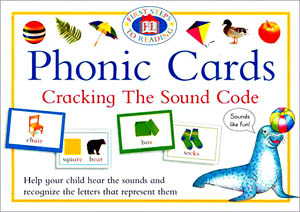
Look at illustrated Phonic Cards with words such as chair, bear, box and socks, then play a picture-and-sound detective game.
The play at a glance
Pictures, spoken words and the sounds inside them
A seal balances a ball on the front of the Phonic Cards: Cracking the Sound Code box. Around it, illustrated cards pair familiar pictures with printed words. The examples visible in the Toysit photograph include a chair, a bear, a box and socks, each framed by a colored border.
The original account describes 42 cards, with a common spelling pattern on the front and alternatives on the back, accompanied by notes for parents. A picture gives the conversation a starting point: name what you see, say the word together and listen to a part of its sound.
Look, name and listen together
Start with one picture that the player recognizes. Agree on its name before looking for a sound match: a picture can suggest more than one sensible word, and the word you choose determines what you hear.
Say the word naturally, then listen together for its beginning sound. An adult can point to the relevant printed letter or letters. Keep the spoken sound separate from the letter’s name; the first sound in bear, for example, is the sound /b/ rather than the letter name “bee.”
Try picture-sound detective
For this original Toysit activity, use a few cards and paper for additional drawings.
- Choose a pictured word and say it together. Listen for the first sound.
- Look for another card that begins with the same spoken sound. If there is no suitable card, draw a familiar object with that sound.
- Invent a clue for a partner. With the pictured bear, a separately drawn ball could prompt: “My other picture is something we can roll.”
- Let the partner name the drawing, say both words and describe the sound they share.
- Change roles and choose another picture.
The ball drawing is an added activity example, not an asserted card in the pack. Use the pronunciation familiar to the players and welcome differences; if a proposed pair does not sound alike to everyone, choose a clearer pair together.
Turn the clues into a small collection
Keep the drawings and dictated clues on a sheet of paper. A player can point, speak or draw while an adult handles the writing. End with a favorite pair and a playful sentence that includes both pictured things.
The historical record
Original Toysit coverage
The original product account and commentary are preserved below as historical coverage.
Help your child hear the sounds and recognize the letters that represent them.
Contains 42 sturdy cards, which cover the main sounds in the English language and their various spelling patters: one common spelling pattern is featured on the front of each phonic card and other common alternatives are shown on the back. Prepares you child for fluent and confident reading in five progressive steps. Includes clear and easy-to-follow notes for parents, and many suggestions for enjoyable supporting activities.
Flash cards are an incredibly effective tool for teaching phonics, as they allow for targeted, repetitive learning that aids in memorization. By presenting individual letters or letter combinations on one side and their phonetic sounds on the other, flash cards create a focused learning environment that isolates specific phonetic elements. This helps children establish the vital connection between written and spoken language. The tactile nature of holding and flipping the cards also engages multiple senses, thereby reinforcing the learning process. Moreover, flash cards are versatile—they can be used for solo review or for interactive games that encourage participation and engagement. The simplicity of flash cards also allows for customization to suit the learner's pace and level, making them one of the most adaptable and efficient methods for mastering the basics of phonics.
Sources and editorial notes
The original package photograph and Toysit text support this historical profile. Book listings associate the preserved identifier 0789442604 with DK’s First Steps to Reading Phonic Cards, but a matching publisher instruction sheet was not recovered. The 42-card count, reverse-side patterns and five-step sequence remain attributed to the original coverage. Later DK Super Phonics sets have different identifiers and were excluded as edition matches. Reading-fluency and other developmental assertions are preserved as historical claims. The detective game is an original informal activity, not a tested reading program.
- Original Toysit image — Existing same-site photograph reviewed and retained unchanged.
- Original Toysit coverage — Complete original product account and historical commentary preserved.

Images and descriptions are retained as historical material. How Toysit covers toys.
Created for Toysit by Tabbloza — the artwork in our header.