
From the Toysit archive
Polly the Tekno Parrot
Explore Polly the Tekno Parrot through built-in phrases, repeated speech and sensor-driven play, with original coverage and a call-and-response activity.
The play at a glance
A talking parrot invites an answer
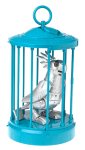
Polly the Tekno Parrot combines an expressive bird character with sounds, movement and the ability to repeat speech. A familiar voice coming from a mechanical parrot is the central surprise.
There are several different things a talking toy can do. It can play a phrase already stored inside it, repeat a sound supplied by a person, or react when it hears a noise. Those deserve separate explanations.
Listen for three different kinds of sound
- A built-in phrase
- The manual describes a stock vocabulary that appears during play.
- A repeated voice
- The guide says Polly can repeat a supplied sound immediately or use it later, and identifies a recording button and microphone.
- A response to noise
- A sound sensor can trigger a response without the toy understanding the words that caused it.
These distinctions help explain why an apparently conversational exchange may be enjoyable without being an open-ended conversation. The person supplies much of the timing, meaning and humor.
The cage is part of the toy’s story
The sensor map includes a cage detector in the foot as well as touch, light and motion inputs. The guide connects these inputs with the bird character’s reactions.
Its “cold” is pretend behavior. It says nothing about real-parrot health or housing. In a story, you can let Polly ask for a new scene without treating the performance as a real animal’s need.
Make the listener’s job visible
A repeated phrase can sound like an answer because someone places it at the right moment. Try imagining the same phrase after two different questions. Does it feel helpful, silly or unrelated?
That small experiment reveals how much a listener contributes. It also gives children a reason to choose words carefully when writing dialogue for any character.
Play a paper call-and-response game
- Draw a parrot and write three short phrases on separate cards, such as “What a day!”, “Try again!” and “Hello there!”
- One player invents a line for a visitor to the parrot.
- A second player draws a phrase card and reads it exactly as written.
- Decide together whether that reply makes sense in the scene.
- Keep the same reply but change the visitor’s line. Notice how the meaning seems to shift.
These are your own dialogue cards. They do not reproduce Polly’s vocabulary or program the original toy, and no recording device is needed.
The historical record
Original Toysit coverage
The complete original description remains below. Its claims about thinking, feelings and catching a cold are the toy’s character language, not observations of a living animal or a thinking system. The general parrot discussion is historical context and should not be read as a guide to keeping a real bird.
Polly the Tekno Parrot can think for himself and will act and say things differently depending on what is happening to him.
Polly the Tekno Parrot is a true robot. He can think for himself and will act and say things differently depending on what is happening to him. He squawks in many expressive ways, laughs out loud when happy, gets worried when he is confused about what is happening around him, coo's when he's petted, catches cold if left too long in his cage, and can even mimic anyone's voice and say it back. Thanks to his sophisticated artificial intelligence software and state-of-the-art sensor technology, Polly will let you know how he is feeling and provides feedback for the care you provide. He knows how long it's been since he's been fed and how often you have petted and played with him. He's quick to let you know he wants out of his cage. Polly has a mind of his own! There are no remote controls to command him. He will do what he wants to do when he wants to do it - just like a real parrot. It all depends on his emotional state based on what his sensors are telling him around him and what has happened to him in the past. The artificial intelligence program in his computer brain decides what Polly should say next. You never know what it will be -- Polly always has a surprise waiting for you.
Children are often fascinated by parrots due to their vivid colors, ability to mimic human speech, and playful personalities. The eye-catching feathers of a parrot can spark a child's imagination and curiosity about the natural world. Additionally, the bird's ability to talk or mimic sounds adds an interactive layer that many other pets don't have, providing not just companionship but also entertainment. Parrots are also known for their intelligence and problem-solving abilities, making them interesting to watch as they interact with their environment. Whether it's in a zoo, as a family pet, or in a picture book, the unique characteristics of parrots make them highly appealing to children who are eager to learn and be entertained.
Sources and editorial notes
The Manley Toy Quest Polly manual’s available introduction, sensor map and interaction pages support built-in speech, repetition and sound response. Both located thirteen-page PDF copies omit printed pages 9 and 12–14; the corresponding museum image links show missing-page placeholders. No complete recording sequence was recovered, so none is supplied here. No hardware, recording quality or voice recognition was tested. The call-and-response activity works independently of Polly.
- Polly the Tekno Parrot owner’s manual — Manufacturer scan archived by Virtual Pet; incomplete, with gaps in the printed pagination.
- Polly manual archive and page index — Independent mirror of the manufacturer pages, including missing-page placeholders.
Images and descriptions are retained as historical material. How Toysit covers toys.
Created for Toysit by Tabbloza — the artwork in our header.