
From the Toysit archive
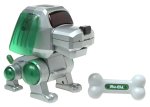
Poo-Chi Interactive Puppy
Compare Poo-Chi’s light, sound and touch inputs, and describe its eye patterns and movements without mistaking displayed moods for feelings.
The play at a glance
Three kinds of input, many small things to observe
Poo-Chi makes the connection between an action and a toy’s response visible. Its original manual describes light, sound and touch sensors, while the eyes, sounds and movements give the player something to watch.
Try a small comparison: one kind of input at a time, with a pause to record what followed. The aim is to notice a pattern, not to make the puppy perform on demand.
Give each input its own turn
Use a clear, smooth, flat indoor surface and follow the matching manual for setup. Wait until Poo-Chi has finished moving before the next input. Its guide describes passing a hand over the nose’s light sensor, clapping for sound and pressing the head button for touch.
Choose just one of those inputs for the first trial. Another player can be the observer, watching the eyes and body while listening for a sound. Swap jobs for the next trial so each player has a chance to notice something different.
Keep a three-part observation list
- Light: note the hand movement you tried, then describe the eye pattern, sound or movement that followed.
- Sound: record the cue separately from any background noise, then describe the response.
- Touch: note the head-button input and what happened afterward, including no obvious change.
A few words or a quick drawing are enough. Keep the input and the result on the same line so you can compare rounds later. Avoid adding a second cue while the first response is still happening.
Look for patterns without demanding a match
Repeat one trial under similar conditions. Did the same thing happen? If not, keep both observations. The manual describes an internal behavior scheme that changes with interaction, so a different response does not necessarily mean the first observation was wrong.
Displayed moods are part of the toy’s character. A heart-shaped eye pattern can become a cheerful moment in a story, but it does not establish that the machine feels affection. Likewise, a response to sound is not evidence that it understands the words spoken around it.
Keep the bone and the story in their roles
The guide places the supplied toy bone in front of the mouth, not inside it. It is a toy accessory, not an invitation to offer real food. Consult that guide for the full feeding interaction, sleep behavior and adult battery handling.
After the observation activity, let the child invent a visit, a walk or an imaginary meal for the puppy. Name the actions supplied by the toy and the events supplied by the storyteller. That distinction lets the original electronic pet remain interesting without asking it to be a modern conversational robot.
The historical record
Original Toysit coverage
The full original description remains below, including its period bio-rhythm, happiness, tail and animated-mouth wording. The new activity uses the original manual’s documented sensor inputs rather than treating every phrase in the older sales description as a verified mechanism.
Poo-Chi is a robotic dog that fits in the palm of your hand.
He sings, plays games, has an animated head, ears, legs, and mouth, and can sense light, sound, and touch. Poo-Chi uses advanced bio-rhythmic technology to create responses that adapt and change. Poo-Chi, the Interactive Puppy, is a new type of friend. Poo-Chi expresses his emotions through his bright expressive eyesflapping ears and wagging tail. Enjoy hours of playful singing, fun dancing and real puppy sounds. Poo-Chi uses advanced technology to create realistic emotional responses that adapt and change as you play with him. The more you play with Poo-Chi, the happier he becomes - he may even sing a special song for you. Poo-Chi will play the best on a smooth, flat surface. Make certain that the area is clear of obstacles so Poo-Chi can stand, sit and dance on his tiptoes. Poo-Chi is very unpredictable. Activate one of Poo-Chi's sensors to see what he will do! Poo-Chi has three sensors: light sensor, sound sensor and a touch sensor. Poo-Chi's eyes are very expressive. Poo-Chi's eyes will tell you if he is happy, sad, sleepy, and that he loves you. Poo-Chi can even blink. Poo-Chi loves to be cared for and the more you take care of Poo-Chi, the happier he will be. Feed Poo-Chi by holding the middle of the bone in front of Poo-Chi's mouth. Poo-Chi will respond with happy eyes, wagging tail and a special eating sound.
Because Poo-Chi is a puppy, he needs his sleep. Just like a real puppy, Poo-Chi will fall asleep when it is dark or when no one is playing with him. When Poo-Chi gets tired, he will sit down and his eyes will flash and close. You may even hear a little snore. To wake up Poo-Chi when he is in a deep sleep, press his head button. If Poo-Chi was sad when he fell asleep, it may take him a little while to completely wake up so you may need to press his head button more than once. If Poo-Chi was happy when he fell asleep, he will quickly wake up. Enjoy hours of fun singing different songs and playing games with Poo-Chi. This life like pup has an animated head, ears, legs, and mouth. And just like a real puppy, he can stand, sit, or dance on his tiptoes! He can sense light, sound, and your special touch! His advanced technology allows him to communicate and play with his other Poo-Chi pals. Because he's so lifelike, he needs extra love and plenty of food, so don't forget to feed him his special bone. The more you care for him, the happier he will be. Poo-Chi uses advanced bio-rythmic technology to create realistic emotional responses that adapt and change as you play with him. His big expressive eyes will melt your heart whether he's telling you he's happy, sad, or just that he loves you. Comes with Poo-Chi the Interactive Puppy, Poo-Chi bone, Instruction Manual
Sources and editorial notes
Reviewed October 16, 2026 using the original photograph and Hasbro-hosted Tiger/SEGA Poo-Chi instructions, copyright 2000. The manual’s diagrams match the pictured original puppy-and-bone form, rather than Super Poo-Chi or a Dalmatians version. The legacy placeholder ASIN, original ASIN B000053VWM and like value are retained. Both manual pages were visually reviewed. Observations below are suggested activities, not results of physical testing.
- Tiger/SEGA: original Poo-Chi instructions (PDF) — Hasbro-hosted original manual with sensor diagrams, care and operating guidance.
Images and descriptions are retained as historical material. How Toysit covers toys.
Created for Toysit by Tabbloza — the artwork in our header.